All species › Carnivores › Hyaenas › Striped hyaena
Striped hyaena | Hyaena hyaena
Gestreepte hyena | Hiena Rayada
The striped hyaena is the smallest of the three bone-cracking hyaenas and the only hyaena in the guide area, in North Africa, the Levant and Turkey. It is mainly a scavenger, almost strictly nocturnal, and lives at low density in dry, rugged country. It is the least studied of the living hyaenas.
Tracks
Striped hyaenas mark their range with secretion from the anal glands, which open into an anal pouch above the anus. On the move the secretion is regularly applied to grass stalks and other objects (pasting). Droppings are left at latrines near feeding sites and along regular routes. Bones are cracked with the heavy cheek teeth, as are tortoise shells. The female digs intensively before giving birth; the cubs lie in a den.
Identification
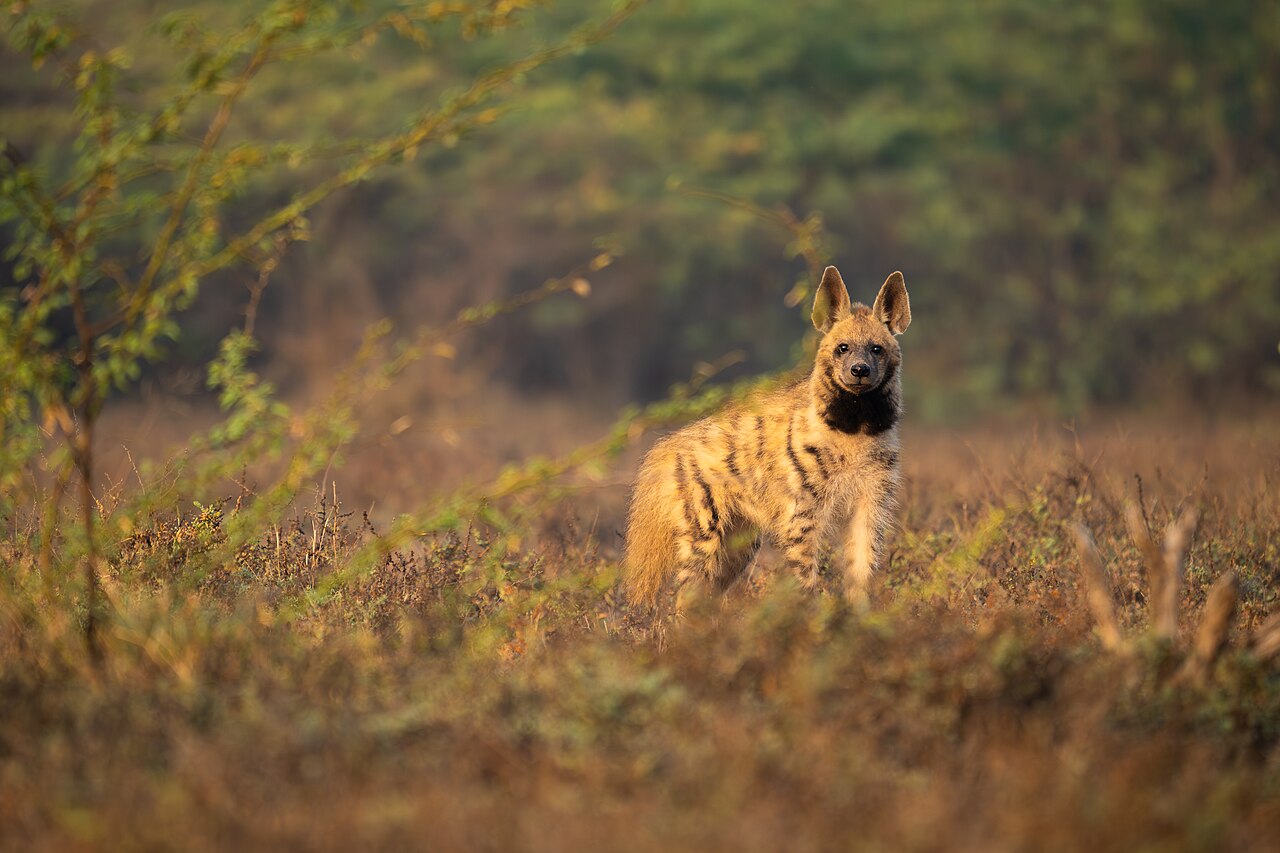
A large, dog-like animal with a sloping back, the forelegs being longer than the hind legs; head, neck and shoulders are heavy. The coat is long and shaggy, pale grey to straw-coloured, with five to nine black vertical stripes on the flanks, two cheek stripes and distinct black transverse and horizontal stripes on all four legs. Muzzle and a patch on the throat are black. The head is round with a pointed muzzle and long, pointed ears. A grey or blond mane of hairs up to 20 cm long runs from the ears to the tail and can be raised, making the animal look more than 30% larger. The tail is long, bushy and black and white. Shoulder height is 66 to 75 cm; the sexes differ little in size.
Similar species
No other hyaena occurs in the guide area. Dogs, the African golden wolf and the golden jackal have a level back, no stripes and no mane, whereas the hyaena moves with the characteristic sloping back and heavy forequarters. On a blurred night image the leg stripes, the long pointed ears and the dorsal mane remain the best features.
Habitat
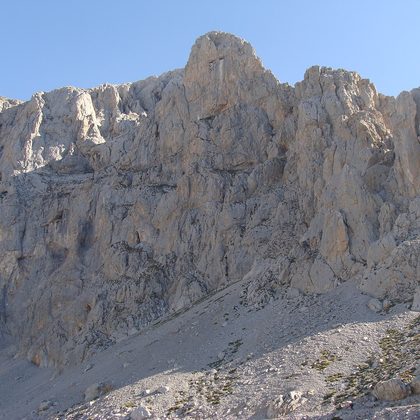
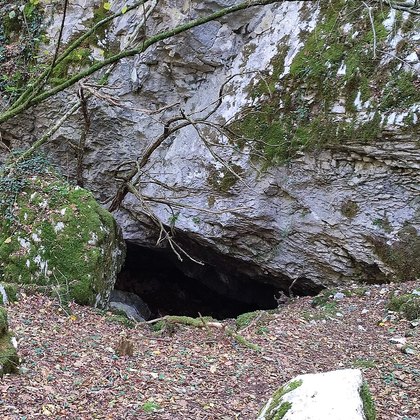
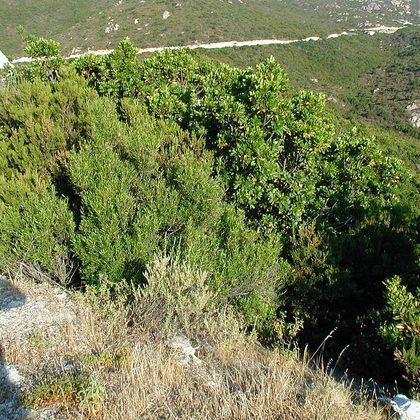
Across most of its range rugged, arid country or light thorn bush; in North Africa mainly open woodland and bushy and mountainous areas. In Central Asia high mountains, dense thickets and forests are avoided; valleys with plenty of caves or other rest sites are suitable. It drinks regularly where water is available but can also live in waterless areas; the central Sahara and Arabian deserts are unsuitable. It avoids areas with minimum temperatures below −15 to −20 °C and more than 80 to 120 frost days a year. In Israel it also lives close to dense human settlement.
Where the animal is most at home, classified with EUNIS — the European standard for habitats.


Distribution
Much of northern, eastern and western Africa, the Middle East, the Caucasus and Central Asia to India and Nepal, mostly in small, isolated populations. Within the guide area: Morocco, Algeria, Tunisia, Libya, Egypt, Israel, Jordan, Lebanon and Turkey. By far most recent records come from Israel.
- Native
- dark = core range, pale = thinly spread
Way of life
Almost strictly nocturnal, probably most so where people are active and persecute it. Striped hyaenas travel great distances: in the Serengeti 19 km a night on average, along game trails or zigzagging across country. The range of a female in the Negev covered about 61 km² and overlapped those of two other animals. No territorial defence has been recorded. They are usually seen alone, but in Central Asia pairs form a family unit that may last several years. Food is mainly carrion: dried flesh and bones of large vertebrates and remains of other predators' kills; also invertebrates, vegetables, fruit, refuse and small vertebrates caught by the hyaena itself. Breeding occurs all year; after a gestation of 90 to 91 days 1 to 4 (median 3) cubs of about 700 g are born, already striped like adults but without a mane. Eyes open at 5 to 9 days, cubs leave the den at about two weeks, and they suckle for more than a year.
Where and when to look
In the guide area Israel is the only place with a reasonable chance of a sighting. The species can be seen at night in open, rugged terrain and on the edges of settlements, including at refuse sites.
Conservation status
Near Threatened (NT, 2015). It lives at low density everywhere, appears to have gone from many localities, and populations are generally declining. Causes are the decline of carrion, as other large carnivores and their prey decline and livestock practices change, and direct persecution: animals are shot, snared or poisoned for allegedly taking livestock. Body parts are used in folk medicine. Large home ranges make fragmentation into small, non-viable populations likely.
Scientific name
Hyaena hyaena | (Linnaeus, 1758)
Linnaeus described the species in 1758 as Canis Hyæna; because it was later moved to another genus, the author and year stand in brackets. Hyaena is Greek hyaina, formed on hys, 'swine': the Greeks likened the animal's bristly mane to a pig's back. The specific name repeats the genus name. The specimen the first description was based on came from India.