All species › Waders, gulls and terns › Sandpipers and snipes › Long-billed dowitcher
Long-billed dowitcher
Limnodromus scolopaceus | Grote grijze snip | Agujeta escolopácea
The dowitcher that reaches Europe. Squat, short-legged and long-billed, it feeds with a fast vertical sewing-machine action in soft mud, almost always on shallow fresh water rather than out on the open tideline.

Voice
A sharp, high, clipped keek, given singly or, on flushing, run together into a fast rattling keek-keek-keek. The note is thin and penetrating and carries a long way over open water. Short-billed Dowitcher sounds entirely different: a soft, mellow, three-syllable tu-tu-tu that recalls Lesser Yellowlegs. Feeding parties also give a quiet conversational muttering audible only at close range.
No freely licensed recording is available for this species yet.
Identification
Heavily built and short-necked, with a humped back, short yellow-green legs and a long straight bill that is markedly longer on females. Summer adults are brick-red right through to the undertail coverts, with barred flanks and fine black spotting on the neck and breast sides. Winter birds have a plain grey breast cut cleanly against a white belly, with a pale supercilium over a dark eye-stripe. Juveniles are warmer brown with plain grey-brown tertials edged at most by a narrow rusty line. In flight there is a white wedge up the back, a barred tail that reads dark at any distance, and toes projecting just beyond it.
Confusion species
The whole problem is Short-billed Dowitcher (Limnodromus griseus). Bills average longer on Long-billed, but the ranges overlap completely: a male Long-billed has a shorter bill than a female Short-billed, so bill length alone settles nothing. On juveniles the tertials do settle it. Long-billed shows plain grey-brown tertials with at best a thin rufous fringe; Short-billed shows broad warm fringes with internal bars and loops, the classic tiger-striping. Long-billed also has black tail bars broader than the white ones, giving a darker tail, and barred rather than spotted flanks in breeding plumage. In the field the call decides: one sharp high note against a soft three-syllable series. Get a bird to fly and you usually have the identification before you have seen a feather tract.
Habitat
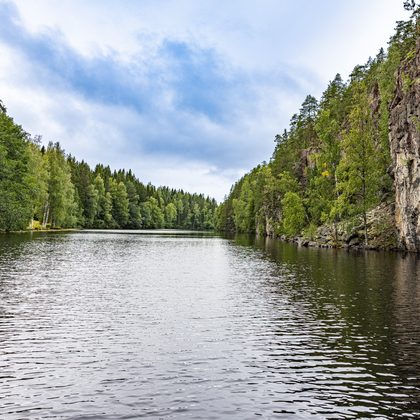
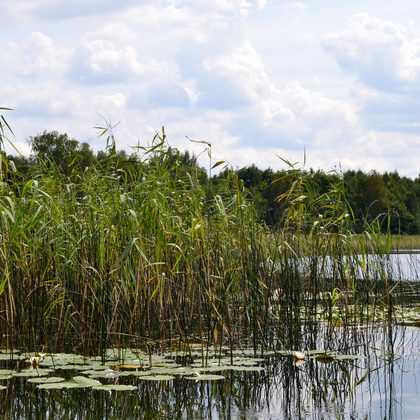
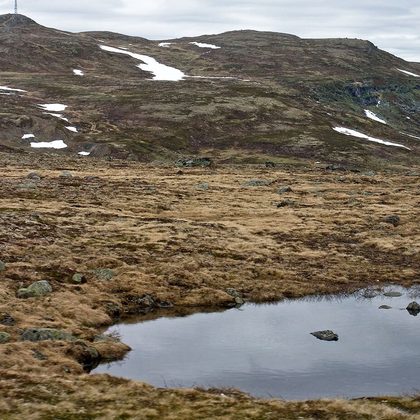
In Europe nearly always shallow fresh or slightly brackish water: flooded grassland, clay pits and gravel workings growing in, wet meadows with open muddy edges, sewage lagoons and saltworks. It wades well above the knee and works the same square metre for minutes on end. Open tidal flats are used far less than by Short-billed Dowitcher. Breeds on wet coastal tundra with sedge tussocks and pools.
Where the bird is most at home, classified with EUNIS — the European standard for habitats.

Range and movements
Breeds in Chukotka and western and northern Alaska and winters from the southern United States to Guatemala. In Europe it is one of the more regular Nearctic waders, with several birds most years in Britain and Ireland, sixty-two accepted Dutch records and a handful of Spanish ones. British and Irish birds are concentrated in September and October and are mostly juveniles; the Dutch pattern is different, with a spring peak from April to June and a striking number of individuals lingering into the winter.
Where and when to look
Look inland of the sea wall rather than on the estuary itself. Twitching a fresh report pays off, because these birds often settle on one pool for days or weeks and are remarkably approachable once they are feeding. Stay for a flight view: the single hard keek is worth more than any plumage character. On a juvenile, photograph the closed wing so the tertials are visible, and among godwits or Ruff pick the bird out by its humped back and short legs before you even judge the bill.
Conservation status
Least Concern. The world population runs to several hundred thousand birds and appears stable, although tundra breeding surveys are difficult and the trend rests largely on counts made on migration. The pressures lie away from the breeding grounds: drainage and conversion of the shallow interior wetlands of western North America, where large flocks moult in late summer, and the continuing loss of Gulf coast marshes. There is no European conservation dimension; here it is a vagrant.