
Werner's Guide to the Birds of Europe
A guide for birdwatchers: field marks, confusion species, sound and the best moments to look — arranged by order, family and genus.
A guide that starts with the sound
Anyone birding in Europe identifies most species by ear long before they see them. Where there is a recording, it stands beside the field marks, together with the confusion species that actually matter in the field — and with the question of where and when to look.
The species follow the order of the family tree: by clade, order, family and genus. It shows at a glance why a wryneck sits with the woodpeckers, a bittern with the herons and a falcon with the passerines.
The family tree of Europe's birds
19 clades, 20 orders, 45 families, 170 species
The tree runs from the oldest branches to the youngest and descends layer by layer: from the main branches of the bird tree through ever smaller clades to orders, families and species. Every clade has a name — some familiar, some only coined in 2024. Where the genetic support is weak, it says so.
-
Fowl Galloanserae
With the gamebirds, the oldest branch of modern birds apart from the ratites. 46 species
-
All other modern birds Neoaves
Nineteen out of twenty bird species belong here; the group fanned out rapidly after the mass extinction 66 million years ago. 124 species
-
Flamingos and grebes Mirandornithes
The first branch of Neoaves: two groups that look nothing alike yet are each other's closest relatives. 7 species
-
Doves, cuckoos and allies Columbaves
Doves and sandgrouse alongside bustards, turacos and cuckoos. 6 species
-
Doves and sandgrouse Columbimorphae
In Europe represented only by the pigeons and doves. 5 species
-
Bustards, turacos and cuckoos Otidimorphae
The internal branching of this group differs between studies. 1 species
-
-
Elementaves Elementaves weakly supported
Newly named in 2024, after birds that excel in earth, air, water and sun. Support for this branch is reasonable but not equally strong in every analysis. 70 species
-
Cranes and waders Gruimorphae weakly supported
Rails and cranes form one branch with all waders, gulls and terns — plus the hoatzin, the least certain position in the whole tree. 63 species
-
Nightjars and swifts Strisores
Aerial insect-eaters with a short bill and a huge gape. 2 species
-
Tropicbirds and waterbirds Phaethoquornithes
The waterside in its broadest sense: from tropicbirds far out at sea to herons in the reeds. 5 species
-
Core waterbirds Aequornithes
Herons, storks, spoonbills and cormorants; with tropicbirds and sunbittern they form Phaethoquornithes. 5 species
-
-
-
Landbirds Telluraves
The great branch of raptors, owls, woodpeckers, falcons and passerines. 41 species
-
Raptors, owls, kingfishers and woodpeckers Afroaves
The branch where diurnal raptors and owls meet the colourful array of kingfishers, bee-eaters and woodpeckers. 18 species
-
Hawks and owls Hieraves weakly supported
Whether owls really are the sister group of the diurnal raptors is still contested: the genes are almost evenly split. 11 species
-
Rollers, kingfishers and woodpeckers Coraciimorphae
With hoopoes and hornbills branching off first; the rest is called Picodynastornithes. 7 species
-
 Hoopoes and hornbills
Bucerotiformes
1 species
Hoopoes and hornbills
Bucerotiformes
1 species
-
Kingfishers, bee-eaters and woodpeckers Picodynastornithes
Cavity nesters that excavate their own nest, in a bank or in wood. 6 species
-
-
-
Falcons, parrots and passerines Australaves
The surprise of the modern tree: falcons belong here, not with the hawks. 23 species
-
Falcons and passerines Eufalconimorphae
Passerines form the group Psittacopasserae with the parrots; falcons are their closest relatives. 23 species
-
 Falcons
Falconiformes
2 species
Falcons
Falconiformes
2 species
-
Parrots and passerines Psittacopasserae
Two groups that each evolved their own form of intelligence: learning to sing and learning to talk. 21 species
-
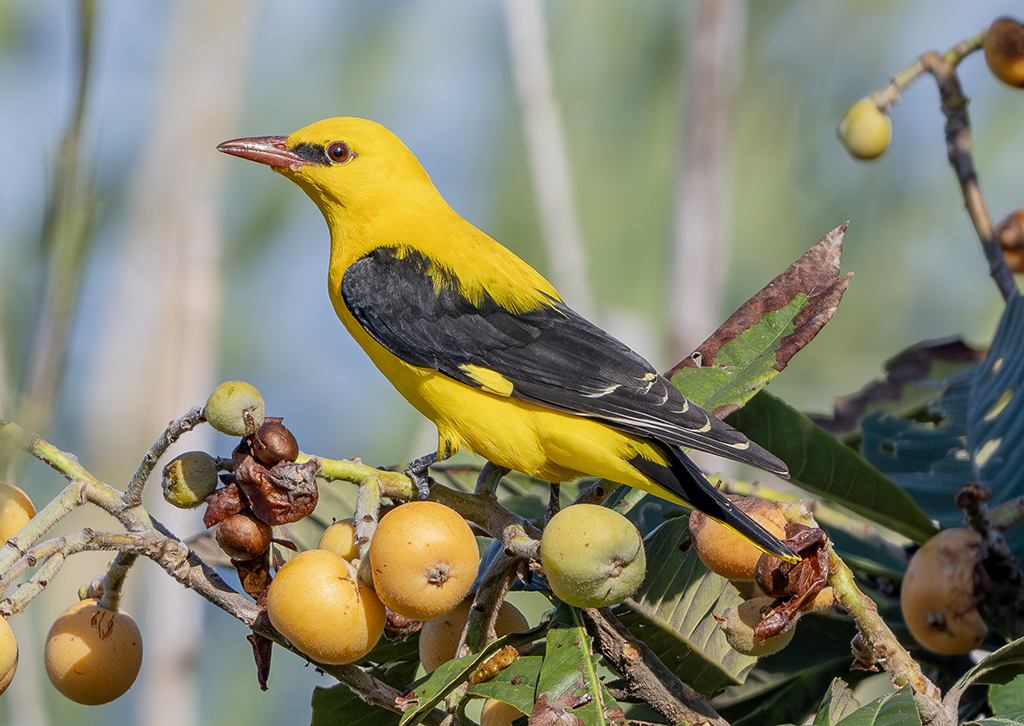 Passerines
Passeriformes
21 species
Orioles Oriolidae 1 · Shrikes Laniidae 1 · Crows and jays Corvidae 2 · Tits Paridae 2 · Larks Alaudidae 1 · Reed warblers Acrocephalidae 1 · Swallows and martins Hirundinidae 1 · Leaf warblers Phylloscopidae 1 · Sylvia warblers Sylviidae 1 · Wrens Troglodytidae 1 · Starlings Sturnidae 1 · Thrushes Turdidae 1 · Chats and flycatchers Muscicapidae 4 · Finches Fringillidae 2 · Buntings Emberizidae 1
Passerines
Passeriformes
21 species
Orioles Oriolidae 1 · Shrikes Laniidae 1 · Crows and jays Corvidae 2 · Tits Paridae 2 · Larks Alaudidae 1 · Reed warblers Acrocephalidae 1 · Swallows and martins Hirundinidae 1 · Leaf warblers Phylloscopidae 1 · Sylvia warblers Sylviidae 1 · Wrens Troglodytidae 1 · Starlings Sturnidae 1 · Thrushes Turdidae 1 · Chats and flycatchers Muscicapidae 4 · Finches Fringillidae 2 · Buntings Emberizidae 1
-
-
-
-
-




Source of the arrangement: Arrangement and sequence follow the family-level genome tree of the B10K project. Stiller et al. 2024, Nature 629, 851–860 (B10K)
About this site
Birds of Europe is an educational site about the birds of the European continent, made for people who want to go beyond a first identification. It is deliberately lightweight: static HTML, no trackers, no cookies.