All species › Waders, gulls and terns › Sandpipers and snipes › Marsh sandpiper
Marsh sandpiper
Tringa stagnatilis | Poelruiter | Archibebe fino
A Greenshank drawn out and refined: longer legs still, a needle for a bill and a head that looks a size too small. In north-west Europe it is a scarce but annual passage migrant, most often picked out among Greenshanks on shallow-flooded ground in May and again from midsummer onwards.

Voice
A sharp, high kyew, often given singly and sometimes in a rapid series of two or three: kyew-yew-yew. It is a shortened, thinner version of the Greenshank's call, less full and more hurried, with a faintly plaintive edge. Over the breeding marsh the song flight carries a persistent, yodelling tu-lee tu-lee. In western Europe you will hear only the flight call, and on a bird passing overhead it is the best character there is.
No freely licensed recording is available for this species yet.
Identification
At 22–26 cm it is markedly slender, with a needle-fine, dead straight dark bill on a small rounded head. The legs are long and olive to yellow-green, with a strikingly long bare tibia. In winter plumage it is exceptionally pale — white forehead and face, plain light grey upperparts, gleaming white underparts — so that it shines out at distance. In breeding plumage the mantle and scapulars are silver-grey blotched with black and the flanks are streaked. In flight it shows a long white wedge running well up the back, an almost unbarred white tail and toes projecting a third of the foot beyond the tail tip.
Confusion species
Greenshank is the first test: much larger at 30–35 cm, with a heavy, obviously upturned bill with a grey base, a thicker neck and grey-green legs, and a loud, hard call of three even notes. Marsh Sandpiper is finer in every dimension, with a straight needle of a bill and a thin neck, and sounds higher and more hurried. Redshank separates at once on orange-red legs and bill base and the broad white trailing edge to the wing. Lesser Yellowlegs is the awkward one: canary-yellow legs rather than olive-green, a slightly stouter bill and, above all, a square white rump with a clearly barred tail instead of the long white back wedge and near-plain white tail of Marsh Sandpiper.
Habitat
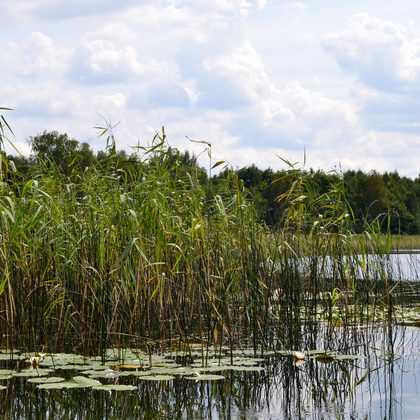
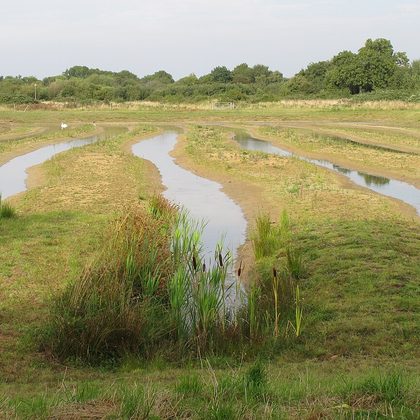
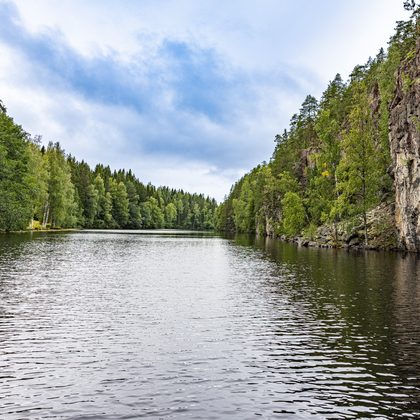
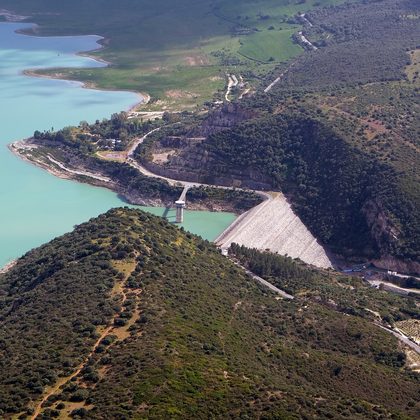
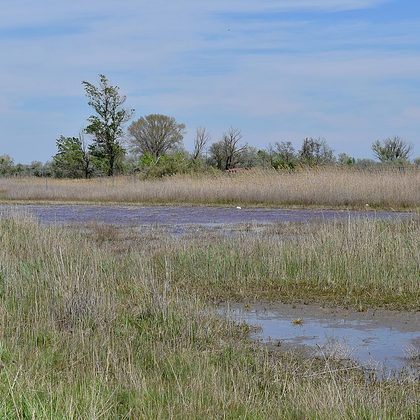
Shallow fresh and brackish water with a soft muddy edge: flooded grassland, coastal borrow pits, clay pits, saltmarsh pans, sewage lagoons and silting margins. It feeds wading in a few centimetres of water, picking quickly from the surface and moving with conspicuously long strides. It breeds in wet, herb-rich grassland and overgrowing marshes around steppe lakes, often in loose company with other waders.
Where the bird is most at home, classified with EUNIS — the European standard for habitats.
Range and movements
Breeds in eastern Europe and across the Asian steppe belt: from Belarus, Ukraine, Poland and the Baltic states, with small and fluctuating numbers in Finland, east to central Siberia, and winters in Africa, southern Asia and Australia. In western Europe it is a scarce passage migrant, and records in Britain, Ireland and the Low Countries rose steeply through the later twentieth century as the breeding range pushed west.
- Breeding (summer)
- Winter
- Passage
- Migration direction
- dark = core range, pale = thinly spread
Where and when to look
Look in May, and again from mid-July to late August, on shallow floods and coastal pools holding Greenshanks; a Marsh Sandpiper is usually among them, betrayed by its smaller size, paler look and thread of a bill. Watch the leg colour and the feeding action: where a Greenshank chases fish, a Marsh Sandpiper picks calmly from the surface. When it flies, the back wedge and the projecting toes settle it.
Conservation status
Least Concern, with by far the largest share of the population in Russia and Kazakhstan. The European breeding population is small and fluctuates strongly; drainage of steppe lakes and wet grassland, conversion to arable and drought on the breeding grounds are the main concerns. Numbers on passage in western Europe have if anything increased since the 1980s.