All species › Pelicans, herons and ibises › Herons and bitterns › Squacco heron
Squacco heron
Ardeola ralloides | Ralreiger | Garcilla cangrejera
The Squacco Heron is a small, thickset heron that is easy to overlook when perched: a buff-brown bird crouched low among the reeds with its neck drawn in. The moment it takes off it opens into an almost white bird, and that contrast makes it unmistakable. In Spain it is an ordinary summer bird of the marshes; further north it stays a rarity.

Voice
Silent away from the colony. When flushed it gives a short, hoarse kek or karr, and at colonies a low rattling ka-ka-ka among the grunting of other herons. Most vocal at dusk, when the birds fly out to a communal roost.
No freely licensed recording is available for this species yet.
Identification
Small and compact, with short legs, a thick neck and a heavy head. A perched bird is ochre-buff, with a finely dark-streaked crown and, in the breeding season, long black-edged nape plumes hanging loosely over the back. The bill is blue-grey with a black tip when breeding and greenish-yellow with a dark tip at other times; the legs are greenish-yellow and flush pink-red in display. Once it flies, the wings, rump and tail prove to be pure white, so that the airborne bird looks almost entirely white with only the back and crown still brown. Juveniles are duller and more heavily streaked and show some dark in the primaries.
Confusion species
Cattle Egret is white in every plumage and has a short yellow bill with an obvious jowl; it walks in grass among livestock while the Squacco stays at the water's edge. Little Bittern is clearly smaller and slimmer, the male with black upperparts and a large pale wing panel, and its flight is fluttering rather than steady. Juvenile Night Heron is bigger and colder grey-brown, spotted with white drops, and shows no white in the wing in flight. In the eastern Mediterranean an Indian Pond Heron has very occasionally been recorded; in breeding plumage it has a chestnut back against a white neck rather than the even buff of our species.
Habitat
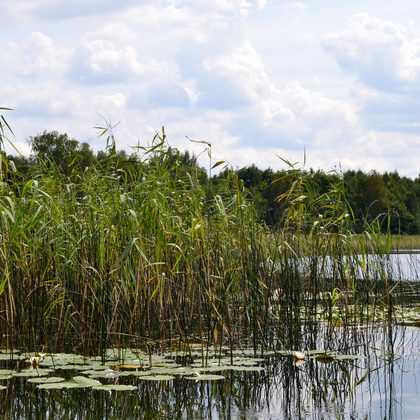
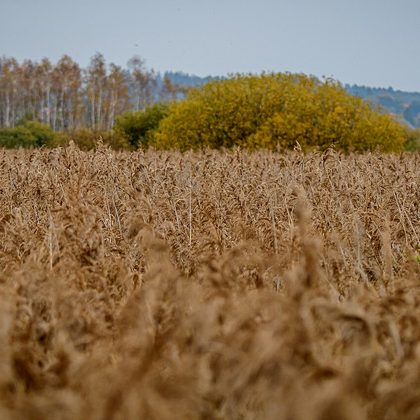
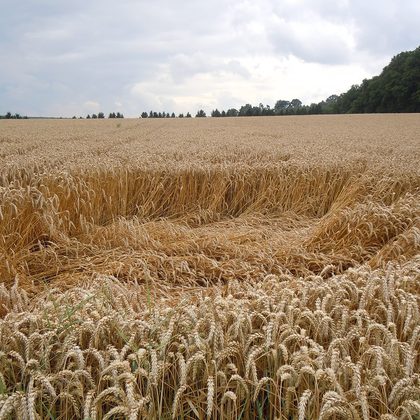
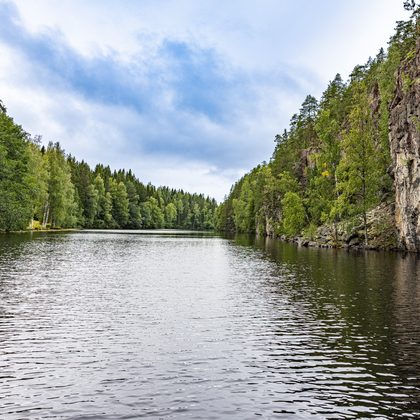
Densely vegetated freshwater marsh: reed fringes, stands of bulrush and thick bankside cover along lagoons, canals and shallow pools, and above all rice fields and irrigation ditches. It hunts by waiting and stalking, half hidden among the stems, taking water insects, frogs, crayfish and small fish, and rarely ventures far onto open mud.
Where the bird is most at home, classified with EUNIS — the European standard for habitats.
Range and movements
A breeding bird of the large Mediterranean wetlands. Spanish strongholds are Doñana and the Guadalquivir marismas, the Ebro Delta, the Albufera of Valencia and scattered pools in Extremadura; eastwards it is numerous in the Danube Delta, Greece and Turkey. Birds arrive in April and leave for the Sahel in September. In Britain it is a rare vagrant of a handful of records a year, mostly in May and June, and a single bird may stay for weeks at one reedy pool.
- Resident
- Breeding (summer)
- Winter
- Passage
- Migration direction
- dark = core range, pale = thinly spread
Where and when to look
In May or June, drive the rice fields and irrigation canals of the Ebro Delta or the tracks around El Rocío and work the reed edges in the first hour after sunrise; the birds are still out in the open before the sun climbs. Watch above all for low, almost white birds skimming briefly over the reeds and dropping in again: that is usually the first you see of a Squacco Heron.
Conservation status
Not globally threatened (IUCN: Least Concern). In Europe the species has recovered from a low point in the twentieth century thanks to protection of the large marshes, but it is still on the Spanish list of threatened species because nearly the whole breeding population sits in a handful of sites. Drought, water abstraction from the marismas and the clearing of reed fringes along ditches are the main threats.