All species › Waders, gulls and terns › Sandpipers and snipes › Terek sandpiper
Terek sandpiper
Xenus cinereus | Terekruiter | Andarríos del Terek
Low-slung, long-bodied and carrying a bill that visibly sweeps upward: the Terek Sandpiper is the only small European wader with that profile. It runs about the mud in busy bursts, bobs its rear like a Common Sandpiper and feeds with quick darting stabs.

Voice
A clear, slightly fluty and gently descending tee-lee-lee, repeated three to five times, usually on take-off. Song only on the breeding grounds: a series of rising trills from a post or in display flight. A migrant on an estuary quite often announces itself with the flight call before it is picked up in the scope.
No freely licensed recording is available for this species yet.
Identification
A grey, long-bodied wader on short orange-yellow legs, with a long upcurved bill that has a yellow to orange base and a black tip. The upperparts are plain grey, in breeding plumage crossed by two black scapular stripes; the underparts are white with a greyish breast. In flight it shows a broad white trailing edge to the secondaries and a dark bar across the bend of the wing. It walks crouched and fast, with the rear end bobbing continuously.
Confusion species
The upcurved bill combined with short orange-yellow legs is where the identification rests; no other European wader of this size has both. Redshank also shows a white trailing edge to the wing, but is larger, longer in the leg, with a straight red-based bill, bright red legs and a long white wedge up the back. Bar-tailed Godwit also has a slightly upswept bill but is far bigger, far longer legged and lacks the white trailing edge. Common Sandpiper shares the bobbing rear end but is brown, with a straight dark bill and a white wedge in front of the wing. Grey Phalarope spins on the water instead of running. If the bird is resting and the bill is hidden, read the low, elongated shape on short legs and the plain grey upperparts, and wait for it to move.
Habitat
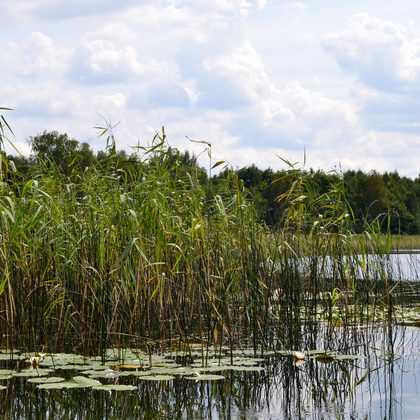
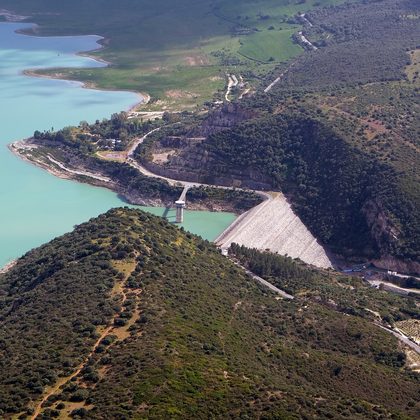
Tidal mudflats and estuary creeks, saltmarsh channels, brackish lagoons and saltpans, and also muddy margins of coastal freshwater pools. It prefers soft wet mud close to the waterline and follows the ebb outwards. Breeds along sandy river banks and wet meadows in the boreal zone, from Finland east through Siberia.
Where the bird is most at home, classified with EUNIS — the European standard for habitats.


Range and movements
Breeds in Finland, the Baltic states and eastwards across Russia, and winters on the coasts of Africa, southern Asia and Australia. In western Europe it is a rare but near-annual passage migrant. Britain has several hundred records since the first in East Sussex in 1951, most in late spring and midsummer, and the Netherlands has built up a few dozen. Numbers rose between 1980 and 2010 alongside a westward spread of the breeding range and have been fairly steady since.
- Breeding (summer)
- Winter
- Passage
- Migration direction
- dark = core range, pale = thinly spread
Where and when to look
Take a mudflat or a saltmarsh creek on a falling tide in late May or in July and scan the loose parties of Redshank and Dunlin at the water's edge. Look for a lower, greyer bird that runs noticeably faster than everything around it; the bill often registers only when it lifts its head.
Conservation status
Not globally threatened, but the small European breeding population in Finland and the Baltic states is vulnerable and declining as river banks are fixed, flooded meadows disappear and sandbanks are disturbed. Along the flyway the much larger Siberian population is squeezed by the loss of intertidal flats in East Asia.