All species › Waders, gulls and terns › Sandpipers and snipes › Western sandpiper
Western sandpiper
Calidris mauri | Alaskastrandloper | Correlimos de Alaska
The rarest of the American peeps in Europe, and the one most likely to be claimed in error. Look for a stint with a long, deep-based bill that droops towards the tip, and in breeding plumage a run of rufous scapulars along the folded wing.

Voice
The flight call is a thin, high, slightly rasping jeet, drawn out and more piercing than the low, hoarse chert of Semipalmated Sandpiper and sharper than the short dry tit of Little Stint. Birds call as they flush and while manoeuvring in the flock. Record it if you possibly can: on a claim that otherwise rests on scapular fringes and a few millimetres of bill, a sound file is often what carries the record through committee.
Recording: Vladimir Yu. Arkhipov (Arkhivov) — CC BY-SA 3.0 · Wikimedia Commons
Identification
A shade bigger and longer-legged in feel than Little Stint, with a bill that is thick at the base and clearly decurved towards the tip; females are the longest-billed, males the shortest. Legs black, with small webs between the front toes. Breeding adults show rufous on crown, ear-coverts and above all the scapulars, which carry black anchor centres, and arrowhead marks running well down the flanks. Juveniles have bright rufous-fringed upper scapulars set against plain grey lower scapulars and coverts, with a clean white breast. Winter birds are plain grey above, white below, and then the bill shape carries the identification. The wing tips reach the tail tip and no further.
Confusion species
Everything turns on Semipalmated Sandpiper. That species has a shorter, straighter, blunt-tipped bill with no droop, lacks rufous scapulars, and looks evenly grey-brown and scaly as a juvenile. Long-billed eastern female Semipalmateds overlap with short-billed male Westerns, so bill length alone settles nothing: it has to be read together with plumage, and the Irish Rare Birds Committee struck both its historic records precisely because that combination was never documented. Both species show webs between the toes, visible on a bird walking through shallow water or lifting off, and that separates the pair at once from Least Sandpiper and Red-necked Stint, which have unwebbed toes. Least Sandpiper has yellow to yellow-green legs, a finer and slightly decurved bill, browner and more heavily streaked plumage and a complete streaked breast band; every other species here has black legs. Red-necked Stint is shorter-billed and longer-winged, its primaries projecting clearly past the tail, and in summer shows an unmarked brick-red throat bordered below by a necklace of streaks, where Western carries its rufous on crown, ear-coverts and scapulars and marks the breast and flanks with arrowheads. Little Stint, the species you are picking through, has a short straight fine-tipped bill, no toe webs, bright white mantle braces as a juvenile and a split supercilium. Temminck's Stint drops out on yellow-olive legs, an even grey breast, white outer tail feathers and its creeping gait. Finally, always measure the bird against Dunlin: bigger, longer-billed, with a finely streaked grey breast in winter, but a distant juvenile Dunlin remains the classic trap.
Habitat
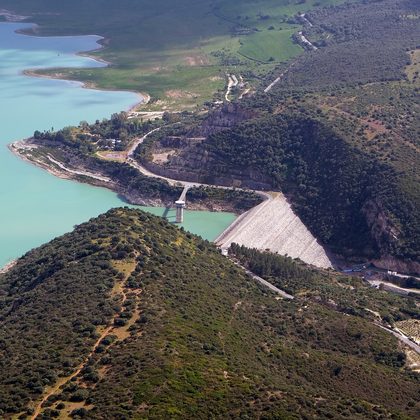
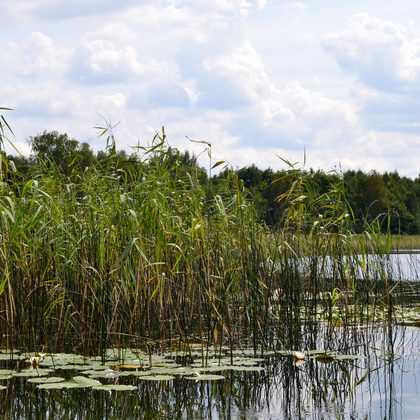
In Europe on estuarine mud, sandy shores, brackish lagoons, saltpans and the drying margins of reservoirs and wader pools, almost always among Dunlin and Little Stints. Feeds by pecking and shallow probing in soft mud and grazes the biofilm on the surface layer. Breeds on dry dwarf-shrub tundra ridges in Chukotka and western Alaska, close to the wet hollows where broods are raised.
Where the bird is most at home, classified with EUNIS — the European standard for habitats.


Range and movements
Breeds in north-east Siberia and western Alaska and winters along both American coasts, from California and the Gulf south to Peru and Surinam. Britain and Ireland share fewer than fifteen accepted records, the first on the Isles of Scilly in 1969, and Ireland currently stands at none: both pre-1988 claims, from Kilcoole in 1960 and Akeragh Lough in 1961, were rejected on review when the field criteria tightened. Records cluster from mid July to late November, with a scatter of wintering birds. The Netherlands has two, both in Friesland in August, and Spain four, in Galicia and on Tenerife.
Where and when to look
September is the month, and estuaries with a regular Dunlin roost are the place: the Wash, the Solway, the Ribble, Cork Harbour, and any Irish coastal lagoon that already holds Nearctic waders. Set up on the roost well before high water and go through the flock bird by bird, watching for a stint whose bill is too long and dips at the tip. Get low, wait for it to wade, and try for the toe webs. Photograph everything, including the bad frames, and stay with the bird until it calls.
Conservation status
Least Concern, with a population in the millions, but one that concentrates at a handful of sites on migration. Several million gather on the Copper River Delta in Alaska in May, which leaves the species exposed to oil spills, disturbance and loss of intertidal flats. Because these birds depend heavily on intertidal biofilm, dredging, coastal hardening and sea-level rise all bear directly on their food supply.