All species › Passerines › Cuckooshrikes › Black-faced Cuckooshrike
Black-faced Cuckooshrike | Coracina novaehollandiae
Australische rupsvogel | Oruguero carinegro
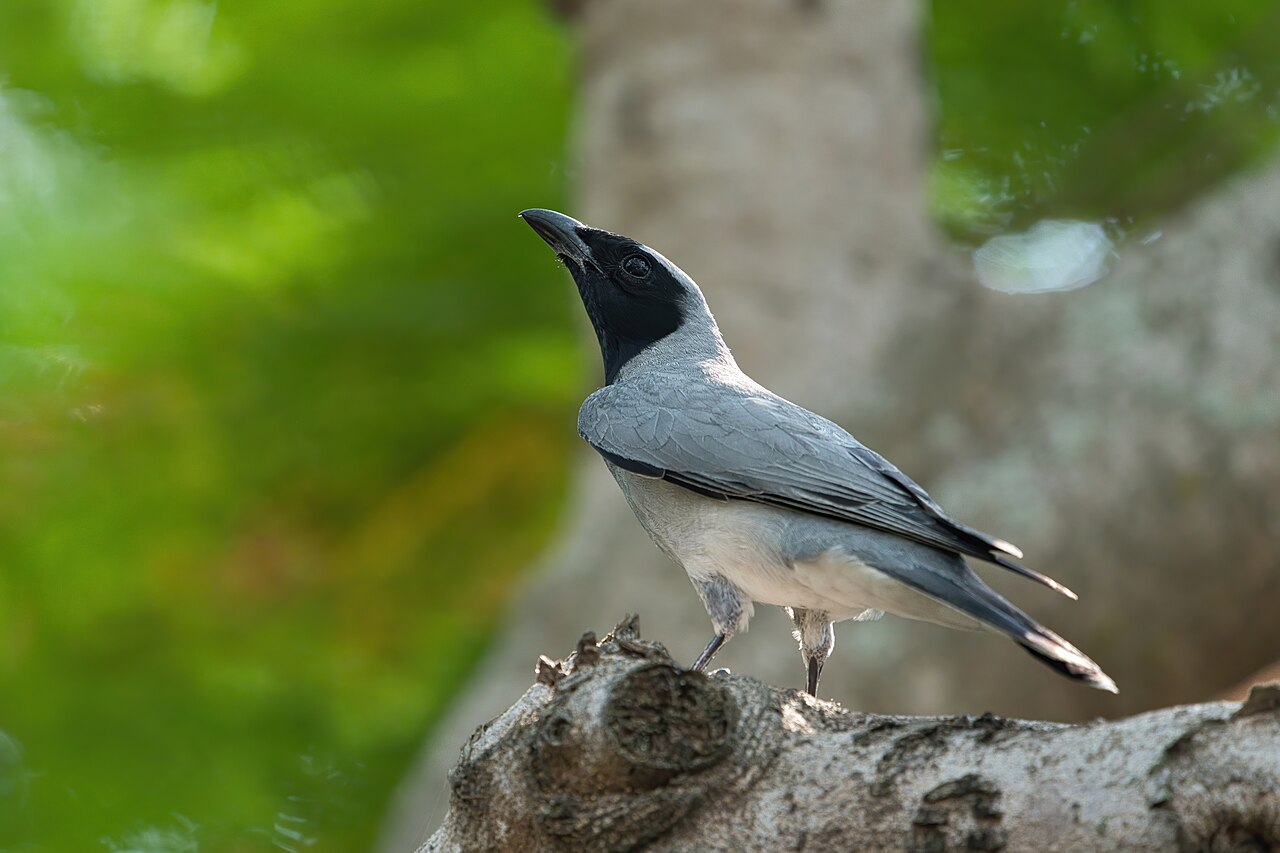
The Black-faced Cuckooshrike is the slim blue-grey bird with the black face mask that sits on telephone wires and television aerials right across Australia. On landing it shuffles its wings over each other a few deliberate times before folding them — the habit that earned it the name Shufflewing and that identifies it at any distance.
Voice
The ordinary call is a rolling, creaking cree-aark, half churr and half rasp, often given in flight and carrying across a whole paddock. There is also a softer sustained churring between partners and a sharp note at the changeover on the nest. Travelling parties call to each other constantly on the wing.
No freely licensed recording has been found for this species yet; what to listen for is described below.
Identification
A slender bird of 32 to 34 centimetres, blue-grey on back, wings and tail, white on belly and undertail, with a black mask covering both face and throat. The wings are long and pointed, the tail long and white-tipped; the flight is undulating with short glides. Sexes are alike. Young birds lack the full mask and show only a black eye stripe.
Confusion species
White-bellied Cuckooshrike (Coracina papuensis) is smaller at 26 to 28 centimetres and its black is confined to the face: the throat is white. Sahul Cicadabird (Edolisoma tenuirostre) is smaller and plain blue-grey without a sharp mask, with an insect-like call. Barred Cuckooshrike (C. lineata) has a yellow eye and barred underparts. Ground Cuckooshrike walks on the ground and has a pale head.
Habitat
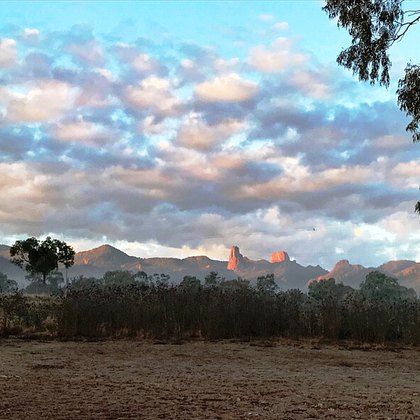
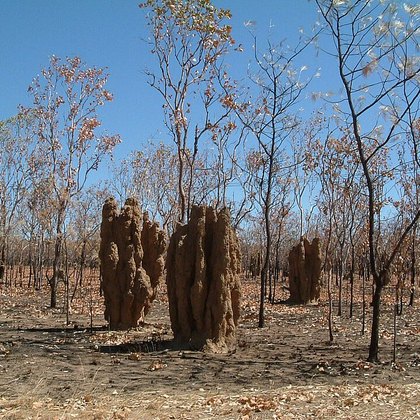
Almost any wooded country except closed rainforest: dry eucalypt woodland, eucalypt savanna, river red gum along creeks, mallee, farmland with scattered trees, and gardens, parks and country streets. It forages in the canopy, in the air and on the ground, and likes a wire or a dead branch with a clear view.
Where the bird is most often found, arranged by main group and formation.


Range and movements
All of Australia including Tasmania, plus southern New Guinea; three subspecies. AviList keeps the Australian bird as Coracina novaehollandiae — the Asian relatives stand as separate species. Part of the southern breeding population moves north in autumn and returns in August and September; outside the breeding season wandering flocks of up to a hundred birds form.
- Resident
- Breeding (summer)
- dark = core range, pale = thinly spread
Where and when to look
Watch every landing for the wing shuffle: no other bird of this size does it, and it settles the identification even against the light. In March and April drive a country road and look for loose parties drifting north in undulating flight. The nest is remarkably small — a shallow saucer of sticks and bark bound with cobweb on a horizontal fork.
Conservation
Least Concern (LC). The species is widespread and numerous, and because it takes open farmland with scattered trees and planted suburbs in its stride, clearing has done it little harm. It eats large numbers of caterpillars, hairy ones included, that other birds leave alone. Locally, the loss of old paddock trees and the use of insecticides cost breeding pairs.
Scientific name
Coracina novaehollandiae | (Gmelin, 1789)
Gmelin described the species in 1789 as Turdus novaehollandiae, among the thrushes, after Latham's 'New Holland thrush' of 1783; the later move puts author and year in parentheses. The genus Coracina was introduced by Vieillot in 1816, from Greek korakinos, 'raven-like', from korax, 'raven'. novaehollandiae means 'of New Holland', the old name for Australia.