All species › Cranes, rails and allies › Rails, gallinules and coots › Eurasian Coot
Eurasian Coot | Fulica atra
Meerkoet | Focha común
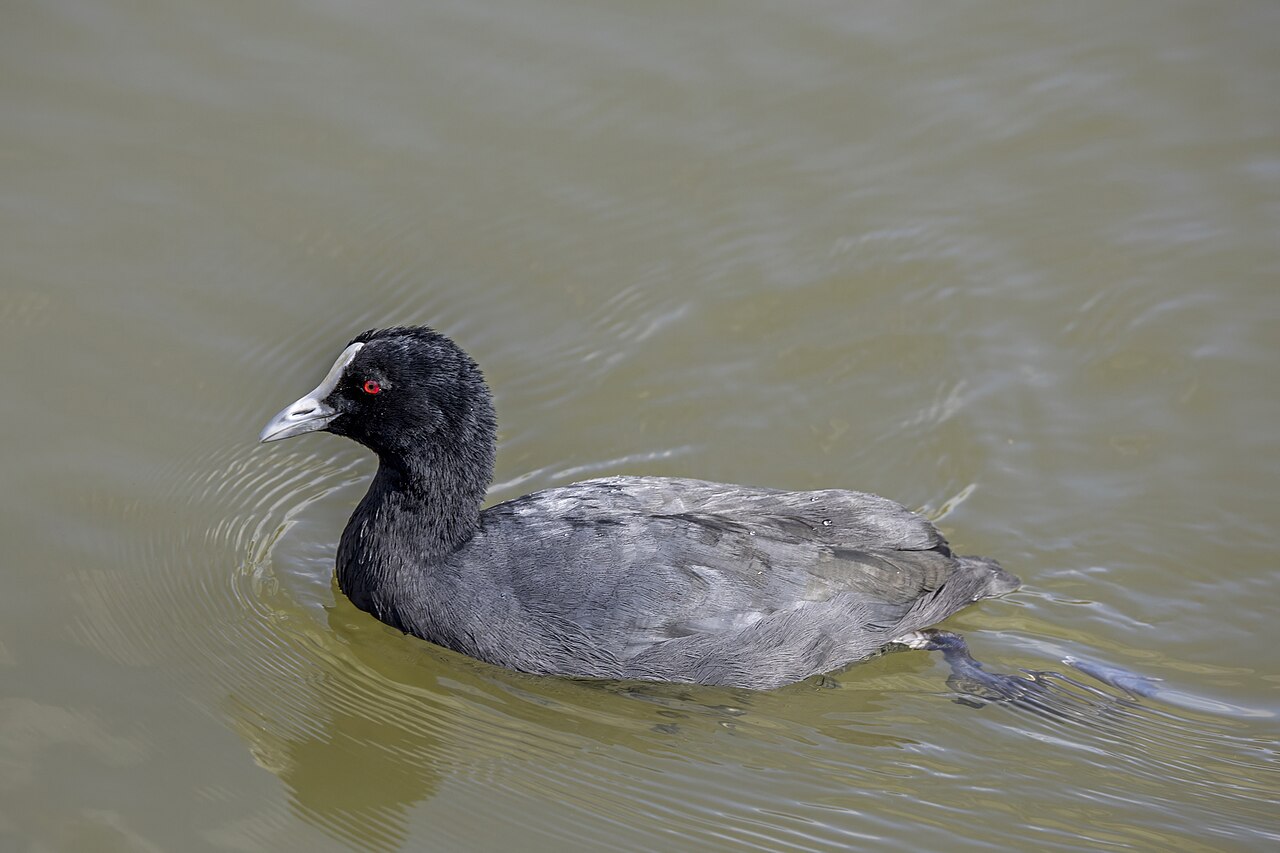
The Eurasian Coot is the round, sooty-black waterbird with the snow-white frontal shield, and one of the few birds this guide shares with the European one: the same species, represented here by the subspecies australis. It dives for water plants, squabbles loudly with anything that comes too close, and reached New Zealand under its own power, first breeding there in 1958.
Voice
The usual call is a loud, hard, faintly discordant kowk or krark, thrown across the water between scattered birds and easily heard from a lake at night. In a quarrel it runs into a rapid series of sharp barking cries. Young beg with a persistent squeaking whistle that keeps going from the reed edge as long as the parents are near.
Recording: Joost van Bruggen — CC BY-SA 4.0 · Arnhem, Arnhem, Gelderland, Netherlands · xeno-canto
Identification
A round, stocky waterbird of 32 to 39 cm, wholly sooty black to dark grey, the head blacker than the rest. Bill and frontal shield are clean white and settle the identification at any range; the eye is deep red. The toes carry lobed webs, visible when the bird walks ashore. To take off it first patters clattering across the water. Young birds are greyer with a white throat and a dull shield; downy chicks have a bald orange-red head.
Confusion species
Dusky Moorhen (Gallinula tenebrosa) swims the same water and is just as dark, but has a red shield, a red bill with a yellow tip and white patches under the tail. Purple Swamphen (Porphyrio porphyrio) is much larger and blue. Australasian Grebe (Tachybaptus novaehollandiae) also dives, but is half the size, sharp-billed and sits far lower in the water. In flight the coot shows a white trailing edge to the wing.
Habitat
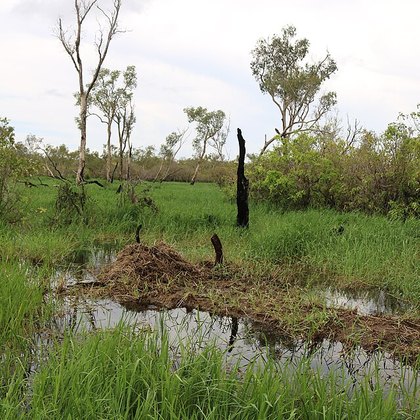
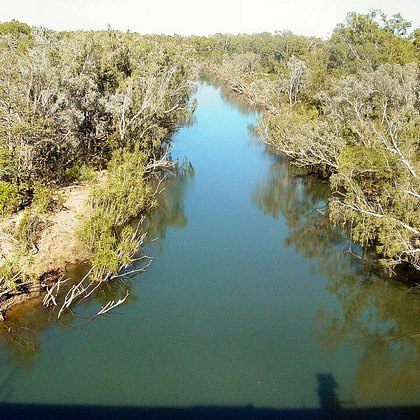
Open fresh water with vegetated margins: lakes, reservoirs, crater lakes, lagoons, slow river reaches and sewage ponds, and in town any park or golf course pond deep enough to dive in. It needs room to dive and reed or rush to nest in; the nest is a floating mound of plant material anchored to the reed edge. Outside the breeding season it also grazes on lawns and banks close to the water.
Where the bird is most often found, arranged by main group and formation.


Range and movements
In Australia across the south and east and scattered inland wherever permanent water stands; in the north and the driest country it is scarce. It reached New Zealand by itself: stray birds from 1875, the first nest in 1958 at Lake Hayes in Otago, after which it spread across the lakes of both islands. Beyond that the species as a whole covers Europe, Asia, North Africa and New Guinea. In Australia it wanders with the drought.
- Resident
- dark = core range, pale = thinly spread
Where and when to look
On any large open water look for the white dot: the shield reads in harsh sun and at several hundred metres, even when the rest of the bird is a silhouette. On a lake, count the divers and time them — a coot is usually down for only ten to fifteen seconds and often surfaces trailing a strand of weed. In New Zealand the lakes of Otago and Canterbury are worth the visit; that is where the colonisation began.
Conservation
Least Concern (LC) globally. In Australia it is numerous and profits from reservoirs, sewage ponds and city lakes; in dry years large numbers pile onto whatever water is left, which makes the population look wildly variable. In New Zealand, as a recent colonist, it is still scarce — the national list rates it naturally uncommon — and there it is lake level management and the clouding of lake water that count.
Scientific name
Fulica atra | Linnaeus, 1758
Linnaeus described the species in 1758 as Fulica atra, and it remains in that genus, so author and year carry no parentheses. Fulica is the classical Latin word for a coot, which Linnaeus took over unchanged as a genus name. atra means 'black'. The type locality is Europe, later restricted to Sweden; the birds of Australia and New Zealand belong to the subspecies australis, described by Gould in 1845.