All species › Gannets and cormorants › Cormorants and shags › Great Cormorant
Great Cormorant | Phalacrocorax carbo
Aalscholver | Cormorán grande
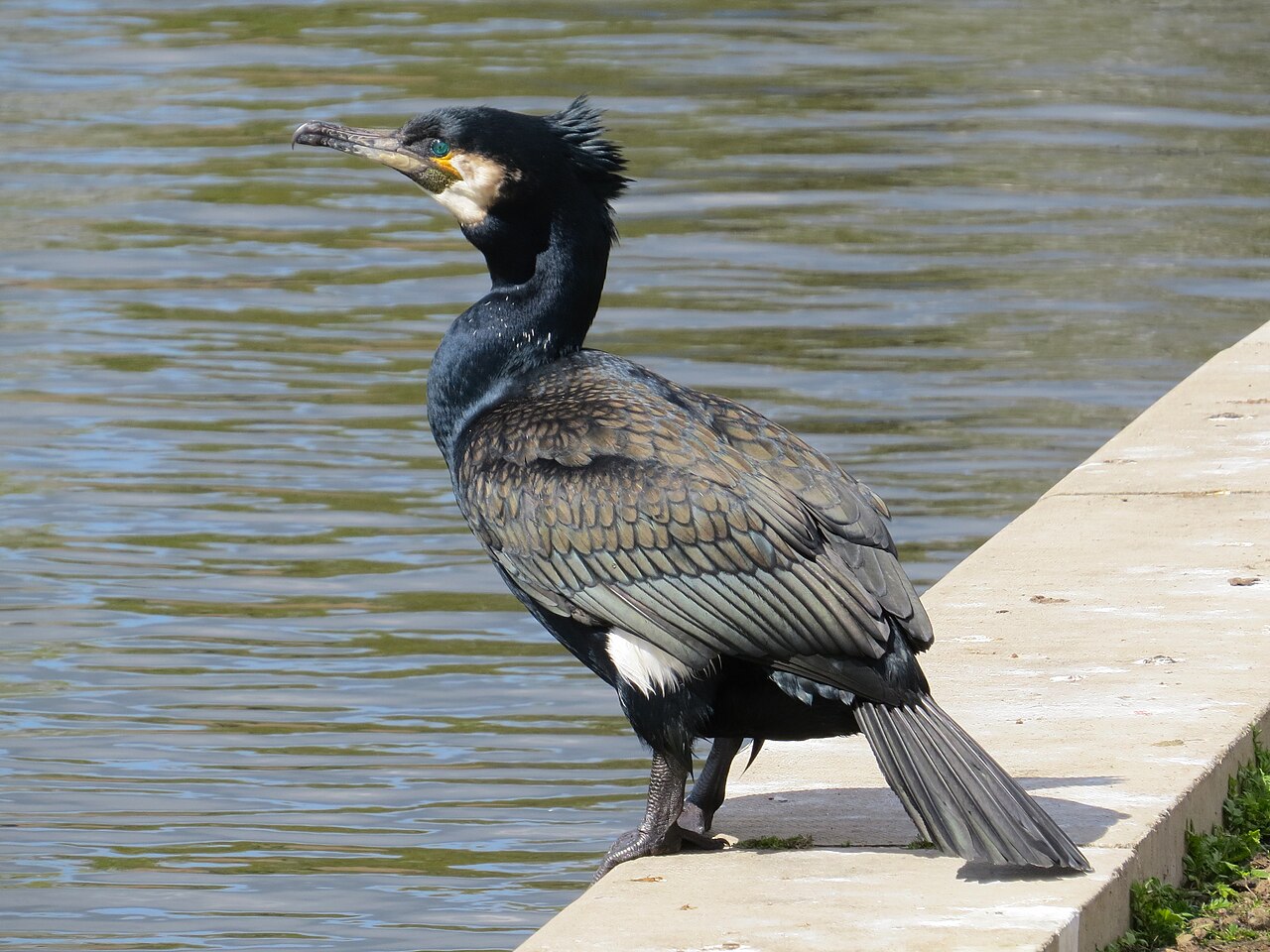
The Great Cormorant is the largest cormorant of Australia and New Zealand: a heavy, all-black bird with a thick hooked bill, yellow bare skin round the base of the bill and a white chin and cheek. It swims low, with only head and neck above water, dives with a short forward spring, and afterwards sits with wings spread to dry — the image everyone has of a cormorant.
Voice
Away from the colony it is virtually silent. At the nest, by contrast, it is strikingly noisy, with a run of low gurgling and growling notes; the male gives a loud raucous call, the female a softer husky one early in the season that comes to sound more like the male's as incubation goes on. A colony in trees above a lake therefore sounds like a continuous low rumble, with the hoarse begging of chicks over the top of it.
No freely licensed recording has been found for this species yet; what to listen for is described below.
Identification
A solid black waterbird of eighty to nearly ninety centimetres and two to over two kilos, with a thick neck, a heavy hooked bill and a long tail held flat on the water when swimming. The plumage is black with a bronze-green gloss; the wing coverts are narrowly edged black, giving a scaled pattern. Yellow bare skin surrounds the base of the bill, with a white chin and white cheek feathering below it; the eye is grey-green. In breeding plumage a white thigh patch is added, along with a small black crest and fine white filoplumes over head and neck, and the facial skin turns orange-red. Young birds are dull brown with dirty white underparts. In flight it shows a straight line held low over the water and an outstretched neck with a kink in it.
Confusion species
Little Black Cormorant (Phalacrocorax sulcirostris) is much smaller and slimmer, black throughout including chin and cheek, with a thin bill and no yellow facial skin; it also fishes in dense co-operating flocks. Australian Pied Cormorant (Phalacrocorax varius) is pied, with white underparts and orange skin in front of the eye. Black-faced Cormorant (Phalacrocorax fuscescens) is likewise pied and has a wholly black bare face. Young Pied Cormorants are the real difficulty: they are paler on the head and show less extensive yellow facial skin than young Great Cormorants, which are darker-headed.
Habitat
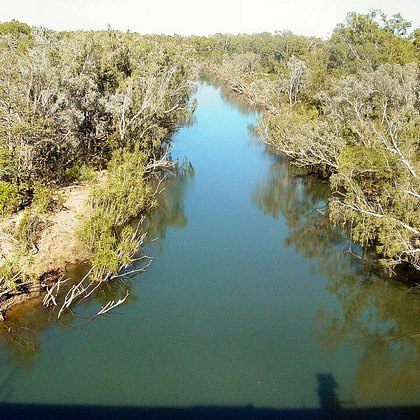
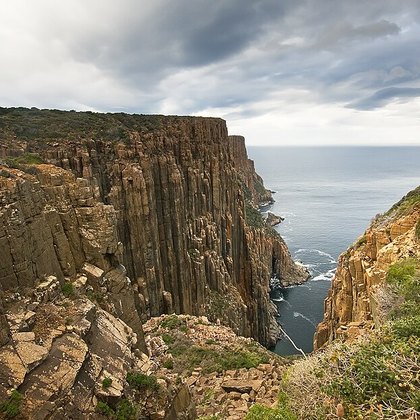
Fresh and salt water alike: big rivers, lakes and reservoirs far inland, but also estuaries, harbours and sheltered bays. It nests colonially in dead or living trees over water, in mangrove, on cliff ledges and on man-made structures such as jetties and pylons, and roosts on posts, buoys and rock stacks. In New Zealand it uses water up into the subalpine zone.
Where the bird is most often found, arranged by main group and formation.


Range and movements
In Australia it is widespread across the whole continent, on the big river systems of the Murray-Darling basin, the coastal lakes and the estuaries, with the highest numbers in the south-east and, in wet years, far inland as well. In New Zealand it is widespread but thinly spread, from Northland to Stewart Island, including many offshore islands and the Chathams; the population there was put at five to ten thousand mature birds in 2012.
- Resident
- dark = core range, pale = thinly spread
Where and when to look
Put binoculars on the chin of every black cormorant on a post or in a tree: a white patch with yellow skin above it makes it this species, an all-black head makes it Little Black Cormorant. On an Australian reservoir or a New Zealand river mouth it is easiest to find in the late morning, when the birds spread their wings in the sun on a branch or a sandbar after fishing.
Conservation
Least Concern (LC): the species occurs across four continents and the Australian population is large and resilient. New Zealand is different — there it is classed as 'Relict', with a population that never recovered to its old level after a century of persecution as a supposed competitor of sport fisheries. Present pressures are disturbance of colonies, drowning in gillnets and fyke nets, and the drying out of inland wetlands in Australia through water extraction and drought.
Scientific name
Phalacrocorax carbo | (Linnaeus, 1758)
Linnaeus described the species in 1758 as Pelecanus Carbo; because it has moved to another genus, author and year are in parentheses. The type locality was at first simply 'Europe' and was restricted in 1920 by Hartert to the rock-nesting form of the North Atlantic. The genus Phalacrocorax was set up by Brisson in 1760 — Greek for 'bald raven', after the bare skin round the bill. carbo is Latin for 'charcoal', after the wholly black colour. The birds of Australia and New Zealand belong to the subspecies novaehollandiae; the Maori name is mapunga or kawau.