All species › Cuckoos › Cuckoos › Long-tailed Koel
Long-tailed Koel | Urodynamis taitensis
Langstaartkoël | Koel colilargo
The koekoea or Long-tailed Koel is the only cuckoo in the world that breeds solely in New Zealand and then leaves across thousands of kilometres of open ocean for the islands of the South Pacific. A large brown bird with a tail as long as its body, heard far more often than seen: a piercing shriek over the forest, often in the middle of the night.
Voice
The call is a loud, screeching rising shriek, zzhweep, that cuts the length of a valley and is usually followed by a strident rattling series, pe-pe-pe-pe-pe. It calls by day and by night, including on migration over the sea, and the sound is so penetrating that it suggests a bird of prey rather than a cuckoo. Nestlings mimic the begging call of their foster parents.
Recording: Matt Slaymaker — CC BY-NC-SA 4.0 · Westland District, West Coast, New Zealand · xeno-canto
Identification
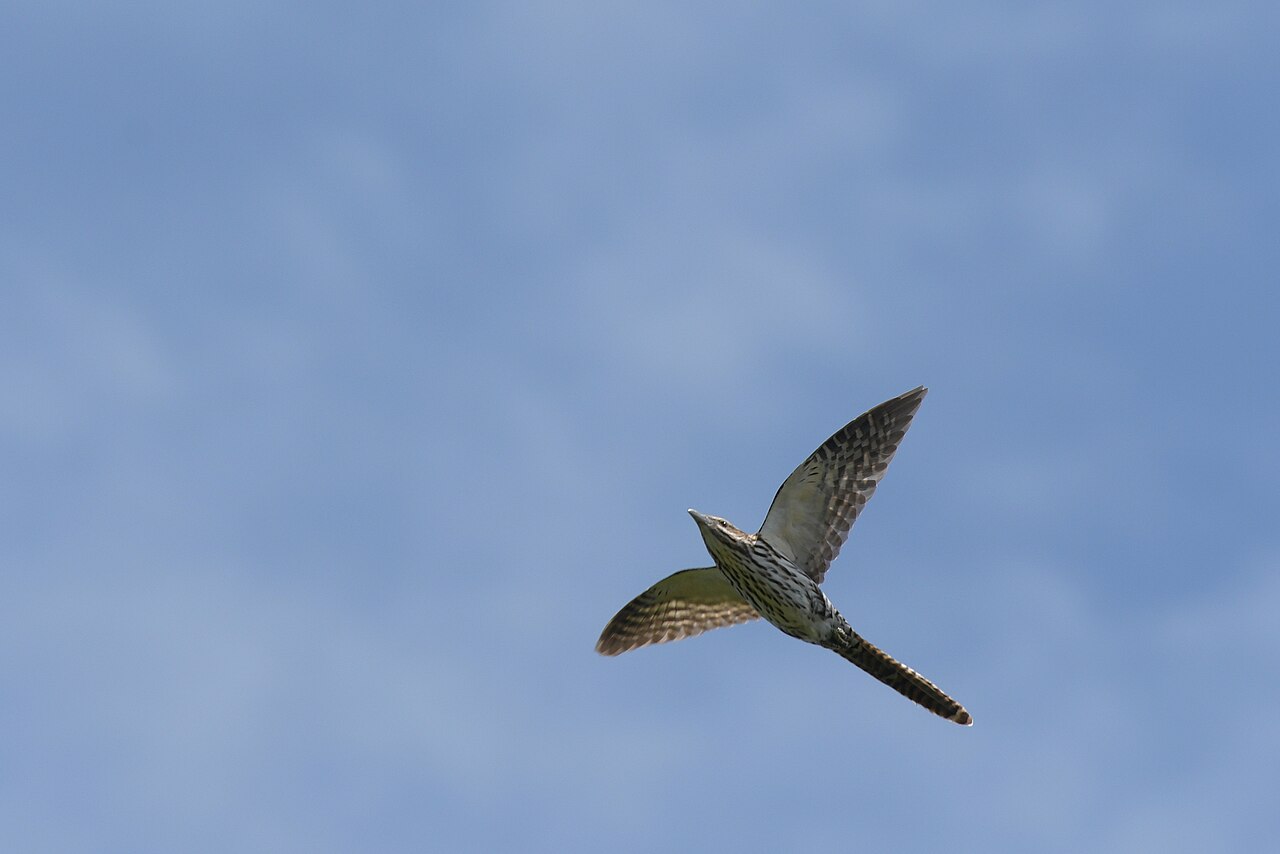
A large slim cuckoo of forty centimetres, of which nearly half is tail: a long wedge-shaped tail that governs the silhouette in flight. The upperparts are brown with fine pale barring, the underparts white with bold dark brown lengthwise streaking. The bill is pale brownish, the eye dark and the legs yellow. Juveniles are darker with cream spots instead of streaks. It often sits motionless for long spells lengthwise along a branch in the half-shade of the canopy.
Confusion species
New Zealand Falcon (Falco novaeseelandiae) is the classic mix-up: brown, streaked and long-tailed, and in silhouette over the forest similar. The falcon, though, has a shorter squarer tail, a strongly marked face with a moustache and sharply pointed wings, while the cuckoo flies on stiff shallow beats with a trailing rear end. The female Pacific Koel (Eudynamys orientalis) is the closest relative and much like koekoea in plumage, but that species breeds in Australia and is all but unknown in New Zealand; close to, the koel has fine barring below where Long-tailed Koel carries lengthwise streaks. Shining Bronze-Cuckoo (Chalcites lucidus), the other cuckoo of New Zealand, is half the size and metallic green.
Habitat
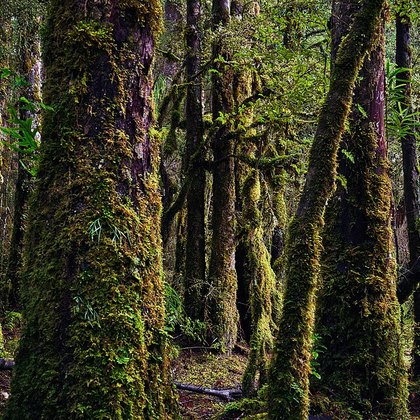
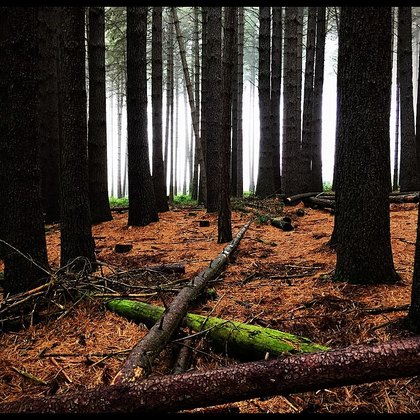
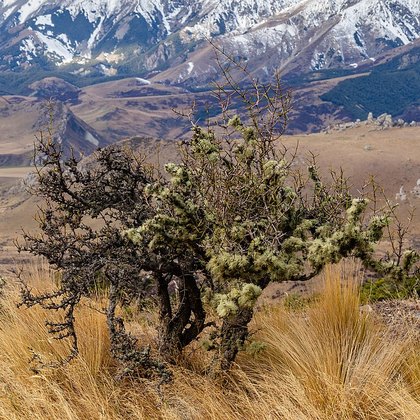
Extensive forest and scrub holding its hosts: podocarp-broadleaf forest, southern beech forest, kauri forest and their margins, but mature conifer plantations and manuka scrub are used as well so long as mohoua or other songbirds breed there. It forages high in the canopy and hunts by preference at dusk and through the night.
Where the bird is most often found, arranged by main group and formation.


Range and movements
A breeding visitor to the forested country of both main islands of New Zealand, centred from the Waikato southwards and through the South Island forests; present from September to April. Outside the breeding season the birds scatter over an enormous spread of Pacific islands, from Palau in the west far east into Polynesia. Within this map window it is a regular passage bird on Norfolk Island and an extreme rarity on the Australian mainland.
- Breeding (summer)
- dark = core range, pale = thinly spread
Where and when to look
In December or January walk the edge of old forest where Whiteheads are calling and wait for the shriek: the sound is the best and often the only trace. Then work through the side branches in the half-shade, because the bird sits still and along the length of the branch, and the long streaked rear end gives it away before the head does. Stop on a forest track at night and listen — out of season it is simply not there.
Conservation
Least Concern (LC) globally, but in the New Zealand national assessment the species counts as vulnerable. The pinch point is not the cuckoo itself but its hosts: it lays only with the mohoua — Whitehead (Mohoua albicilla) on the North Island and the two other species of the genus on the South Island — and those have fallen away badly through predation by rats and stoats. Where management brings the hosts back, the cuckoo follows; predator control across large forest tracts is therefore the only measure that works.
Scientific name
Urodynamis taitensis | (Sparrman, 1787)
Sparrman described the bird in 1787 as Cuculus taitensis; because it later moved to another genus, author and year stand in parentheses. Salvadori introduced Urodynamis in 1880, from Greek oura, 'tail', with the genus name Eudynamys: the long-tailed koel. taitensis means 'of Tahiti', because the type material came from Tahiti — the species was thus described from its wintering ground and not from the islands where it breeds. The Maori name is koekoea; the bird's arrival was the sign to plant the kumara and its departure the sign to harvest.