All species › Passerines › Australasian treecreepers › Rufous Treecreeper
Rufous Treecreeper | Climacteris rufus
Rosse kruiper | Corretroncos rufo
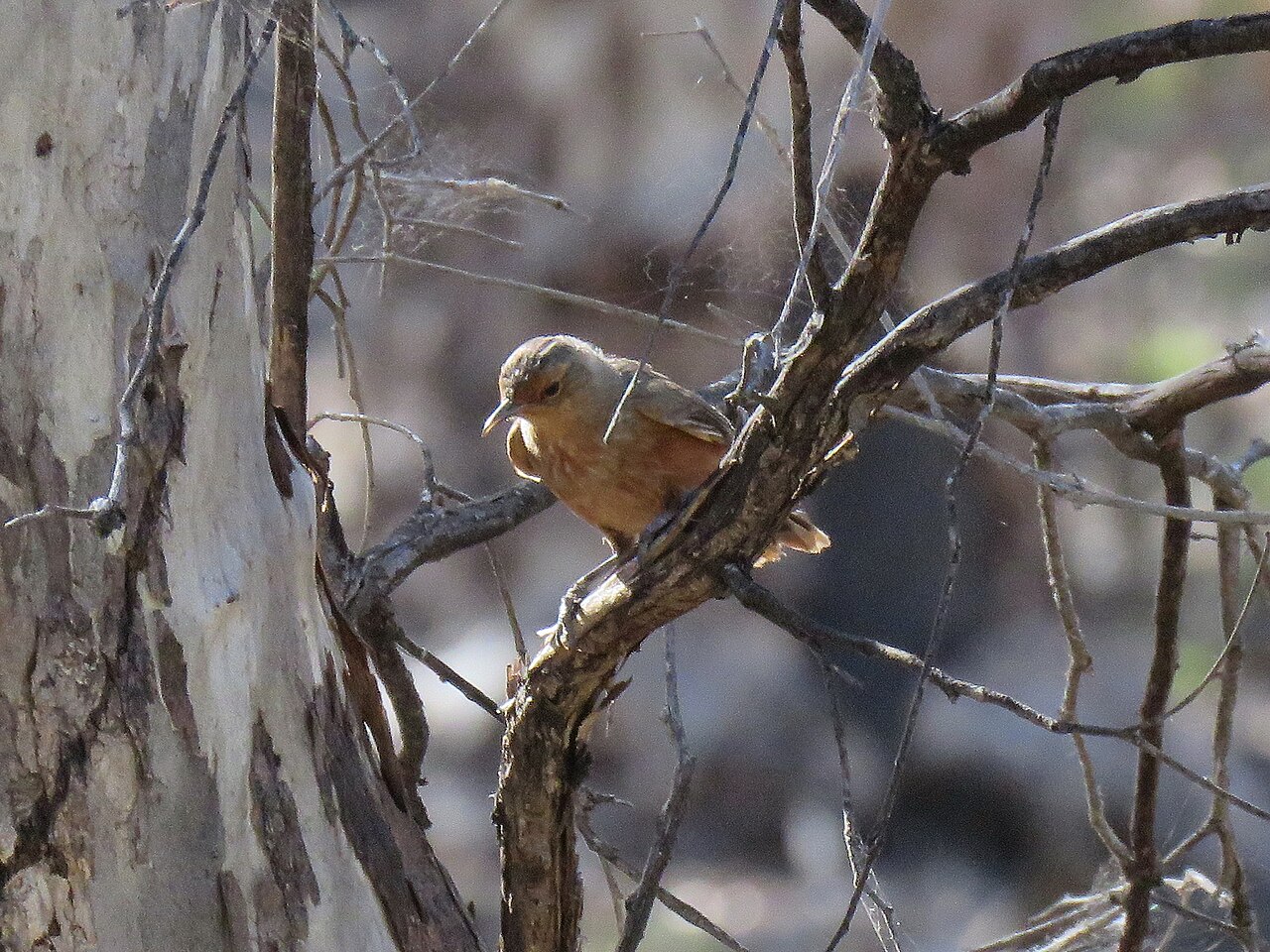
The Rufous Treecreeper is the only treecreeper of south-western Australia and at the same time the most colourful of the genus: warm rufous over face, breast and belly, with a pale rufous brow. It belongs to the wandoo and jarrah woodlands as White-throated Treecreeper belongs to the east, and it is so numerous and so little shy that in many reserves it is the first bird to show itself. This species too breeds cooperatively, with helpers that stay on with their parents.
Voice
A loud, clear series of piping notes, usually in groups of three to six, carrying far through the open woodland. There is also a rolling churr like a rattle, used in boundary disputes, and soft rapid contact squeaks within the family party. The species calls all year and is one of the easiest birds of the wandoo woodland to locate.
No freely licensed recording has been found for this species yet; what to listen for is described below.
Identification
Sixteen to eighteen centimetres, stockier and more heavily built than the other treecreepers. Crown and back are grey-brown, but face, throat, breast and belly are a warm cinnamon-rufous — a colour no other Australian treecreeper carries. The brow is pale rufous and continues behind the eye. The lower belly and undertail-coverts show heavy black-and-white streaking. The broad pale wing-bar appears only in flight. The female carries orange-rufous streaks on the sides of the throat and upper breast; in the male the breast streaking is black and white. The bird spirals up the trunk but also searches a great deal on the ground and on fallen timber, where ants and termites are the main food.
Confusion species
There is no other treecreeper within the range, so confusion arises mainly on the dry northern and eastern margins where White-browed Treecreeper (Climacteris affinis) begins: that bird is smaller, grey rather than rufous below, and has a crisp white brow. Varied Sittella (Daphoenositta chrysoptera) climbs trunks in the same woodland, but moves head-downward as readily as upward, has an upturned bill and shows a bold pale wing-flash in flight; a treecreeper always climbs up and never down. Brown Treecreeper (Climacteris picumnus) and this species approach to within a few hundred kilometres in South Australia but do not overlap; a treecreeper seen on Eyre Peninsula is this one.
Habitat
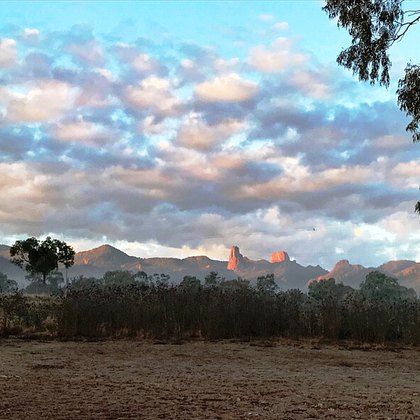
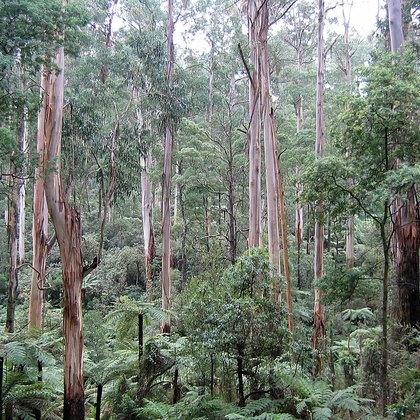
Dry eucalypt forest and woodland of wandoo, jarrah, marri and salmon gum, with a preference for old stands holding plenty of hollows and plenty of fallen dead wood; in the far south-west also the much taller, wetter karri forest. The species is not particular about the tree, but it is particular about the age of the stand: a woodland without hollow-bearing trees is unusable however close it stands to occupied ground. Reserves such as the wandoo woodland of Dryandra, where the bird has been studied intensively, show how closely density tracks the supply of hollows.
Where the bird is most often found, arranged by main group and formation.
Range and movements
South-western Western Australia, from the Murchison in the north south to the south coast, and east along the edge of the Nullarbor to Eyre Peninsula in South Australia. The continuous part of the range lies in the forest country south and west of the wheatbelt; within the wheatbelt itself the species is reduced to surviving patches and roadside strips. The Eyre Peninsula population stands apart from the western birds and is small. Sedentary, with no seasonal movement.
- Resident
- dark = core range, pale = thinly spread
Where and when to look
In wandoo woodland it pays to stand still by a group of old hollow-bearing trees and wait: the family party works through them over a quarter of an hour and repeatedly comes within a few metres. Watch the birds that are on the ground, because that is where the rufous underparts show best. The clear piping series locates the party from a distance. On the dry eastern margin, where White-browed Treecreeper begins, the colour of the underparts is the only character needed.
Conservation
Least Concern (LC). In the continuous forests of the south-west the species is common and locally numerous. Where woodland has been cleared for grain, however, it has largely gone: small remnants without old hollow-bearing trees do not hold parties, and the birds barely cross open ground. The isolated Eyre Peninsula population has declined considerably as a result and deserves separate attention. Retaining standing dead trees and fallen timber matters more for this bird than the area of woodland by itself.
Scientific name
Climacteris rufus | Gould, 1841
John Gould described the species in 1841 from Western Australian material, as Climacteris rufa; the ending later shifted with the grammatical gender assigned to Climacteris. The genus name goes back to Ancient Greek klimax ('ladder'). The epithet rufus is the Latin word for reddish-brown. The English Rufous Treecreeper, the Spanish corretroncos rufo and the Dutch rosse kruiper all follow the colour of the underparts, which in the field is indeed the first thing one notices.