All species › Passerines › Australasian treecreepers › White-throated Treecreeper
White-throated Treecreeper | Cormobates leucophaea
Witkeelkruiper | Corretroncos gorjiblanco
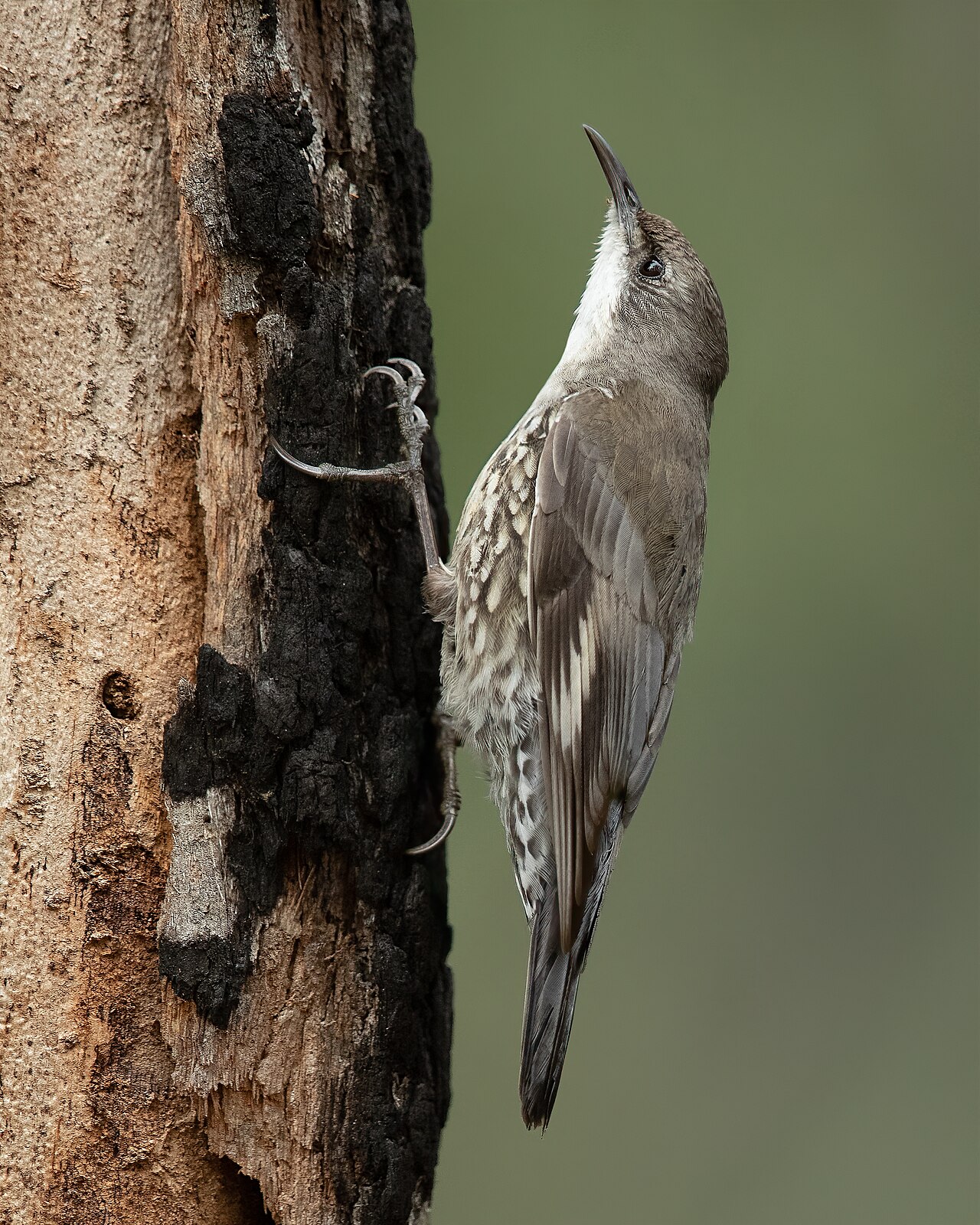
The White-throated Treecreeper is the treecreeper of the eastern forests: a dark, compact bird that works up a trunk in jerks and gives itself away by a sharply cut white throat. Of the six Australian treecreepers it is the only one that virtually never comes to the ground. It is resident and holds its territory the year round.
Voice
A loud, piercing series of even piping whistles, run off quickly and with a tremulous undertone; it is one of the most frequently heard sounds of eastern eucalypt forest. The contact note is a sharp, hard chip given somewhere against a trunk, usually the first sign of the bird. Both sexes call, but the long series comes from the male. Calling goes on all year, most from August to January, when the pairs are nesting.
No freely licensed recording has been found for this species yet; what to listen for is described below.
Identification
Thirteen to seventeen centimetres, fifteen on average: a short bird with a stout, slightly curved bill, short tail and heavy legs. The upperparts are dark grey-brown, the throat and upper breast pure white and sharply bounded; the flanks are white with black streaks and the undertail is finely barred. In flight a rufous band shows across the primaries. The female has an orange spot on the side of the head, the male none; young birds are duller and more rufous on the rump. Birds of north-eastern Queensland are smaller and darker than those of the south.
Confusion species
The treecreepers of the genus Climacteris are larger and paler, have a pale eyebrow instead of a white throat and feed regularly on the ground; Brown Treecreeper (Climacteris picumnus) measures sixteen to eighteen centimetres and overlaps with this species inland. Climacteris erythrops, the treecreeper with the rufous face, also has a streaked belly and keeps higher in the canopy. Varied Sittella (Daphoenositta chrysoptera) climbs head-downward, has an upturned bill and moves in noisy parties. A treecreeper that works upward and then flies to the foot of the next trunk is almost always this species.
Habitat
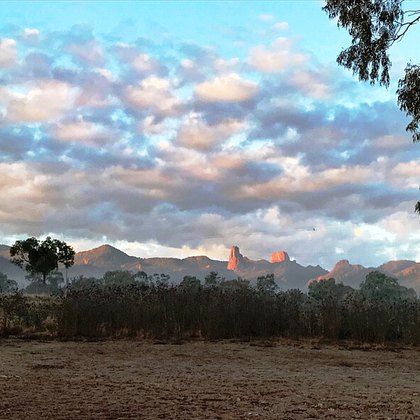
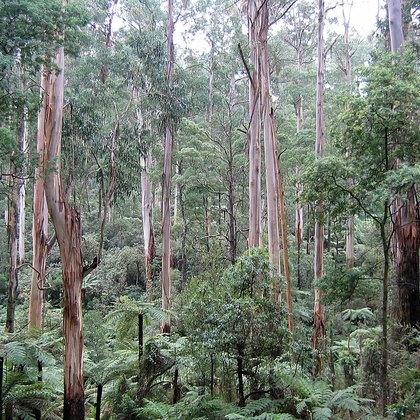
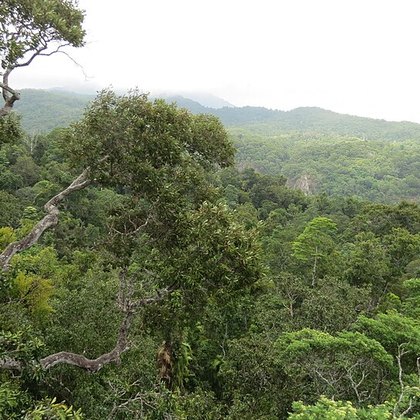
Eucalypt forest and woodland with rough, deeply furrowed bark, whose crevices the bird searches for ants; also rainforest, wet gullies and timber along rivers. It needs old trees, for it nests in a hollow and lines it with bark and hair. On town edges it holds on as long as old rough-barked eucalypts stand; young plantings and smooth-barked trees are avoided. It will not cross open, treeless country.
Where the bird is most often found, arranged by main group and formation.


Range and movements
Eastern and southern mainland Australia, from the Tropic of Capricorn to south-eastern South Australia, almost wholly on the eastern side of the Great Dividing Range. In north-eastern Queensland a separate population sits in the rainforest of the Wet Tropics, with smaller and darker birds. The species is sedentary: pairs hold their territory year-round and young birds settle nearby. The range has changed little over the past century, though the bird has gone from patches of woodland where the old trees were felled.
- Resident
- dark = core range, pale = thinly spread
Where and when to look
Find it by ear and then look low: the bird starts at the foot of a trunk and spirals upward, then flies to the foot of the next tree. Anyone watching one walk head-downward is looking at something else. With a good view, check the side of the head: the orange spot makes it a female.
Conservation
Not threatened (LC) and common over almost all of its range. The loss of old trees with hollows and loose bark is the chief concern, since both the nest and the food depend on them. Of the Australian treecreepers this one stands up best in fragmented forest, because it does not live off the ground and so suffers less from grazing and the clearing of fallen timber.
Scientific name
Cormobates leucophaea | (Latham, 1801)
Latham described the bird in 1801 as Certhia leucophaea, among the treecreepers of the northern hemisphere; because the species was later moved to another genus, author and year stand in parentheses. The genus Cormobates is formed from Greek kormos (tree trunk) and bates (walker): the trunk-walker. leucophaea comes from leukos (white) and phaios (dusky), after the white throat on a dusky bird. The type locality is Sydney, New South Wales.