All species › Passerines › Thornbills, scrubwrens, gerygones and allies › Spotted Scrubwren
Spotted Scrubwren | Sericornis maculatus
Westelijke witbrauwstruiksluiper | Sericornis maculatus
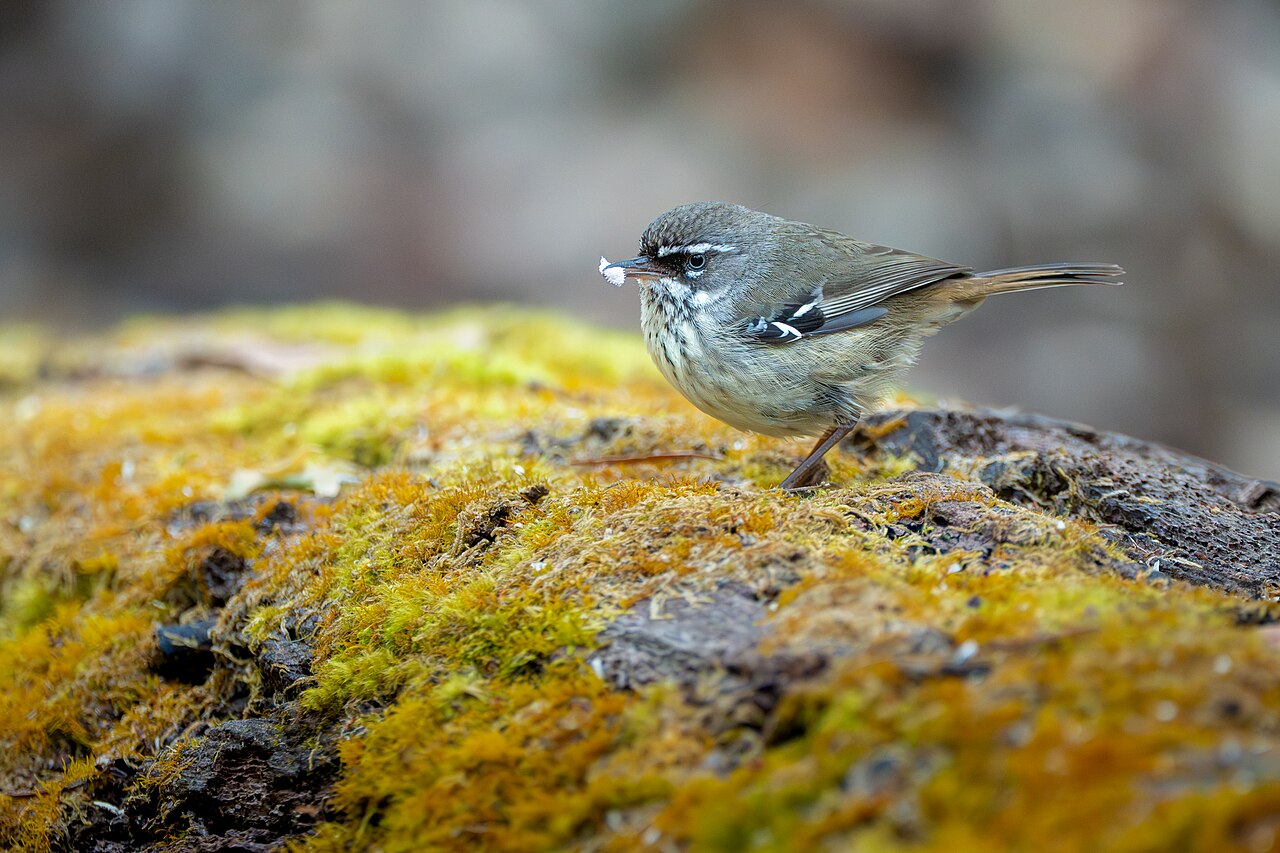
The Spotted Scrubwren is the scrubwren of southern and south-western coastal Australia: a brown, short-legged bird with a sharply marked face and a pale eye, working the ground and the low thicket in coastal scrub and garden shrubbery. It was only recognised as a separate species in 2019, and outside its range there is nothing to confuse it with.
Voice
The song is a loud, high series often rendered ch-weip ch-weip, repeated in short phrases from cover; it sounds large for the bird and carries far enough across a garden or dune thicket that the singer cannot be placed. There is also a sharp scolding rattle when the bird is disturbed, often from both members of a pair at once, and a thin contact squeak. Song is heard all year, with a clear peak in the southern spring, August to November.
No freely licensed recording has been found for this species yet; what to listen for is described below.
Identification
Eleven to fourteen centimetres, olive-brown above and off-white to light grey below. The face carries the diagnostic pattern: a broad, sharply drawn white eyebrow and a white moustachial stripe with a dark cheek patch between them, and a pale cream iris. The bend of the wing shows a black patch flecked with white; the throat is white with fine dark streaks, which gave the bird its English name. The male has black lores, the female grey to brown ones; young birds show a grey bill, a dull grey eye and an indistinct face pattern.
Confusion species
White-browed Scrubwren (Sericornis frontalis) is all but identical and was lumped with this species until 2019, but occurs only east of Adelaide; in Western Australia confusion is impossible. Genetically maculatus proves to be further from frontalis than Tasmanian Scrubwren (Sericornis humilis), which in turn is darker and has a less clean white throat. In the south-west the real question in the field is whether the bird is a thornbill: Western Thornbill (Acanthiza inornata) is smaller, plainer brown, lacks the white brow and streaked throat, and forages in foliage rather than on the ground.
Habitat
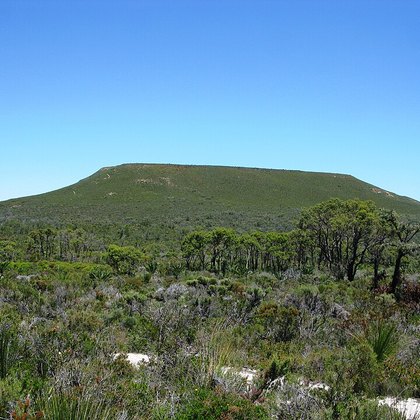
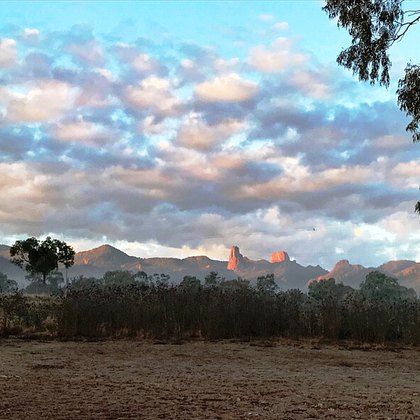
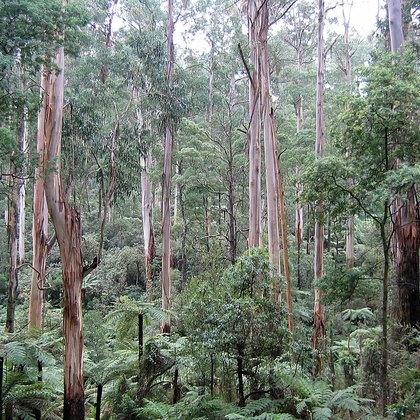
Coastal scrub on sand, kwongan heath with banksia and hakea, the shrub layer of jarrah and karri forest, dune vegetation, gullies and the vegetated edges of creeks. The requirement is always dense low thicket the bird can vanish into. It spends much time on the ground among litter and dead branches and seldom climbs more than a few metres. Gardens and parks in Perth and Albany with a native shrub layer are occupied as a matter of course.
Where the bird is most often found, arranged by main group and formation.

Range and movements
The coastal belt of southern Australia, from Adelaide west through South Australia and along the whole south-western coast to Shark Bay in Western Australia. Four subspecies divide that range: maculatus from Bremer Bay to Jurien Bay, balstoni from Jurien Bay north to Shark Bay, ashbyi on Kangaroo Island and mellori in coastal South Australia and the far south-east of Western Australia. The species is sedentary; there is no seasonal movement and territories are held year-round.
- Resident
- dark = core range, pale = thinly spread
Where and when to look
Go in early spring in the first hours after sunrise to a track through dune scrub or kwongan near Albany, Margaret River or Kalbarri and follow the loud ch-weip. The bird reacts strongly to disturbance at the edge of its territory and will often come briefly up into the top of a low bush, throat feathers raised. Watch the face: eyebrow, moustachial stripe and pale eye together are enough for a certain record.
Conservation
The species has not yet been assessed separately on the current world lists and therefore stands as Not Evaluated (NE); as part of the white-browed scrubwren complex it carried Least Concern, and nothing suggests a different outcome once a separate assessment follows. It is common within its coastal range and takes readily to gardens and reserve edges. Loss of coastal scrub to building, too-frequent fire in kwongan heath and feral cats are the local pressures. I found no reliable estimate of the world population and so give no figure.
Scientific name
Sericornis maculatus | Gould, 1847
Gould described the bird in 1847 as Sericornis maculatus, with Albany fixed as the type locality; author and year stand without parentheses because the genus has not changed since. maculatus is Latin for 'spotted' and refers to the finely streaked, spotted-looking throat, from which the English name is also taken. Sericornis comes from Greek serikos (silken) and ornis (bird). The Dutch name used in this guide sets 'western' against 'eastern' to make the 2019 split visible. No established Spanish name is known for this species; the Spanish text therefore uses the scientific name.