All species › Passerines › Thornbills, scrubwrens, gerygones and allies › Western Thornbill
Western Thornbill | Acanthiza inornata
Kaap Leeuwin-doornsnavel | Acantiza sencilla
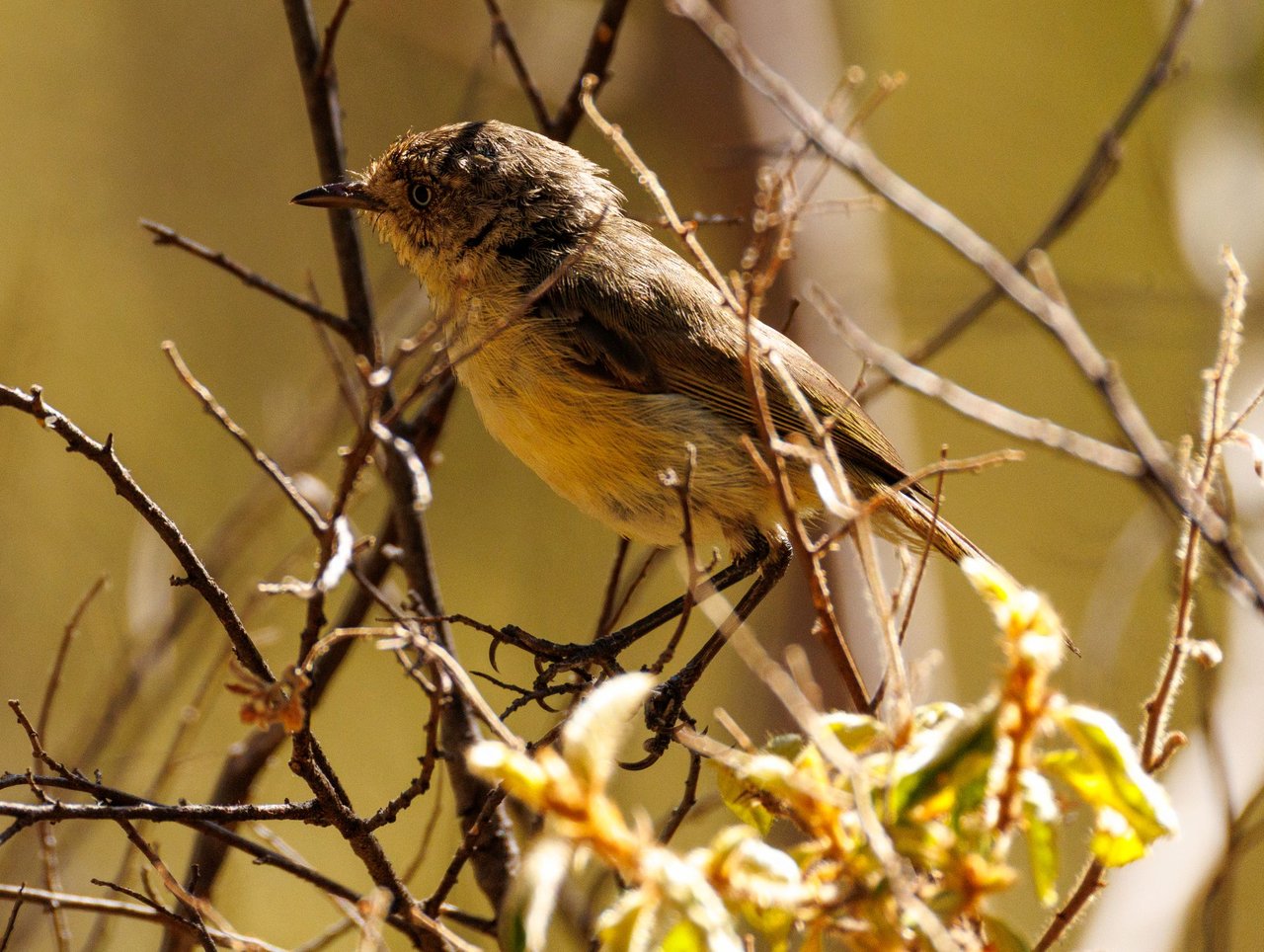
The Western Thornbill is the plainest bird in a plain family: an unmarked grey-brown thornbill from the forests of Australia's south-western corner, with no coloured rump, no streaking and no yellow. That is exactly what makes it recognisable — in a guide full of thornbills with a character, this is the thornbill without one.
Voice
A soft, high, rapid chattering kept up continuously by a party as it works through the understorey, interspersed with a sweet, slight song that carries little. Because the birds stay close together and feed low, the effect is a gentle rustling murmur in the bushes; a single bird is barely audible.
Recording: nick talbot — CC BY-NC-SA 4.0 · Dryandra, Shire of Cuballing, Western Australia, Australia · xeno-canto
Identification
Nine to ten centimetres, uniformly grey-brown to olive-brown above, with no rump that stands out against the back. The underparts are cream to pale buff and entirely unstreaked. The forehead is warm brown with very faint pale scalloping, much weaker than in any relative. The iris is cream-white to blue-grey; juveniles still have a brown iris that turns blue-grey about a month after fledging and only later becomes creamy white. The sexes cannot be told apart, in measurements or in plumage.
Confusion species
In the south-west the counterpart is Inland Thornbill (Acanthiza apicalis), and the ranges overlap completely: that species has a rufous rump, a deep red iris, a clearly black-and-white scalloped forehead, dark streaking on throat and breast, and a longer tail usually held cocked — five characters this species lacks. Yellow-rumped Thornbill (Acanthiza chrysorrhoa) also occurs but is larger, feeds on the ground and has a bright yellow rump. There are no other thornbills in the south-west. Spotted Scrubwren (Sericornis maculatus) shares the understorey but is larger, with a conspicuous white brow and a white wing stripe. Weebill (Smicrornis brevirostris) is smaller, yellower, and has a short stubby bill instead of a thornbill's fine needle.
Habitat
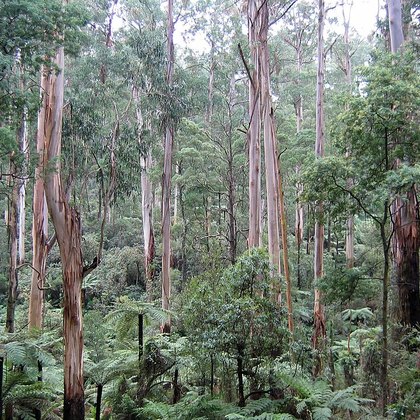
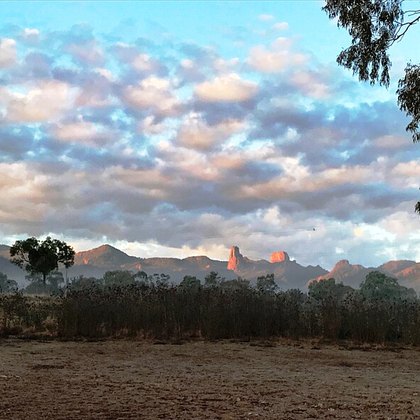
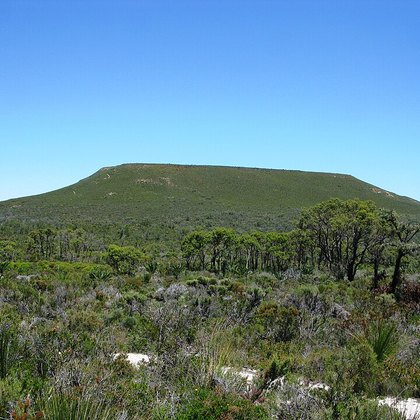
Forests and woodland of the south-western corner: jarrah, marri and wandoo (white-barked eucalypt of south-western Australia, and the woodland it forms) on drier ground, karri in the wet south-western angle, and beyond that shrubby forest edges and adjoining sandplain heath. It forages in parties through the understorey and the lower branches and comes regularly to the ground, which is unusual within the genus. Food consists of small invertebrates gleaned from leaves, bark and litter. The clutch is three to four eggs; the female alone incubates.
Where the bird is most often found, arranged by main group and formation.
Range and movements
Endemic to the south-western corner of Western Australia, roughly from the country north of Perth south to Cape Leeuwin and east along the south coast to the neighbourhood of the Stirling Range and Esperance. The whole range covers some hundred and forty thousand square kilometres. The species is sedentary and a poor flier across open ground, which makes fragmented remnants hard to reach again.
- Resident
- dark = core range, pale = thinly spread
Where and when to look
Work slowly through the understorey of jarrah or wandoo forest and listen for a continuous soft chattering that moves slowly along — that is usually a party of this species. With a bird in view, take the rump first: no colour there already all but settles it. Confirm with the pale eye. If you are caught between this species and Inland Thornbill, watch the tail: the Inland's is cocked continually, this one's is not.
Conservation
Least Concern (LC). The species is still common within its small range where forest is continuous, but it is sensitive to fragmentation: weak flight makes recolonising isolated remnants difficult, and in small blocks surrounded by farmland it disappears over time. Large-scale logging, the spread of Perth, and the dieback of jarrah and marri forest from drought and the root fungus Phytophthora cinnamomi are the main long-term concerns.
Scientific name
Acanthiza inornata | Gould, 1841
John Gould described the species in 1841. The epithet inornata is Latin for 'unadorned' and is remarkably apt: no coloured rump, no streaking, no mask. The English name Western Thornbill takes the position of the range, the Dutch Kaap Leeuwin-doornsnavel the south-western point of the mainland that bounds it, and the Spanish acantiza sencilla follows the scientific epithet in taking the plainness.