All species › Parrots › Old World parrots › Yellow-crowned Parakeet
Yellow-crowned Parakeet | Cyanoramphus auriceps
Geelvoorhoofdkakariki | Perico maori cabecigualdo
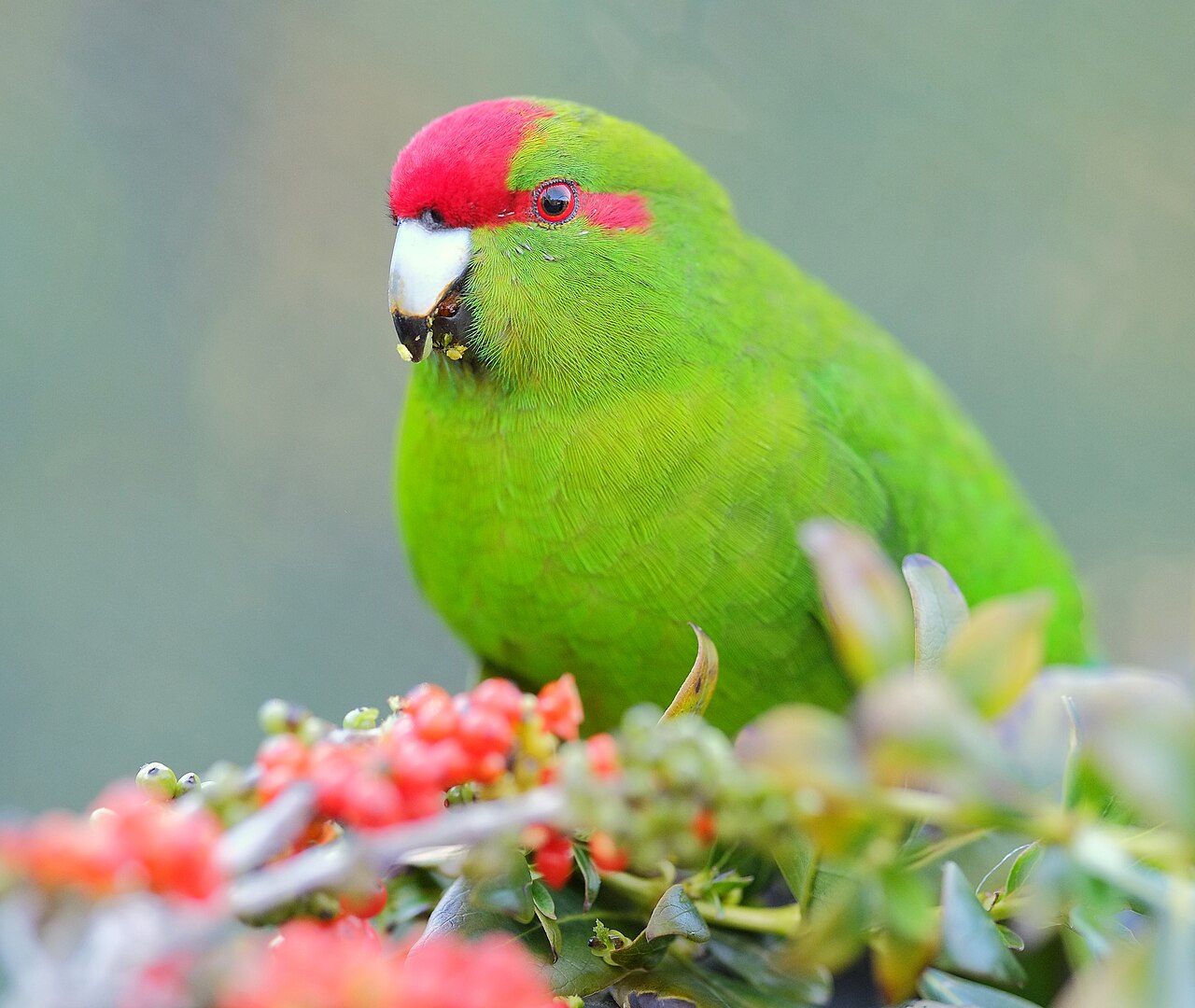
The Yellow-crowned Parakeet is the smaller, higher-pitched counterpart of the Red-crowned Parakeet, and the only kakariki still present in reasonable numbers in mainland New Zealand forest. It is bright grass-green with a lemon-yellow crown and a narrow red band just in front of it, high in the canopy of old forest.
Voice
In flight it rattles a rapid, high, sharp tsi-tsi-tsi-tsi, thinner and faster than the fuller chatter of the Red-crowned Parakeet; both sexes call. Perched in the canopy come a series of quiet, undistinguished churring and grunting notes, and a muted babble between members of a pair. Often the fast flight chatter is all you get of the species.
No freely licensed recording has been found for this species yet; what to listen for is described below.
Identification
Small and slim at twenty-five centimetres, much of it graduated tail; the male weighs fifty-one grams, the female forty-one. The plumage is bright grass-green, a little yellower below. The crown is lemon-yellow, with a narrow crimson band between that yellow crown and the cere; there is no red behind the eye. A red patch sits on each side of the rump, and the outer wing has a blue leading edge. The bill is pale bluish-grey with a black tip and cutting edge.
Confusion species
Red-crowned Parakeet (Cyanoramphus novaezelandiae) is larger, sounds lower, and has red over the whole fore-crown continuing as a stripe behind the eye — that red behind the eye is the decisive mark. Malherbe's Parakeet (Cyanoramphus malherbi) is paler and bluer-green with an orange rather than crimson band above the cere; in poor light the difference is notoriously hard, and until 2000 it was even treated as a colour form of this species. Chatham Islands Parakeet (Cyanoramphus forbesi) is very close in head pattern, but occurs only in the Chathams.
Habitat
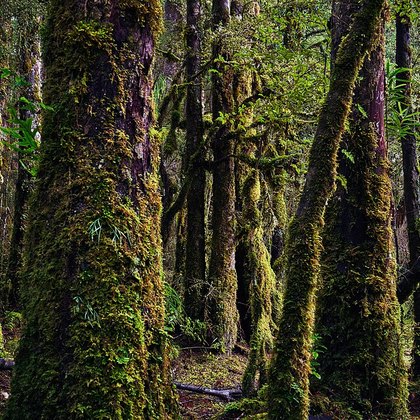
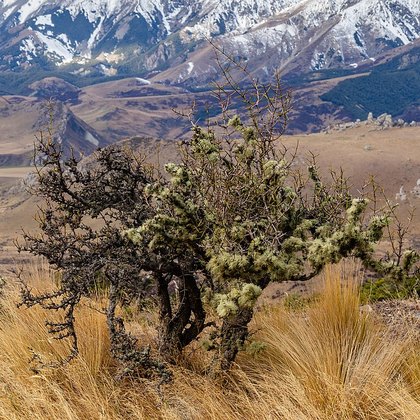
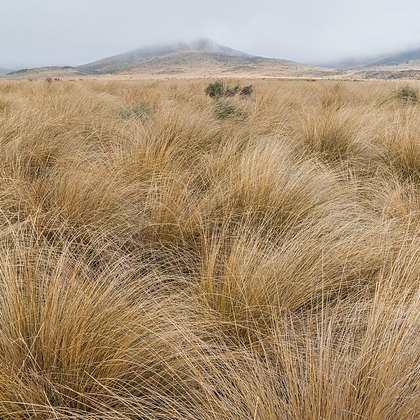
On the mainland it is largely confined to tall old forest: beech and podocarp-broadleaf, where it spends most of its time high in the canopy taking seed, buds, flowers and insects. On islands it drops far lower and also uses low scrub and even open grassland. It nests in cavities in old trees.
Where the bird is most often found, arranged by main group and formation.

Range and movements
Spread across the three main islands — North Island, South Island and Stewart Island — plus many offshore islands and the Auckland Islands in the south. It is absent from the Taranaki volcano, northern Taranaki and Northland. On the mainland it is scarce to rare everywhere and is found mainly in the large unbroken inland beech forests; on predator-free islands it is locally common.
- Resident
- Breeding (summer)
- dark = core range, pale = thinly spread
Where and when to look
Walk a track through old beech forest and look up the moment you hear the fast, thin chatter: the birds usually pass over the canopy in twos and threes and are almost impossible to find at eye level. A fresh fall of bitten-off beech twigs and flower buds on the path gives away a party feeding just above you. If the head is out of reach, use the voice — high and fast is this species, low and broad the Red-crowned.
Conservation
Near Threatened (NT), with a New Zealand population put at some tens of thousands and nationally classed as declining. The causes are those of the other kakariki: ship rats and stoats raid the nest cavities, above all in the years when the beech forest masts and predator numbers explode. Landscape-scale predator control in the beech forests, and the absence of predators on restored islands, are what hold the species up, so that of the mainland kakariki it is by far the one holding on best.
Scientific name
Cyanoramphus auriceps | (Kuhl, 1820)
Kuhl described the species in 1820 as Psittacus auriceps; because of its placement in Cyanoramphus, author and year stand in parentheses. The epithet is formed from Latin aurum 'gold' and -ceps 'head', hence 'golden-headed', for the yellow crown. The type locality was originally given as 'New Holland', an error corrected by Mathews and Iredale in 1913 to the South Island of New Zealand.