All species › Passerines › Thornbills, scrubwrens, gerygones and allies › Yellow Thornbill
Yellow Thornbill | Acanthiza nana
Gele doornsnavel | Acantiza enana
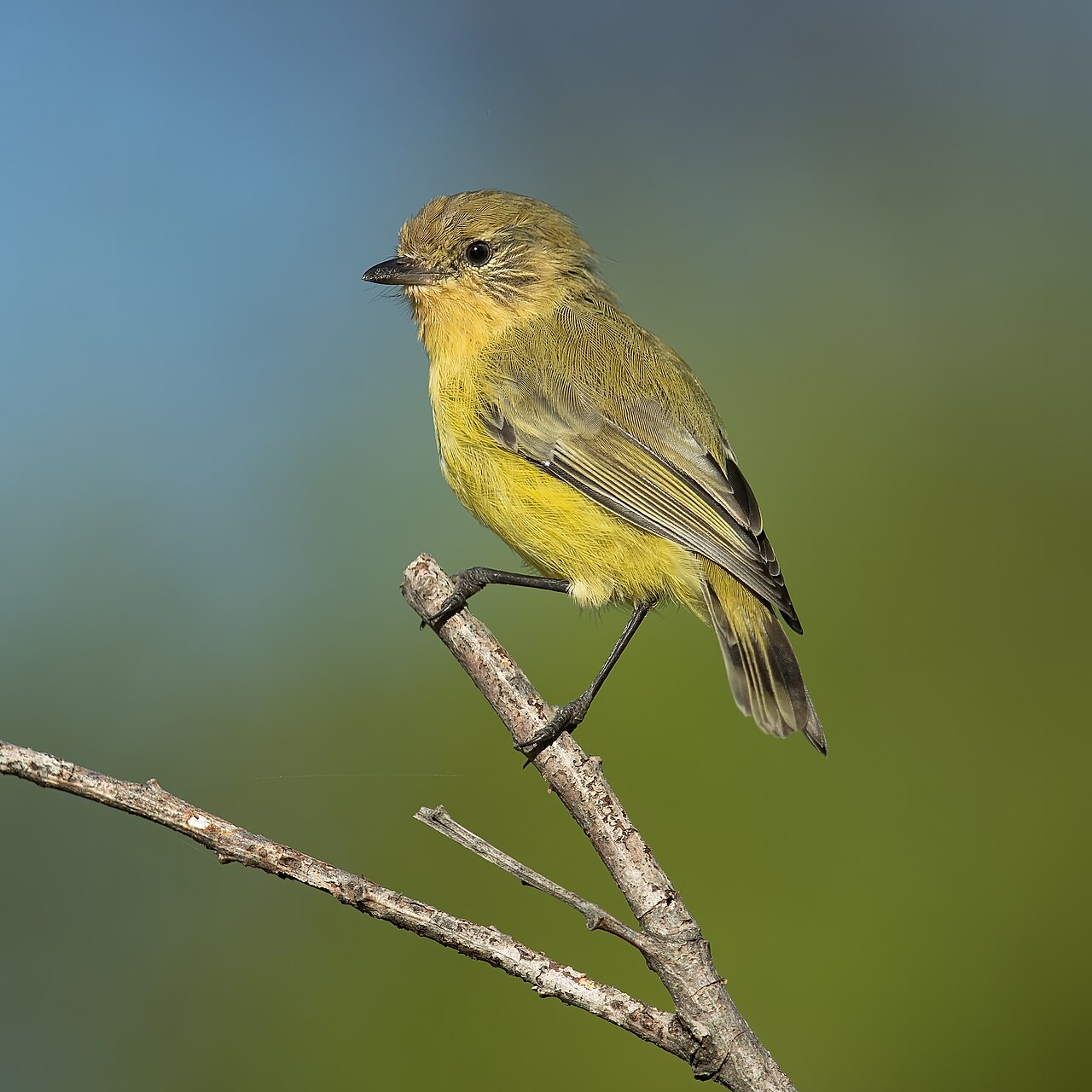
The Yellow Thornbill is the yellowest of the thornbills and at the same time one of the least conspicuous: a small olive-green bird with a yellow underside that forages high in casuarinas, wattles and paperbarks and gives itself away almost solely by its scratchy two-note call. It avoids precisely the eucalypts in which most of its relatives are at home.
Voice
Harsh, scratchy two-syllable calls: tzid-id, often extended to tzid-id, tis-tis. The sound is sharper and less musical than in most thornbills and serves both as a contact call within the party and for territorial advertisement. Since the birds stay in the foliage, this is usually all they offer.
No freely licensed recording has been found for this species yet; what to listen for is described below.
Identification
Nine to ten centimetres, with greenish-olive to grey-green upperparts and olive-brown wing coverts. The underparts are pale to bright yellow and that yellow runs down onto the belly — no other thornbill is this yellow across the whole underside. The cheek and ear region carries fine white streaking, the chin and throat have a reddish-brown wash, and the eye is dark with a cream eye-ring. The crown is plain, not streaked. The sexes are alike; juveniles are duller. Three subspecies are recognised.
Confusion species
Striated Thornbill (Acanthiza lineata) is the closest relative and the main pitfall: it has an orange-brown crown clearly streaked with white, a streaked chin, throat and breast, and is greener and less yellow. Yellow Thornbill has a plain crown and a smooth yellow underside. Yellow-rumped Thornbill (Acanthiza chrysorrhoa) is larger, feeds on the ground and carries its yellow on the rump alone, with cream underparts. Buff-rumped Thornbill (Acanthiza reguloides) has a pale iris against this species' dark eye, and a contrasting buff-yellow rump. Weebill (Smicrornis brevirostris) is smaller still, with a markedly short, stubby bill and a pale iris.
Habitat
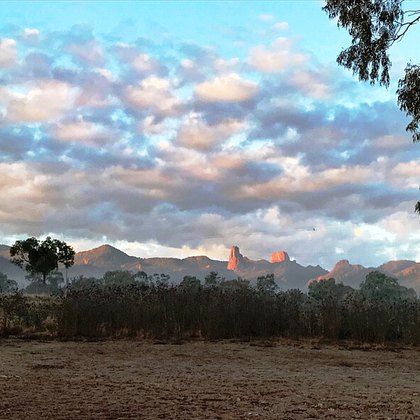
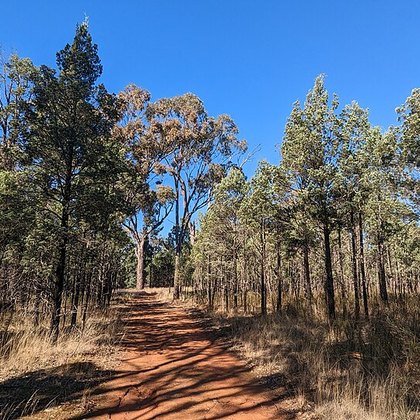
Open forest, woodland and shrubland in which the tone is set not by eucalypts but by casuarinas, wattles, paperbarks or native pines — a clear preference that separates it from most relatives. Older parks and gardens with such plantings are occupied too. It forages almost exclusively in the foliage of trees and shrubs, gleaning small insects and occasionally taking seed. Breeding pairs are assisted by helpers in feeding the young; the female builds a rounded domed nest of grass and bark with a narrow, hooded entrance near the top.
Where the bird is most often found, arranged by main group and formation.


Range and movements
Endemic to eastern Australia, from the southern half of Queensland through almost all of New South Wales and Victoria into south-eastern South Australia; northern populations reach north-eastern Queensland. It is absent from Tasmania and from New Zealand. The species is sedentary and stays on the same ground all year.
- Resident
- dark = core range, pale = thinly spread
Where and when to look
This bird is nearly always heard first: a sharp, scratchy tzid-id from the foliage of a casuarina or paperbark. Follow the sound and then look for the yellow belly — against the light that yellow is all that survives. Next check the crown: plain here, streaked white in Striated Thornbill. Where the two occur together you will hear the difference sooner than you see it: the Striated's voice is thinner and more insect-like.
Conservation
Least Concern (LC), but with a declining trend. The decline is attributed to habitat loss through clearing and development, to fire, and to a falling supply of insects as a result of agricultural pesticides and climate change. The species holds on in older gardens and parks as long as casuarinas, wattles and paperbarks are retained; that is precisely the planting that tends to go first when a site is redeveloped.
Scientific name
Acanthiza nana | Vigors & Horsfield, 1827
Nicholas Vigors and Thomas Horsfield described the species in 1827, in the same work in which they introduced the genus Acanthiza — compounded from Ancient Greek akantha ('thorn') and zaō ('to inhabit'). The epithet nana is Latin for 'female dwarf' and points to the small size. The English Yellow Thornbill, the Dutch gele doornsnavel and the Spanish acantiza enana take different sides of the same bird: the first two the colour, the last the size, as the scientific epithet does.