All species › Passerines › Tyrant flycatchers and allies › Ash-throated Flycatcher
Ash-throated Flycatcher | Myiarchus cinerascens
Grijskeeltiran | Copetón Cenizo
The Ash-throated Flycatcher is the Myiarchus of the dry West: from the sagebrush of Oregon to the cactus country of Sonora it sits upright on a dead branch above the scrub. It nests in cavities and drinks almost no water, taking all its moisture from its prey.
Voice
The best-known call is a two-syllabled, burry ka-brick with a rolling, almost grating quality, heard year-round. There is also a rough prrt and an upward-flicked wheer. The dawn song strings those same elements together in a fixed pattern, delivered from a high perch before sunrise. The voice is burrier and less whistled than that of the other Myiarchus species, and it is usually the sound that closes the identification.
Recording: steve — CC BY-SA 4.0 · El Refugio, Los Cabos, Baja California Sur, Mexico · xeno-canto
Identification
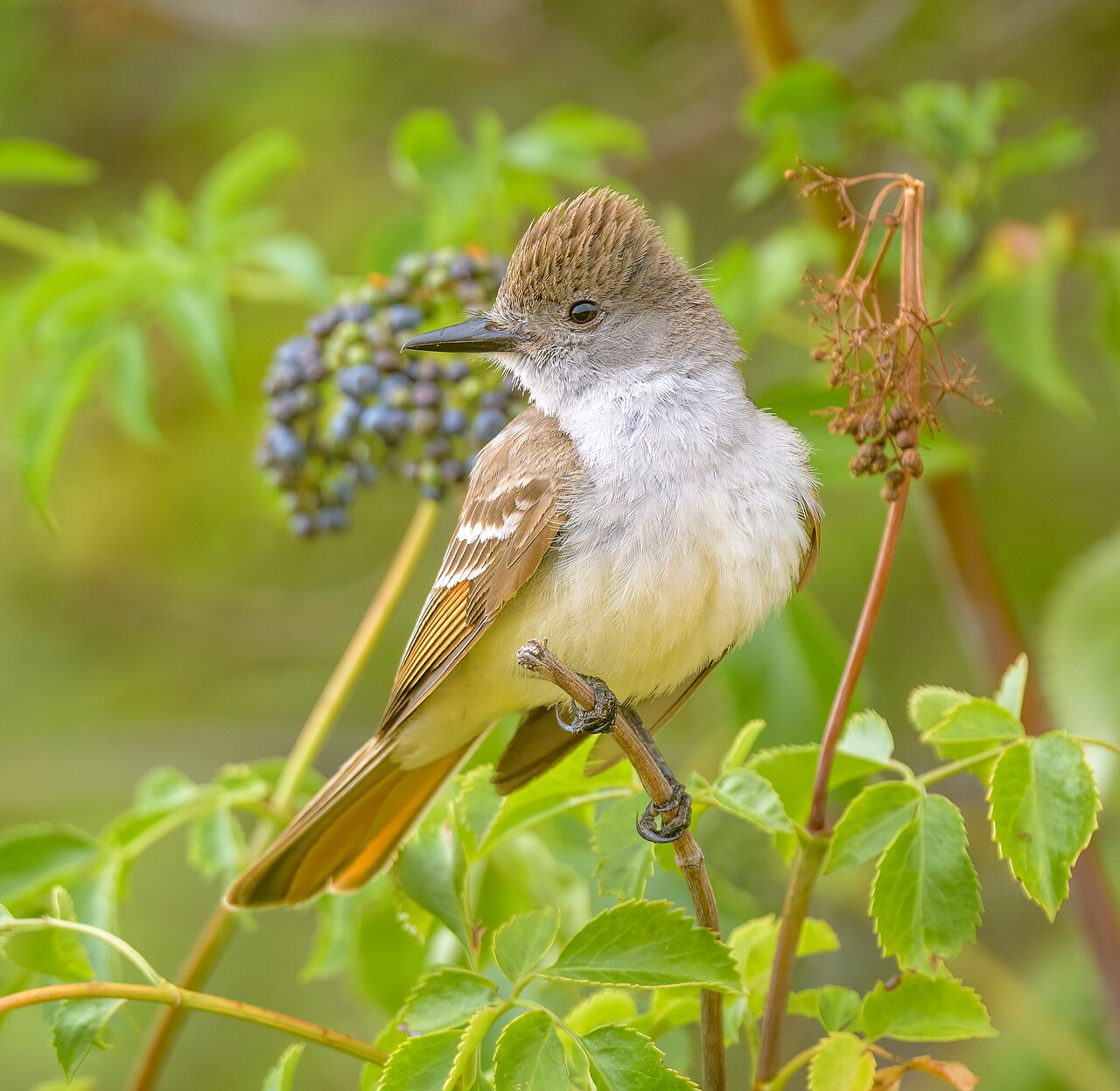
A slim, long-tailed flycatcher with a slightly peaked crest on a large head. The upperparts are olive-brown, the throat and breast pale grey and the belly faintly yellow — paler than in the other Myiarchus species, with a gradual shift from grey to yellow. The wings have two dull bars and rufous edges to the flight feathers; the tail shows rufous on the outer web, but the inner web of the outer tail feathers ends in a dark tip, so the rufous does not run to the end of the tail. The bill is wholly dark.
Confusion species
Dusky-capped Flycatcher is smaller, has a dark cap contrasting with the back, a deeper yellow belly and a drawn-out descending peeeur; Ash-throated has an even crown and the burry ka-brick. Great Crested Flycatcher is bulkier and darker, with a deep yellow belly, a pale base to the lower mandible and a loud rising wheep. Nutting's Flycatcher is the hardest: it shows rufous to the tail tip with no dark terminal band, an orange mouth lining, a sharp single wheek and yellowish edges to the outer secondaries — on Ash-throated those edges are white. Brown-crested Flycatcher is larger with a heavier bill; Say's Phoebe is smaller, lacks rufous in the tail and has a cinnamon belly.
Habitat
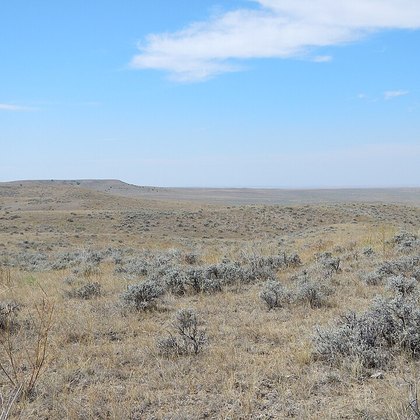
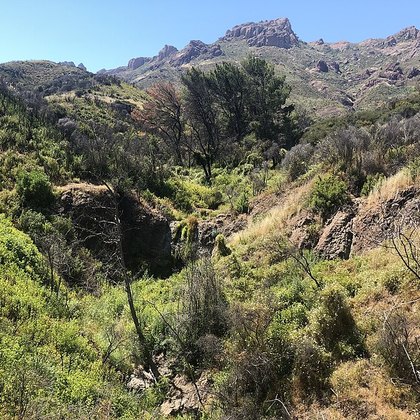
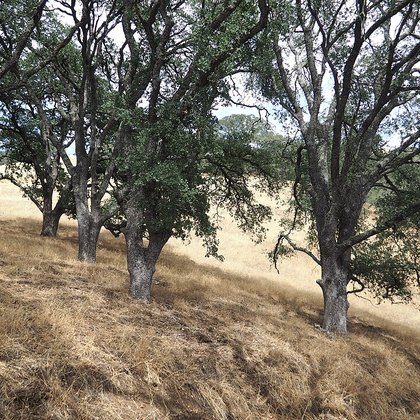
Dry, semi-open country: desert scrub with saguaro and mesquite, sagebrush, chaparral, pinyon-juniper, open oak and pine woodland and the wooded strip along dry washes, up to about 2700 metres. It depends on cavities — woodpecker holes, natural hollows in dead trees and cacti — and takes readily to nest boxes, mailboxes and hollow posts. In winter, tropical thorn forest and semi-deciduous woodland.
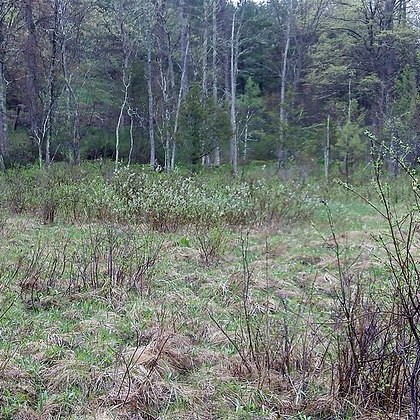
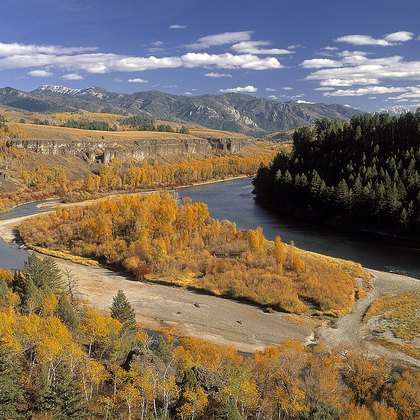
Where the bird is most often found, arranged by the USNVC — the vegetation classification of the United States and Canada — and CMECS for sea and coast.


Range and movements
Breeds from southern Washington and southwestern Idaho south through the Great Basin and the Southwest to central Mexico, and east to western Kansas, western Oklahoma and central Texas; locally in southern British Columbia. It is a short-distance migrant: most birds winter from southwestern Mexico to the Pacific slope of Honduras, with small numbers staying in the lowlands of southern California and southern Arizona. In Baja California and northwestern Mexico the species is resident. A few birds reach the Atlantic coast of the United States each autumn.
- Resident
- Breeding (summer)
- Winter
- Passage
- dark = core range, pale = thinly spread
Where and when to look
From April to July, look in the desert for a bird perched upright on a dead branch or a fence post, jerking its head from time to time. Let go of the belly colour and wait for the ka-brick. To settle it against Nutting's Flycatcher, look at the underside of the spread tail: a dark tip on the inner web means Ash-throated.
Conservation
The IUCN places the species in the least concern category. Partners in Flight puts the breeding population at about ten million birds, and the Breeding Bird Survey shows an increase of roughly 0.7 percent a year between 1966 and 2019. The use of nest boxes and artificial cavities contributes to that. Loss of riparian woodland and the removal of dead trees with cavities are the main limits; the species is covered by the Migratory Bird Treaty Act.
Scientific name
Myiarchus cinerascens | (Lawrence, 1851)
George Newbold Lawrence described the species in 1851 as Tyrannula cinerascens; because it was later moved to Myiarchus, author and year stand in parentheses. Myiarchus is Greek for 'fly-ruler', from muia 'fly' and arkhos 'ruler'. The species name cinerascens is Latin for 'becoming ashy', after the grey throat and breast; the Dutch and English names refer to the same character. The specimen described came from western Texas.