All species › Passerines › Thrushes and allies › Eyebrowed Thrush
Eyebrowed Thrush | Turdus obscurus
Vale lijster | Zorzal cejudo
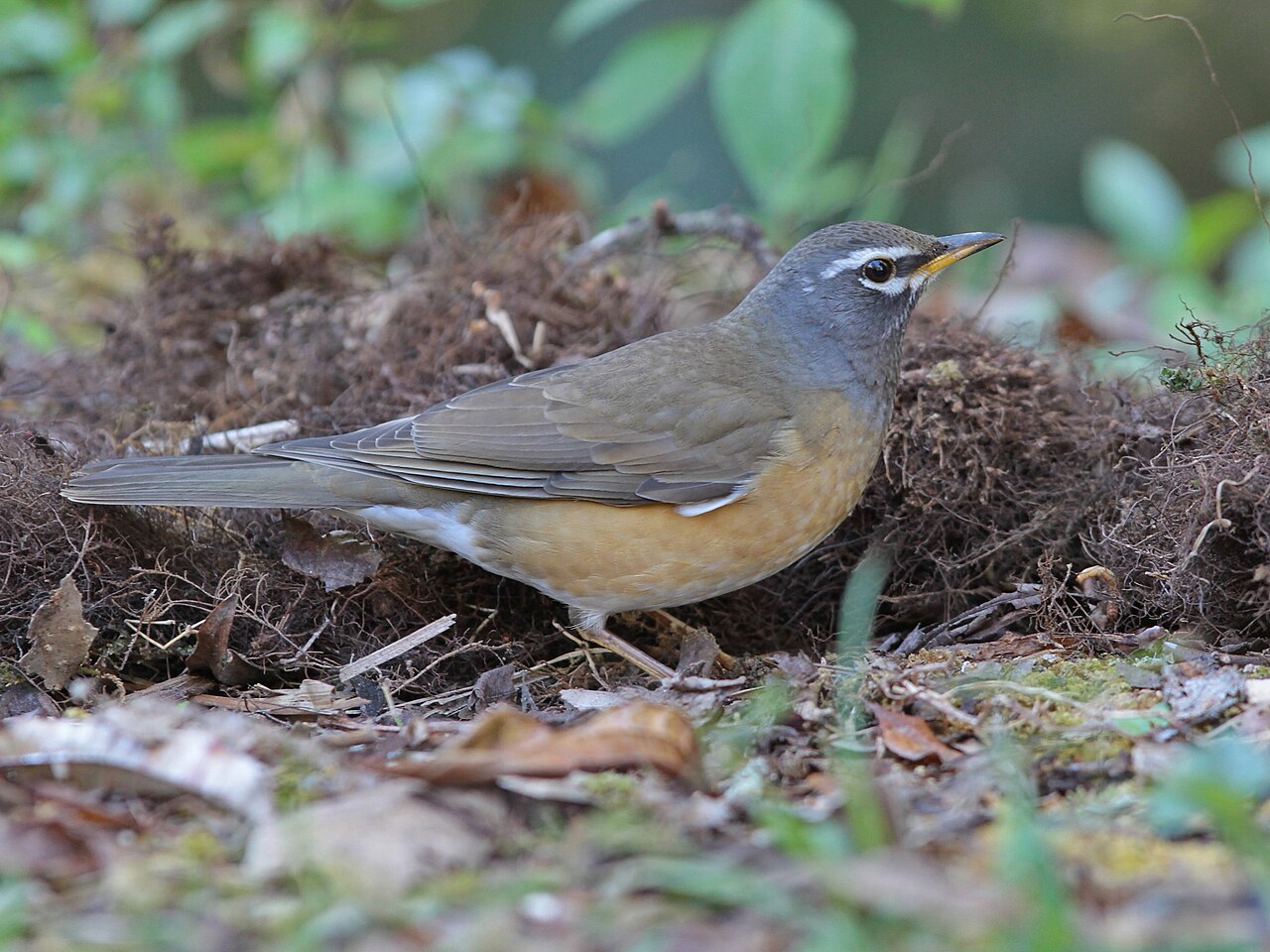
The Eyebrowed Thrush is a Siberian thrush with a grey head, a white supercilium and orange flanks. In North America it is a visitor from the west: it turns up almost annually in the Aleutians and on the Bering Sea islands, mostly in May, while the mainland has only a handful of scattered records.
Voice
The song is a simple series of thin whistled notes, two or three to a phrase, with pauses between them; it recalls the Mistle Thrush but is shorter and higher. The call is a thin drawn-out tseep, given by migrants at night, and in alarm a rapid rattling chuck-chuck-chuck. In Alaska the species is usually silent, and records there rest on plumage rather than voice.
Recording: Jochem Verweij — CC BY-SA 4.0 · Khurkh Bird Ringing Station, Биндэр, Хэнтий, Mongolia · xeno-canto
Identification
A thrush the size of an American Robin, but slimmer and longer-winged. The head is grey with a white supercilium and a white stripe below the eye, set between two dark bands; the male has the most contrasting head pattern, the female a browner head with a white throat and fine streaks. The upperparts are plain olive-brown, the breast and flanks orange, the belly and undertail coverts white. The bill is dark with a yellow base; the tail is plain, without white corners.
Confusion species
American Robin lacks the white supercilium, has a darker head with a broken white eye-ring and shows white corners to the tail. Redwing also has a white supercilium, but streaked underparts and a rusty underwing instead of a plain orange breast. Hermit Thrush and the other Catharus thrushes are smaller, have a spotted breast and lack the grey head. Pale American Robins away from Alaska are the commonest source of error: check for the absence of white tail corners.
Habitat
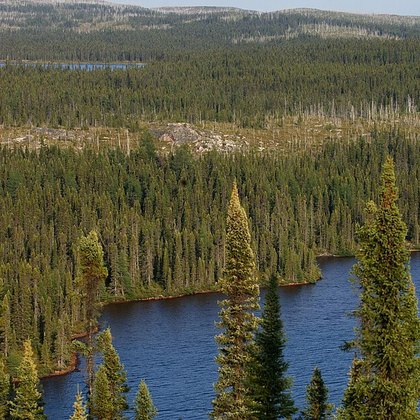
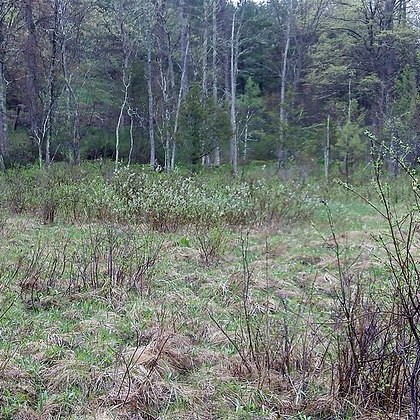
Breeds in dense conifer and birch taiga across Siberia, often in damp valley woodland with an understorey. Winters in forest edge, plantations and gardens in Southeast Asia. The birds that reach Alaska sit in low scrub and on the grassy slopes of treeless islands, feeding on the ground for insects and worms and taking cover in the few bushes available.
Where the bird is most often found, arranged by the USNVC — the vegetation classification of the United States and Canada — and CMECS for sea and coast.


Range and movements
The breeding range runs from central Siberia east to Kamchatka, Sakhalin and northern Japan; the winter is spent from southern China and Indochina to the Philippines and Indonesia. In the guide area it is strictly a vagrant along the western edge of Alaska: Attu, Shemya and the other western Aleutians, St Paul and St George in the Pribilofs, and St Lawrence Island. Records peak in the second half of May, with a smaller autumn passage in September. Mainland Alaska and the West Coast farther south have only a few accepted records.
- Breeding (summer)
- Passage
- dark = core range, pale = thinly spread
Where and when to look
The chance of this species hangs on one place and one period: an island in the western Aleutians or the Bering Sea in the last week of May, with a sustained westerly airflow. Look for birds feeding low in the creeping willow scrub near settlements, and check every thrush from behind as it flies: the plain tail without white corners rules out American Robin at once.
Conservation
The world population is large and spread widely through the Siberian taiga; the IUCN lists the species as Least Concern and assumes a stable trend. It is trapped for the cage-bird trade in parts of Southeast Asia, and loss of wintering forest plays a part there. Within the guide area it has no management status of its own, since there is no breeding population.
Scientific name
Turdus obscurus | Gmelin, 1789
Johann Friedrich Gmelin described the species in 1789 as Turdus obscurus, after the 'Dark Thrush' John Latham had described in 1783; the specimen came from the Siberian forests beyond Lake Baikal. As the species still stands in its original genus, author and year are not in parentheses. Turdus is the Latin word for thrush and obscurus means 'dark' or 'dull'. The Dutch name refers to the washed-out upperparts, the English and Spanish names to the white supercilium.