All species › Passerines › New World warblers › Lucy's Warbler
Lucy's Warbler | Leiothlypis luciae
Lucy's zanger | Reinita de Lucy
Lucy's Warbler is the smallest American warbler and the only one that breeds in true desert. It keeps to mesquite woodland along dry washes in the southwestern United States and northwestern Mexico, and with the Prothonotary Warbler it is one of only two warblers that nest in cavities.
Voice
The song is a fast, high series of about eight even chee-chee-chee notes that drops or rises a step at the end; the whole thing lasts under two seconds. Males sing from late March into June through most of the morning, and on through the middle of the day when the rest of the mesquite is silent. The call is a sharp, dry chik, usually given from cover inside a thorny branch.
Recording: Bill Pyle — CC BY-NC-SA 4.0 · Peppersauce Canyon Campground, Pinal Co., Arizona, United States · xeno-canto
Identification
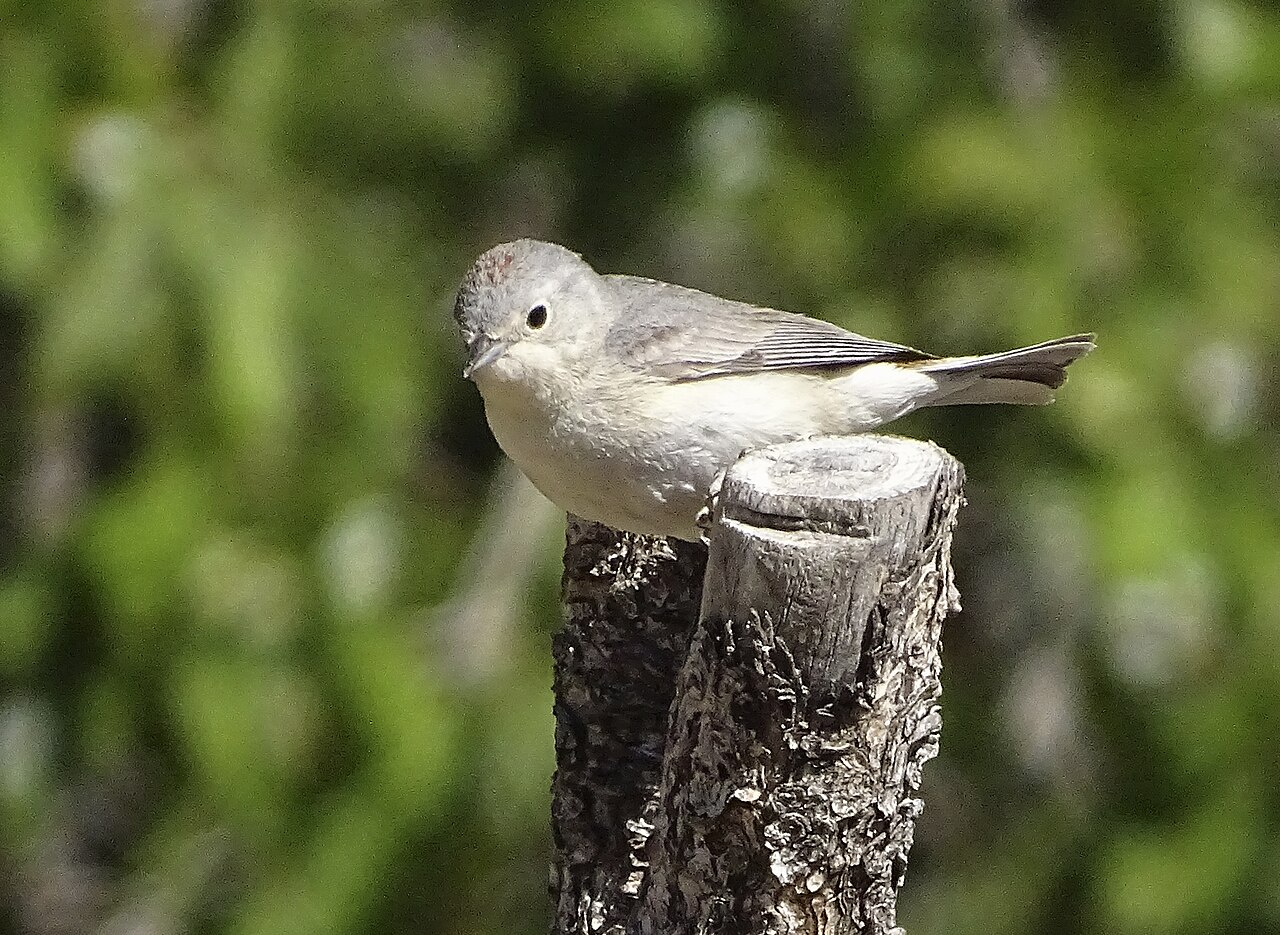
A small, thin-billed warbler that is grey almost throughout: grey above, dingy white below, without wing bars and without yellow. The two marks that count are cinnamon-red: a crown patch, usually hidden on a perched bird, and the rump, which shows mainly as the bird takes off. A narrow white eye-ring stands alone in the plain grey face. Females and young birds have the same pattern in yellowish brown instead of cinnamon. It forages actively among thorny twigs and often hangs upside down.
Confusion species
Virginia's Warbler is larger, has a longer tail that it pumps up and down, and yellow on the breast and undertail coverts; it lacks the cinnamon rump. The grey form of Orange-crowned Warbler is a darker olive-grey, has yellow undertail coverts and a streaked lore. Verdin has a yellow face and a conical bill. Bell's Vireo shares the habitat but has a heavier, hooked bill and moves slowly rather than with this warbler's quick scrambling.
Habitat
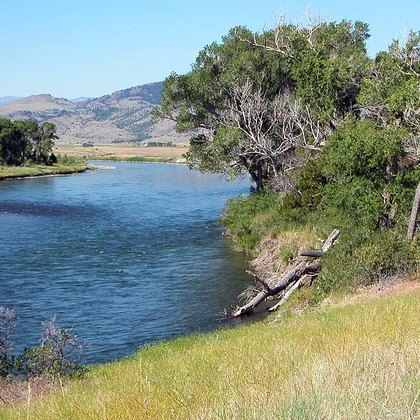
Mesquite woodland, tamarisk, acacia, hackberry and willow along dry washes, arroyos (dry, steep-sided gullies that carry water only after rain) and streambeds in the Sonoran and Chihuahuan deserts, generally below 1500 metres. Where mesquite (a thorny pod-bearing shrub of the Southwest that forms dense thickets) grows tall enough and old trunks hold cavities and loose bark plates, the species packs in closely; up to twelve pairs per hectare have been recorded. It nests in natural cavities, abandoned woodpecker holes, behind loose bark and in nest boxes. Away from the washes it also uses cottonwood stands and dry montane woodland at higher elevation.
Where the bird is most often found, arranged by the USNVC — the vegetation classification of the United States and Canada — and CMECS for sea and coast.




Range and movements
The breeding range covers Arizona, southern Nevada, southwestern Utah, southeastern California along the Colorado River, western and southern New Mexico and West Texas, and continues into northeastern Sonora and northeastern Baja California. It returns as early as March and leaves early: many birds are gone by August. It winters on the west coast of Mexico from Sinaloa to Guerrero and Oaxaca, in tropical deciduous forest and thorn scrub.
- Breeding (summer)
- Winter
- Passage
- dark = core range, pale = thinly spread
Where and when to look
Walk a mesquite wash in southern Arizona at sunrise in April or May and listen first; the song finds the bird sooner than the eye does. Then look for the cinnamon rump at the moment a bird flies from bush to bush — on a perched bird you will almost never see it.
Conservation
The species is listed as Least Concern (LC), but numbers are falling across part of the breeding range. The pressure is the loss of mesquite woodland along streams and rivers to groundwater pumping, building and conversion to pasture; parasitism by Brown-headed Cowbird adds to it. Nest boxes are used in Arizona where old cavity-bearing trees are missing, and restoration of the riparian strip increases the supply of nest sites.
Scientific name
Leiothlypis luciae | (Cooper, 1861)
James Graham Cooper described the species in 1861 as Helminthophaga luciae, from a specimen taken at Fort Mojave in the Colorado Valley; because it was later moved to another genus, author and year stand in parentheses. The species name honours Lucy Hunter Baird, daughter of the ornithologist Spencer Fullerton Baird. The genus Leiothlypis comes from Greek leios 'smooth, plain' and thlypis, a name for a small bird — a reference to the unmarked plumage.