All species › Passerines › Thrushes › Common blackbird
Common blackbird | Turdus merula
Merel | Mirlo común
A woodland thrush that turned itself into Europe's most familiar garden bird in barely two centuries. Its fluting evening song is often delivered from a chimney or aerial.

Click a thumbnail to switch the photo above.
Voice
The song is a series of unhurried, low, richly fluted phrases, each rounded off with a hurried squeaky or grating flourish; heard February to July, strongest around sunrise and in the last of the evening light. Alarm is a hysterical rattling tchink-tchink-tchink at dusk, and a thin high seee when a Sparrowhawk passes over.
Recording: Marie-Lan Taÿ Pamart — CC BY-SA 4.0 · Wikimedia Commons
Identification
Males are deep black with an orange-yellow bill and yellow eye-ring; first-year males still show a dark bill and browner flight feathers. Females are dark brown with a paler, faintly mottled throat and breast and a dull brown bill. Juveniles are rufous with warm spotting. The long tail is flicked up on landing and lowered slowly.
Confusion species
Ring ouzel looks like a Blackbird with a white breast crescent, scaly underparts, pale wing panels and a hard chacking tak-tak-tak; it passes through heath and dunes in March–April and October. Starling is shorter-tailed, walks rather than hops, is glossy and spangled and has triangular wings. Also expect leucistic Blackbirds with white patches, which are frequent in towns.
Habitat
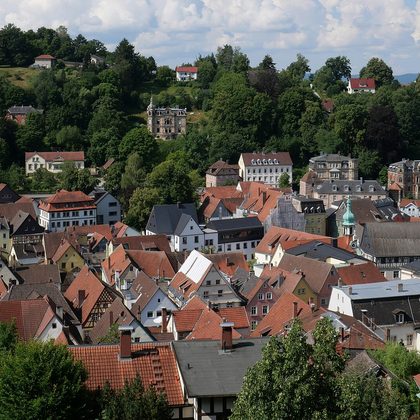
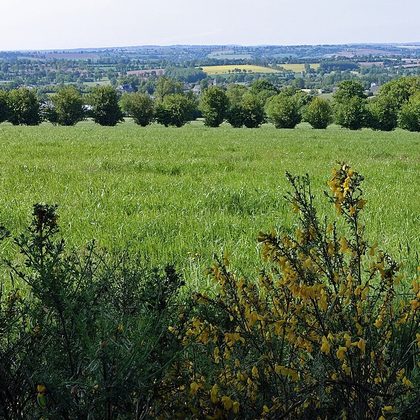
Originally broadleaved and mixed woodland with open ground and understorey, now largely gardens, parks, churchyards, hedges, orchards and village edges. In southern Europe also cork oak woods, riverine forest and olive groves; in winter anywhere with berries and windfall fruit.
Where the bird is most at home, classified with EUNIS — the European standard for habitats.



Range and movements
All of Europe except Iceland. In the Netherlands very numerous year-round, with a strong influx from Germany, Scandinavia and Poland in October and November. In Spain it breeds from sea level up into mountain forest and winters in large numbers in olive groves, vineyards and Mediterranean scrub, gorging on olives and berries, likewise reinforced by birds from central Europe.
- Resident
- Breeding (summer)
- Winter
- Passage
- dark = core range, pale = thinly spread
How and when to look
Track down singing males in March and April, half an hour before sunset, and note the fixed song posts: one male will use the same ridge or treetop night after night. In winter work shady thickets of holly, ivy and hawthorn, where Blackbirds and other thrushes drop in together.
Conservation status
Abundant and broadly stable, though parts of north-west Europe have seen declines caused by Usutu virus, which kills birds during and after hot summers. Cat predation, road traffic and the loss of damp, invertebrate-rich ground in tidy gardens also take a toll.
Scientific name
Turdus merula | Linnaeus, 1758
Linnaeus described the species in 1758 and placed it straight away in the genus where it still stands. He introduced the genus Turdus in that same work. Turdus is the ordinary Latin word for 'thrush'. merula is the Latin word for the blackbird; it survives in French merle and Dutch 'merel'. The specimen the first description was based on came from Sweden.