All species › Waders, gulls and terns › Plovers and lapwings › Common ringed plover
Common ringed plover | Charadrius hiaticula
Bontbekplevier | Chorlitejo grande
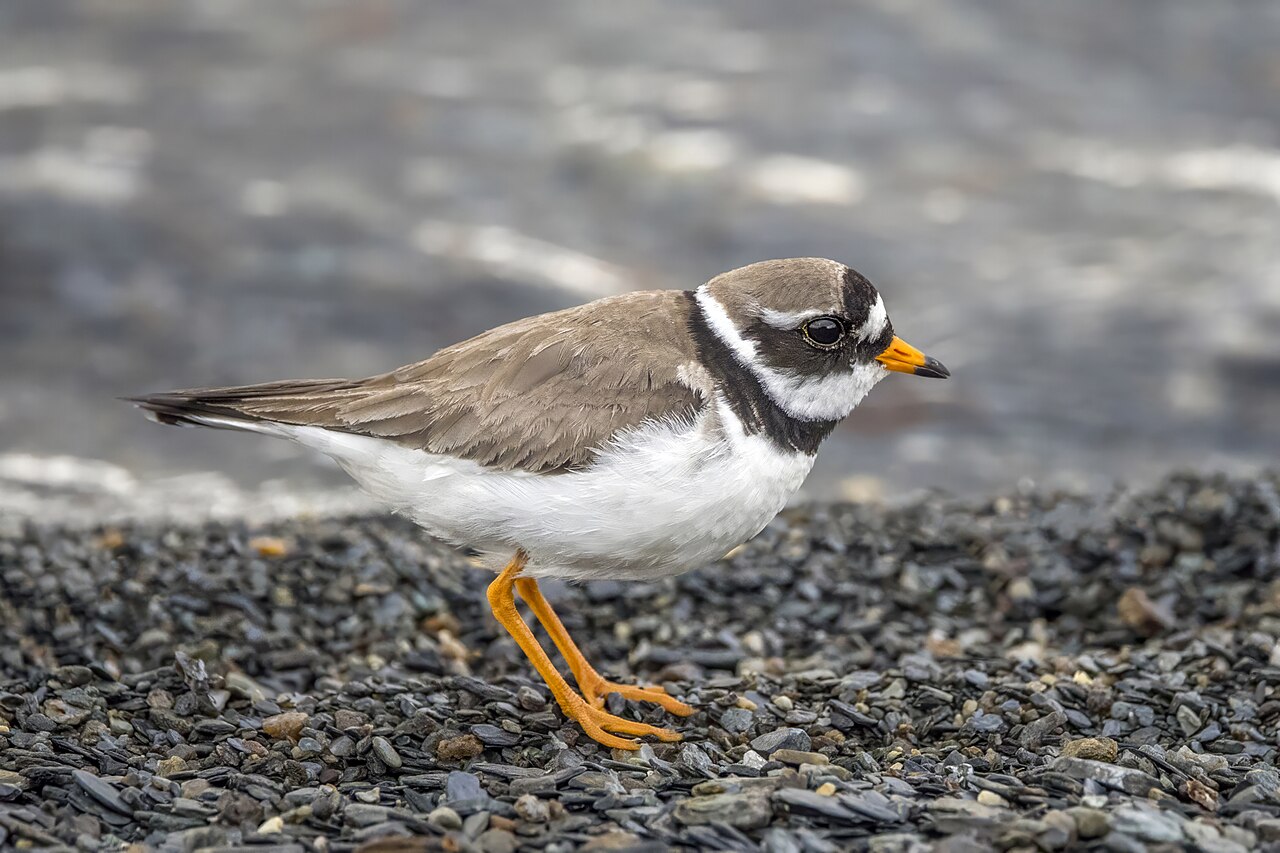
Compact, round and boldly marked, the Ringed Plover runs across the mud in short bursts and stops dead to pick. It can be found on the Wadden Sea year-round, with peak numbers when northern birds pass through.
Click a thumbnail to switch the photo above.
Voice
A soft, cheerful two-note too-lee, rising at the end, heard everywhere along the tideline. In display flight a rhythmically repeated tuwee-tuwee-tuwee over the breeding ground. Calls all year, particularly on taking off and from night migrants in August and September.
Recording: Joost van Bruggen — CC BY-SA 4.0 · Wikimedia Commons
Identification
Sturdier and rounder than Little Ringed, with a broad black breast band, black mask and white forehead. The bill is orange with a black tip, the legs bright orange. In flight a broad white wingbar runs the length of the wing. In winter and on juveniles black and orange are replaced by brown and dull yellow-orange, and the breast band looks narrower and sometimes broken.
Confusion species
Little ringed plover is the main pitfall: it lacks the white wingbar and shows a yellow eye-ring, an all-dark bill and dull yellow legs. Kentish plover is paler and longer-legged and always has a broken breast band, with an all-black bill and dark legs. In flight the Ringed Plover's wingbar is the broadest of the three.
Habitat
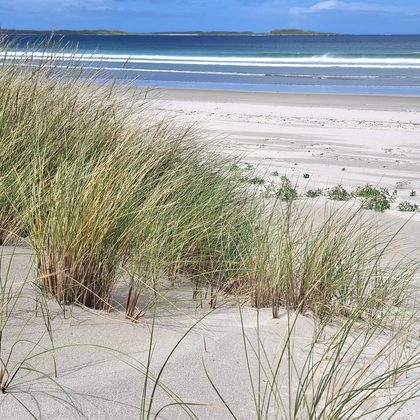
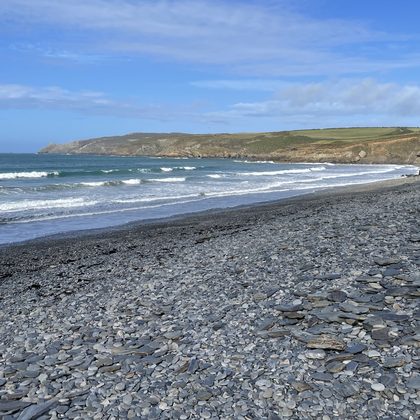
Sand and shell beaches, mudflats, saltmarsh edges and drying banks; breeds on bare shell ridges, dredged ground and northern tundra. Outside the breeding season mainly on estuarine mud, where it hunts by sight and feeds scattered and alone among other waders rather than in tight flocks.
Where the bird is most at home, classified with EUNIS — the European standard for habitats.


Range and movements
Breeds from north-western Europe to the Arctic tundra of Greenland and Siberia, and where a bird goes depends on where it came from. Fennoscandian breeders head south-west to western Europe, Iberia and the North African coast, the furthest reaching Ghana and Benin; Icelandic and Greenland birds stay further north and winter in the British Isles, south-western France and Iberia. The main flyway follows the Atlantic coast. Along the North Sea — the Wadden coast, the Delta — a scarce breeder but a numerous passage migrant and winter visitor; in the British Isles and along the French coast present all year. In Iberia and North Africa mainly a passage migrant and winterer in estuaries and deltas; inland in central Europe only on passage. Southbound movement starts in August, the return peaks in March and April.
- Resident
- Breeding (summer)
- Winter
- Passage
- dark = core range, pale = thinly spread
How and when to look
Reach a mudflat two hours after high water in May or August and follow the falling waterline; the birds spread out over freshly exposed mud. Watch for the distinctive stop-run-pick rhythm, which identifies the species long before plumage detail resolves in the binoculars.
Conservation status
Arctic populations remain numerous, but west European breeders are declining through recreational pressure on beaches, coastal defence works and predation. In the Netherlands the breeding population has shrunk badly while passage numbers hold up reasonably well. Disturbance of high-tide roosts is a continuing concern.
Scientific name
Charadrius hiaticula | Linnaeus, 1758
Linnaeus described the species in 1758 and placed it straight away in the genus where it still stands. He introduced the genus Charadrius in that same work. Charadrius is Late Latin, from Ancient Greek kharadrios, a plain-coloured nocturnal bird of ravines and river valleys, from kharadra 'ravine'. hiaticula is late Medieval Latin for a plover. The specimen the first description was based on came from Sweden.