All species › Hoopoes and hornbills › Hoopoes › Eurasian hoopoe
Eurasian hoopoe | Upupa epops
Hop | Abubilla
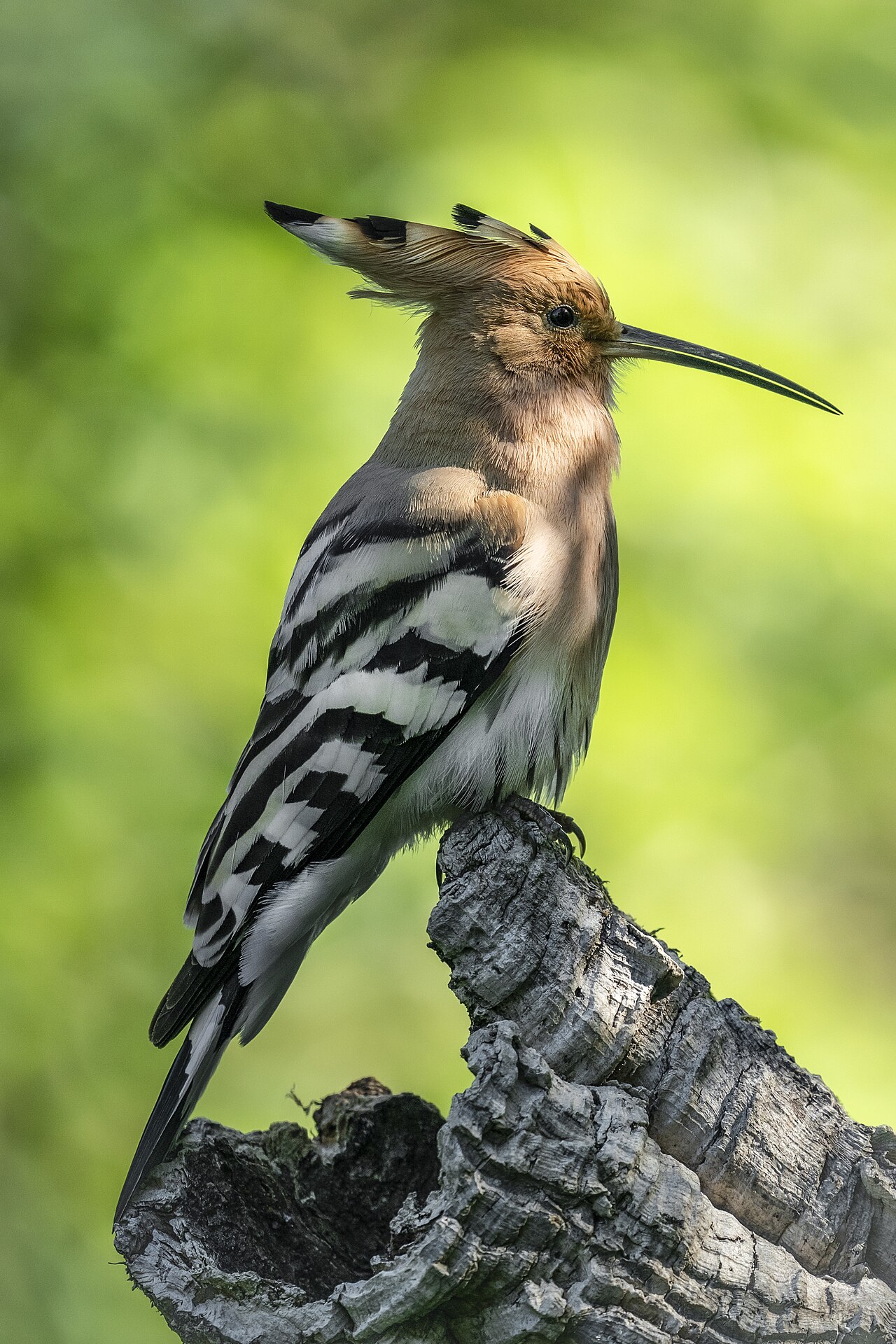
The Hoopoe is one of Europe's most unmistakable birds: pinkish orange, barred black and white, with a crest that fans open like a hand of cards. It belongs to warm, small-scale landscapes with short vegetation and plenty of large insects.
Click a thumbnail to switch the photo above.
Voice
A soft, hollow and far-carrying oop-oop-oop, usually in three-syllable series — precisely the sound both the English and the scientific name derive from. Delivered with the throat inflated, often from a post or dead branch.
Recording: Alexander Kurthy — CC BY-SA 4.0 · Wikimedia Commons
Identification
Pinkish orange head, neck and breast contrasting sharply with the boldly black-and-white barred wings and tail. Long, thin, slightly decurved bill. The crest is usually held flat and briefly fanned on landing or in excitement. Flight is floppy and irregular, almost butterfly-like, on strikingly broad rounded wings.
Confusion species
No European species really resembles it. In flight the black-and-white wing pattern can suggest a great spotted woodpecker at long range, but flight action and colour settle it at once.
Habitat
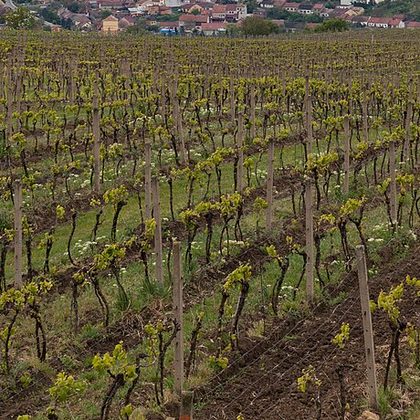
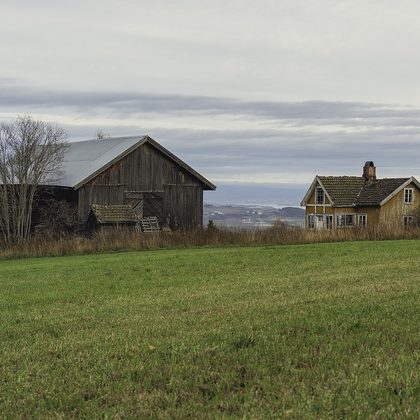
Warm, half-open landscapes with short or bare ground for feeding and cavities for nesting: vineyards, old orchards, extensively grazed grassland, steppe and village edges with walls and pollarded trees. Feeds while walking on the ground, specialising in large larvae, mole crickets and chafer grubs.
Where the bird is most at home, classified with EUNIS — the European standard for habitats.



Range and movements
Breeds in southern and central Europe, expanding northwards in Germany and Poland; on the Iberian Peninsula it is abundant and in the south a good part of the population stays resident year-round. In the Netherlands mainly a migrant in April and May with occasional breeding records; most sightings come from dune areas, saltmarshes and golf courses.
- Resident
- Breeding (summer)
- Winter
- Passage
- dark = core range, pale = thinly spread
How and when to look
Easiest in southern Europe from April to June: driving slowly along orchards and vineyards early in the morning almost always produces one. In the Netherlands, watch spring reports — overshooting birds often stay for several days feeding on a single short-mown site.
Conservation status
Not globally threatened (IUCN: Least Concern), but declining across much of central Europe through the loss of insect-rich extensive farming, old fruit trees and nesting cavities. Recovery has been demonstrated where nest boxes are combined with extensive grassland management.
Scientific name
Upupa epops | Linnaeus, 1758
Linnaeus described the species in 1758 and placed it straight away in the genus where it still stands. He introduced the genus Upupa in that same work. Upupa is the Latin name of the hoopoe, formed in imitation of its call oop-oop-oop. epops is the Greek word for the hoopoe, likewise formed in imitation of the call. The specimen the first description was based on came from Sweden.