All species › Passerines › Chats and flycatchers › European robin
European robin | Erithacus rubecula
Roodborst | Petirrojo europeo
In north-west Europe the Robin is the byword for tameness; in the south it is a skulking woodland bird that barely shows itself. At the same time it is one of the most aggressive territory holders in the wood.
Voice
The song is a thin, wistful trickle of high notes in short phrases, each different in shape and often ending in a fine trill. Delivered through almost the whole year, by females too in winter, and frequently after dark near street lights. Calls: a sharp ticking tik... tik-tik and a fine drawn-out tseee.
Recording: Marie-Lan Taÿ Pamart — CC BY-SA 4.0 · Wikimedia Commons
Identification
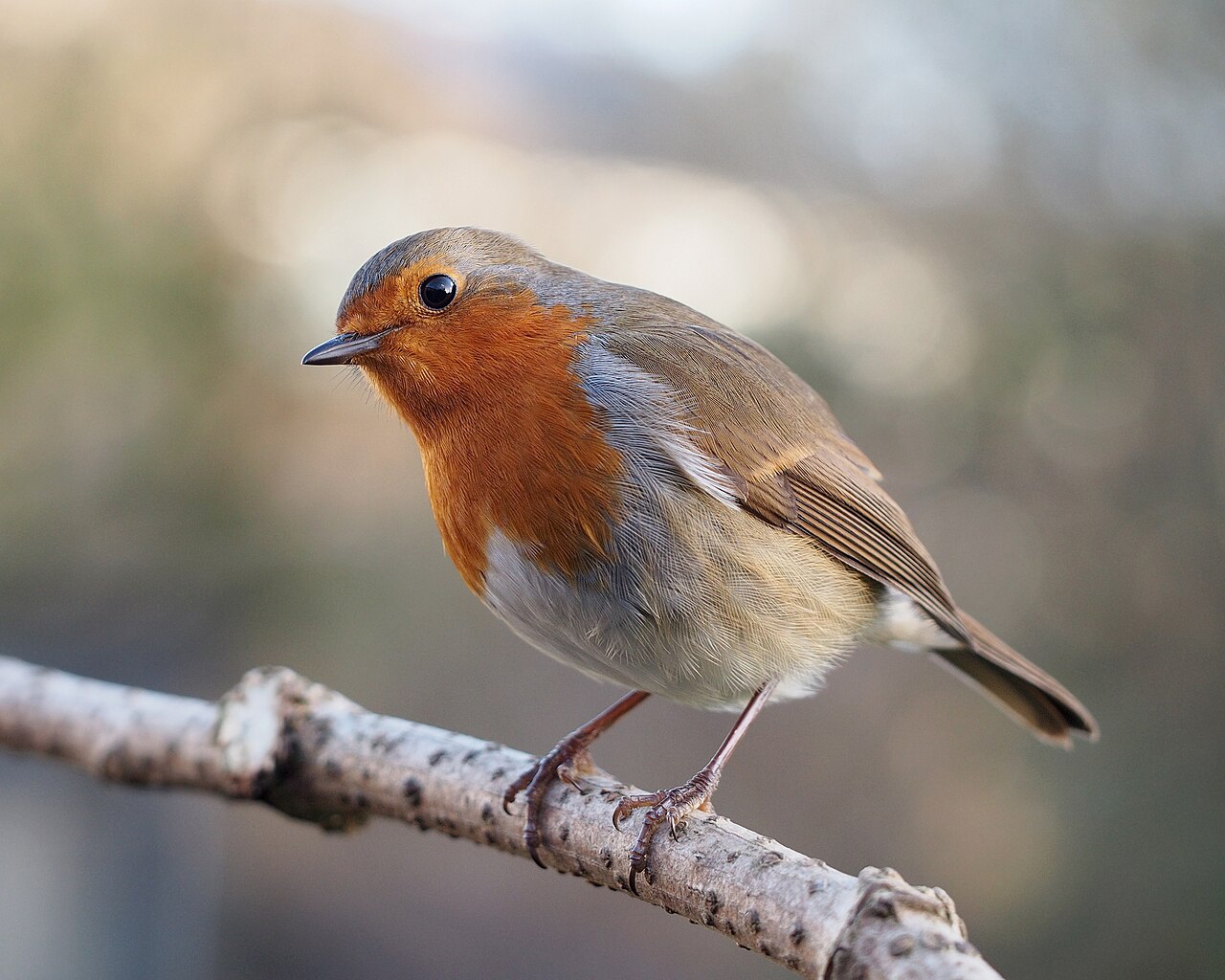
Rounded, short-necked and big-eyed, with an orange-red breast and face bordered blue-grey towards the flanks, olive-brown upperparts and long thin legs. The sexes cannot be separated in the field. Juveniles lack all red and are entirely buff-scalloped, but share the round shape, large eye and upright, bobbing stance.
Confusion species
Juvenile Robins are confused with young Nightingale and common redstart; the latter has a rufous tail in constant shivering motion, Nightingale is larger with a long warm-brown tail. Stonechat is short-tailed with a dark head and white wing flash, and perches on top of open scrub rather than skulking in undergrowth.
Habitat
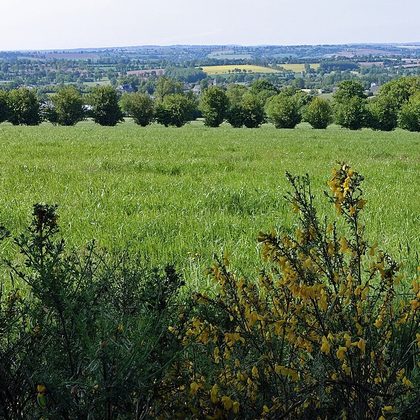
Damp broadleaved and mixed woodland with dense understorey and deep leaf litter, plus parks, churchyards, gardens, hedge banks and stream valleys. In southern Europe it breeds mainly in montane and beech forest, moving in winter into olive groves, riverside woods and scrub.
Where the bird is most at home, classified with EUNIS — the European standard for habitats.



Range and movements
Almost all of Europe. In the Netherlands numerous year-round; local breeders partly move out and are replaced from October by large numbers of Scandinavian and Baltic migrants and winterers. In Iberia it breeds in the northern half and the mountains, and winters in huge numbers across the whole country, down to the southern olive groves and the islands.
- Resident
- Breeding (summer)
- Winter
- Passage
- dark = core range, pale = thinly spread
How and when to look
From October onwards nearly every garden, olive grove or pine copse holds a winter territory, advertised with the ticking call. Look low down at dusk, along paths where boar or gardeners have turned the soil; in southern Europe you will hear it long before you see it.
Conservation status
Numerous and stable to slightly increasing across most of its range. Hard winters cause local mortality, and in Mediterranean countries traditional trapping with limesticks and snares still takes birds. The main habitat concern is the loss of shrub layer to browsing and overly tidy forestry.
Scientific name
Erithacus rubecula | (Linnaeus, 1758)
Linnaeus described the species in 1758 as Motacilla rubecula; because it was later moved to another genus, the author and year stand in brackets. The genus Erithacus was introduced in 1800 by Cuvier. Erithacus is Ancient Greek: erithakos was a classical name for a bird now usually taken to be the robin. rubecula is a Latin diminutive of ruber, 'red', after the orange-red breast. The specimen the first description was based on came from Sweden.