All species › Grebes › Grebes › Great crested grebe
Great crested grebe | Podiceps cristatus
Fuut | Somormujo lavanco
The great crested grebe is a slim diver of inland water, with a long white neck and chestnut breeding ruff. In early spring the pair performs its courtship display, the mirror dance.
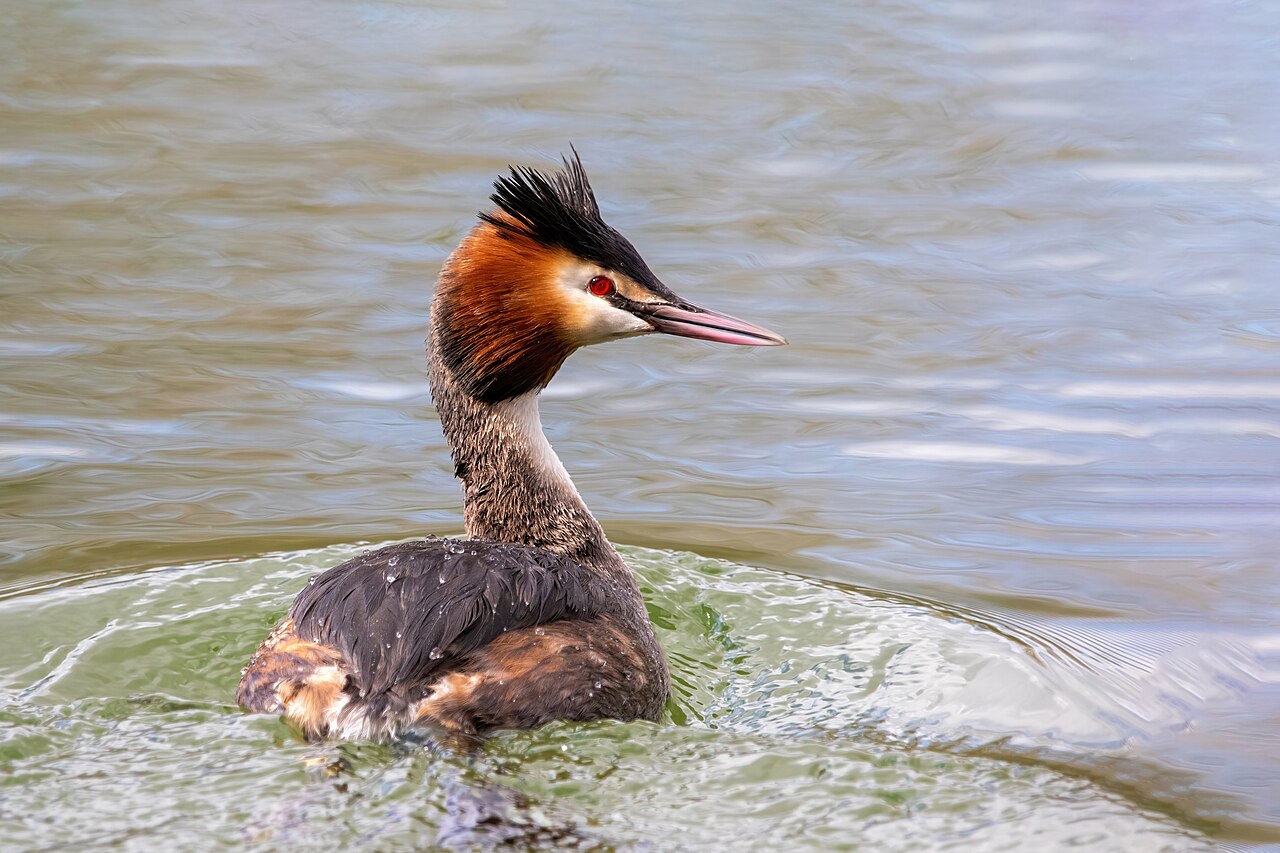
Click a thumbnail to switch the photo above.
Voice
Noisy in spring: a far-carrying, harsh ringing kroa-ah or barking krrooh, usually answered by the mate. Young birds beg persistently with a shrill whistling peeuw-peeuw well into the summer. Outside the breeding season the species is almost completely silent.
Recording: Aubrey John Williams — CC BY-SA 4.0 · Wikimedia Commons
Identification
Slender, long-necked grebe with a dagger-shaped pink bill and a flat crown. Breeding adults have double black crests and a rufous, black-edged ruff that is fanned in excitement. Winter birds show a clean white face, dark cap and a white line over the eye. Juveniles are boldly head-striped; in flight the white wing panels are obvious.
Confusion species
Red-necked grebe is more compact, with a yellow bill base and grey cheeks in winter, the dark face swallowing the supercilium. Black-necked and little grebes are far smaller and rounder. In winter at sea, birders repeatedly call them divers; divers have a thicker neck and a heavier head.
Habitat
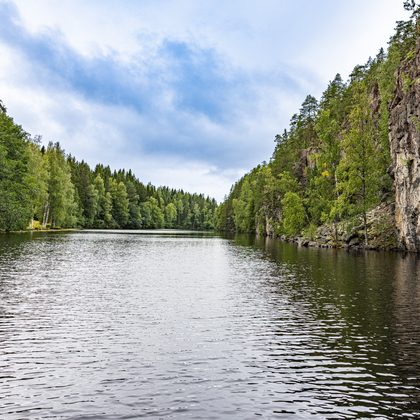
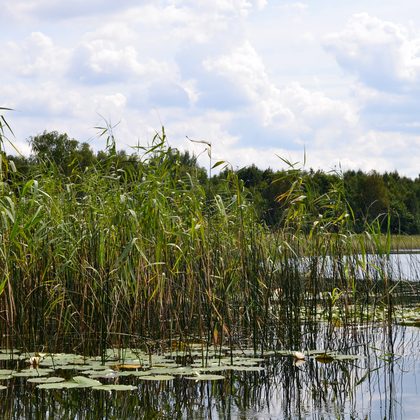
Open, moderately rich fresh water with a fringe of reed or waterside vegetation to anchor the floating nest: lakes, canals, gravel pits, broad ditches and large rivers. In winter also on coastal waters, harbours and large shallow seas such as the IJsselmeer.
Where the bird is most at home, classified with EUNIS — the European standard for habitats.


Range and movements
Widespread across Europe, North Africa, Turkey and the Levant. Common in north-west and central Europe on almost any larger water; in freezing weather birds shift to the coast and the estuaries. Around the Mediterranean it breeds on reservoirs and freshwater lagoons inland and in the deltas, and winters in numbers on large reservoirs and along the Mediterranean coast.
- Resident
- Breeding (summer)
- Winter
- Passage
- dark = core range, pale = thinly spread
How and when to look
For the display go in March and April: two birds swim together, shake their heads rhythmically and sometimes rear up breast to breast with weed in their bills. Early morning, flat calm water, and keep your distance, because disturbed pairs break off at once.
Conservation status
Not threatened, and widespread in the Netherlands, helped by new gravel pits and cleaner water. The problems are wash from recreational boats flooding nests, entanglement in discarded fishing line and botulism in hot summers. Severe winters can cause local mortality on frozen inland waters.
Scientific name
Podiceps cristatus | (Linnaeus, 1758)
Linnaeus described the species in 1758 as Colymbus cristatus; because it was later moved to another genus, the author and year stand in brackets. The genus Podiceps was introduced in 1787 by Latham. Podiceps is Latin, from podex, genitive podicis, 'rear end', and pes 'foot', after the legs set far back on the body. cristatus is Latin for 'crested', from crista 'crest'. The specimen the first description was based on came from Sweden.