All species › Grebes › Grebes
Grebes | Podicipedidae
Futen | Somormujos
In the breeding season both sexes carry the same head and neck ornaments — crests, ruffs or coloured cheek patches — and perform an elaborate courtship together in mirrored postures on the water. The nest is a floating heap of wet waterweed anchored to reeds or branches; the eggs are chalky white but soon stain brown, and the bird covers them with plant material on leaving. The young are striped lengthwise in black and white, take to the water at once and climb in among the parents' back feathers, which carry them and even go under on a dive. Another mark of the family is that they swallow their own feathers and feed feathers to the chicks; in the stomach these form a plug that holds back bones and hard remains.
Native species 5 species
Species that occur here by nature: breeding birds, winter visitors and passage migrants. They are arranged by genus, in the sequence of the list.
Tachybaptus 1 species

Podiceps 4 species
-

Horned grebe
Podiceps auritus Sublittoral sediment
 Surface standing waters
 Littoral zone of inland surface waterbodies
-
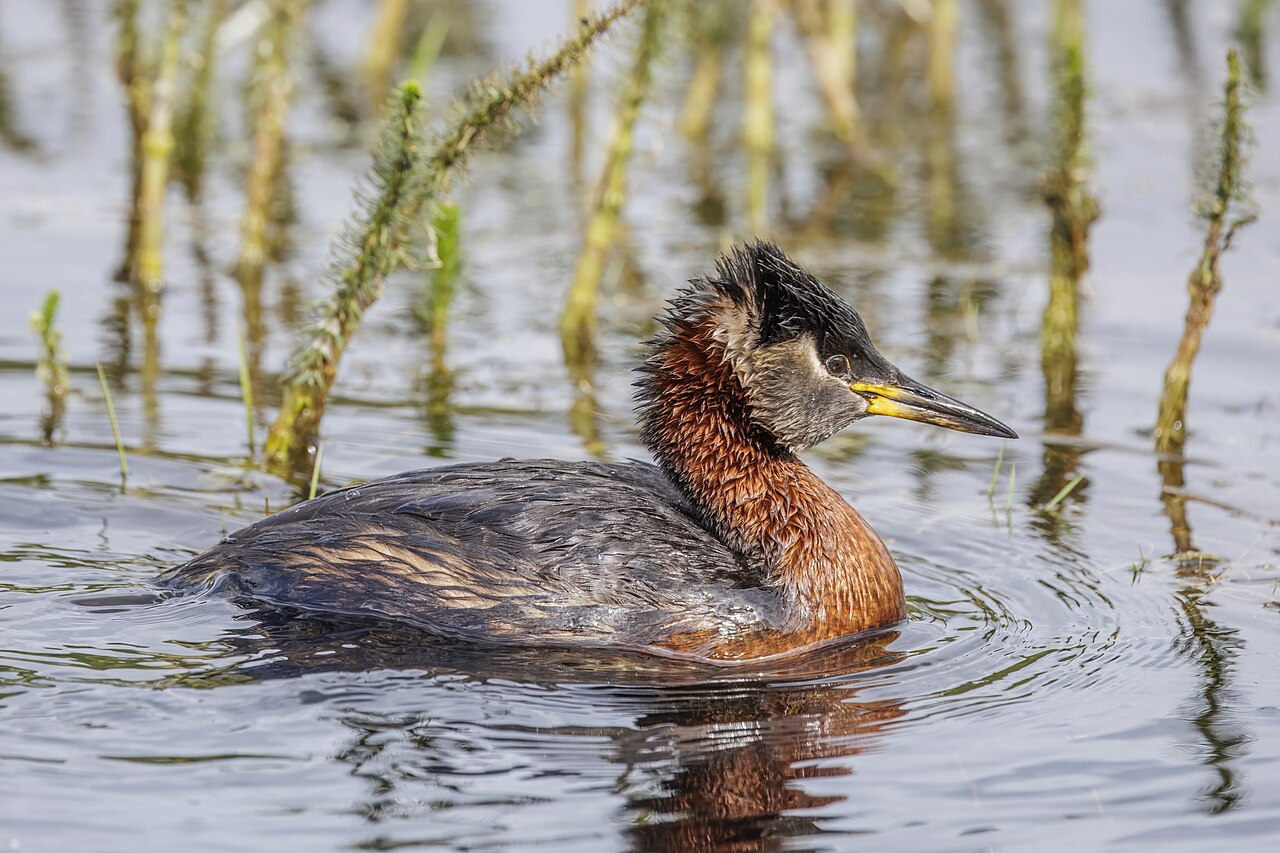
Red-necked grebe
Podiceps grisegena- Sublittoral sediment
- Surface standing waters
- Littoral zone of inland surface waterbodies
-
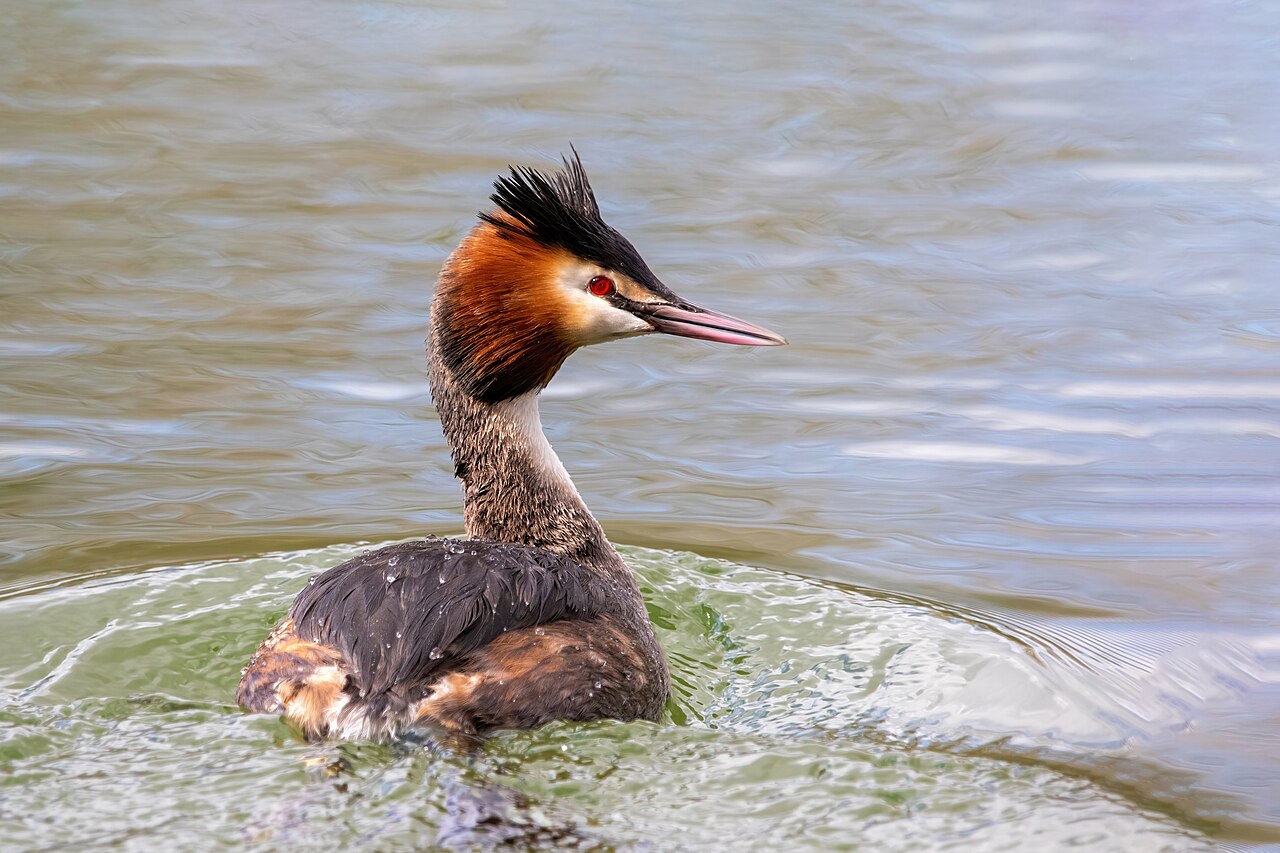
Great crested grebe
Podiceps cristatus- Surface standing waters
- Littoral zone of inland surface waterbodies
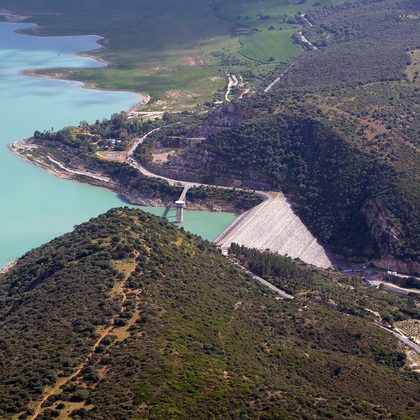 Highly artificial man-made waters
- Sublittoral sediment
-

Eared grebe
Podiceps nigricollis- Surface standing waters
- Highly artificial man-made waters
- Sublittoral sediment
- Littoral zone of inland surface waterbodies
Vagrants 1 species
Birds blown in from other continents. They have no range here, and so no distribution map.
