All species › Grebes › Grebes › Little Grebe
Little Grebe | Tachybaptus ruficollis
Dodaars | Zampullín común | Zwergtaucher | טבלן גמדי | Grèbe castagneux
The smallest and roundest grebe in Europe. Its whinnying laugh from an overgrown ditch usually gives it away long before the eye finds it.

Click a thumbnail to switch the photo above.
Voice
The song is a long, accelerating and descending whinny, a laughing whee-hee-hee-hee, often given in duet. There is also a sharp weet in alarm. Heard from March into July, strongest at first light, but also on mild winter days when the first territories are claimed.
Recording: Flor WMCH — CC BY-SA 4.0 · Wikimedia Commons
Identification
Small, dumpy and short-billed, with a fluffy pale rear end that sticks up like a powder puff. Breeding birds are dark brown with a chestnut cheek and neck and a bright, obvious yellow-green spot at the gape. In winter far paler: warm buff flanks, brown upperparts and a vague pale throat, with the gape spot dull.
Confusion species
Only young Great Crested Grebes and small diving ducks mislead, but the Little Grebe is markedly smaller and shows no white wing patch at all in flight. From Black-necked and Slavonian Grebes it differs in the short, blunt bill, the brown rather than greyish tones and the pale stern.
Habitat
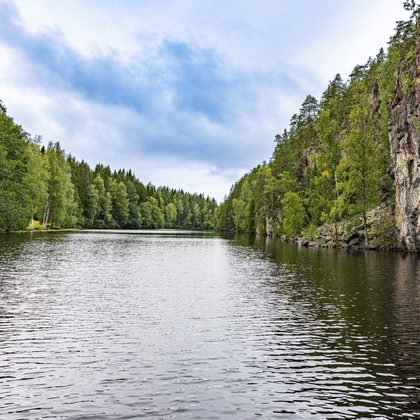
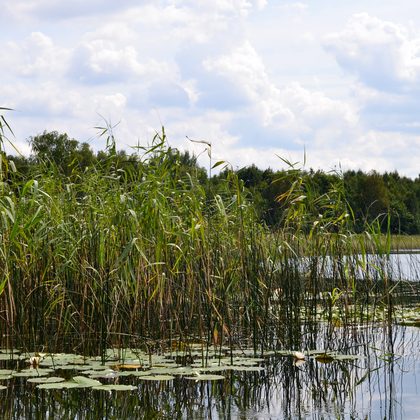
Small, shallow, sheltered waters: clay pits, moorland pools, ditches, town ponds, canals with reed fringes and slow streams. Nests on a floating platform tucked against overhanging bank vegetation. In winter it also uses larger, more open water, harbours and ice-free stretches of canals and rivers.
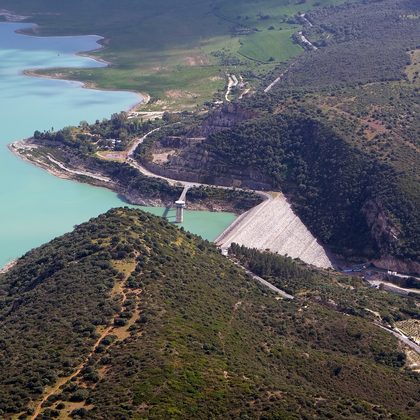
Where the bird is most at home, classified with EUNIS — the European standard for habitats.

Range and movements
Widespread over almost all of Europe. In north-western Europe a common breeder of small waters that also uses canals and harbours in winter; northern and eastern birds move away ahead of frost. Around the Mediterranean it is present year-round on rivers, reservoirs and lagoons, up into the mountains.
- Resident
- Breeding (summer)
- Winter
- Passage
- dark = core range, pale = thinly spread
How and when to look
Walk a reedy ditch or clay pit early on an April morning and simply stand still: the whinny will come. In a hard winter it pays to check ice-free spots in harbours and lock basins, where Little Grebes concentrate on the last open water.
Conservation status
Not globally threatened (IUCN: Least Concern). Severe frost causes occasional heavy mortality. The main pressures are ditch clearance during the breeding season, disturbance by watersports and the removal of rank bankside vegetation.
Scientific name
Tachybaptus ruficollis | (Pallas, 1764)
Pallas described the species in 1764 as Colymbus ruficollis; because it was later moved to another genus, the author and year stand in brackets. The genus Tachybaptus was introduced in 1853 by Reichenbach. Tachybaptus is Greek, from takhus 'fast' and baptō 'to sink under, dive'. ruficollis is Latin, from rufus 'reddish' and collum 'neck', after the chestnut throat and neck sides in breeding plumage. The specimen the first description was based on came from Holland.