All species › Pigeons and doves › Pigeons and doves › Stock dove
Stock dove | Columba oenas
Holenduif | Paloma zurita
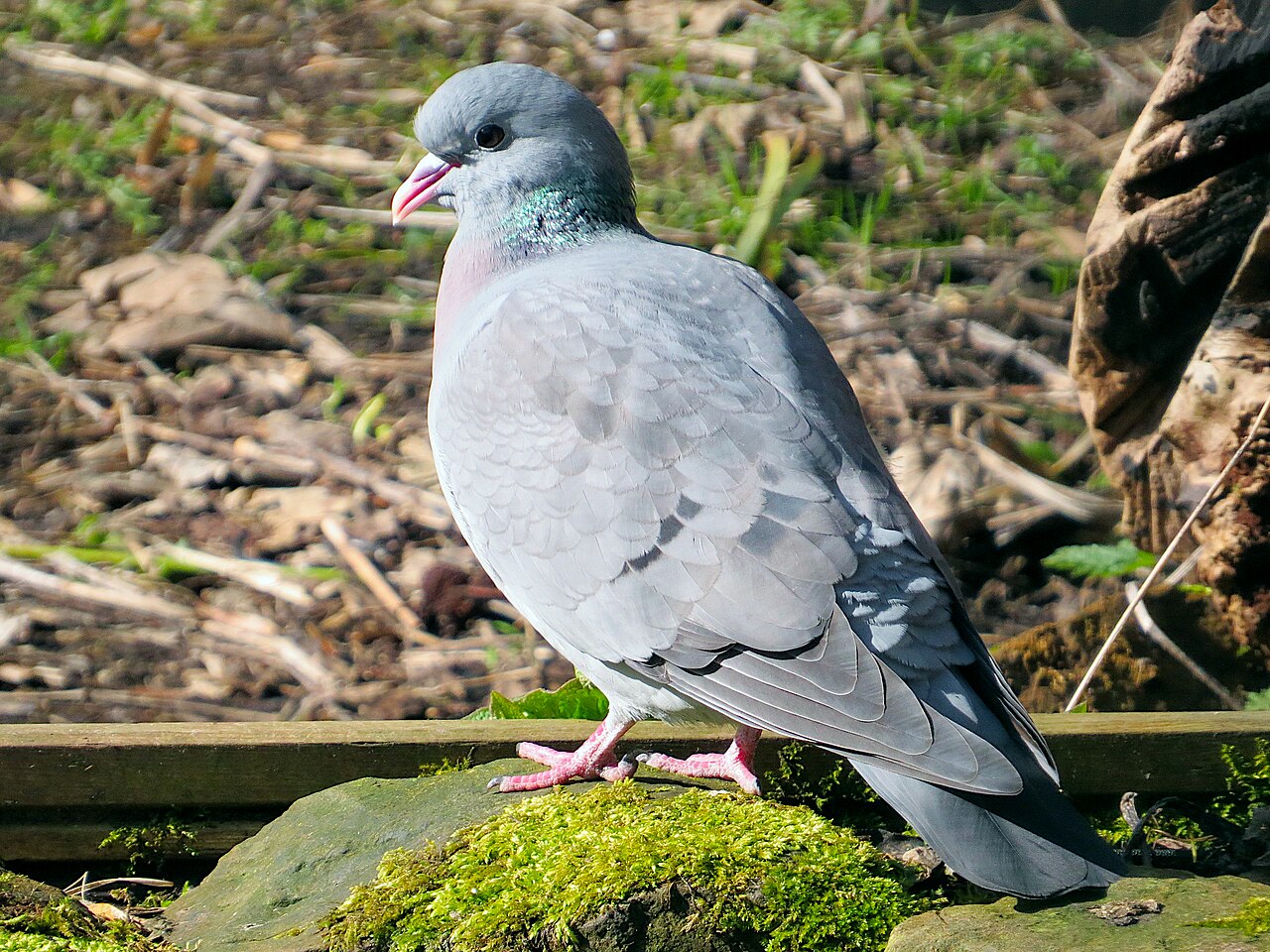
The stock dove is the modest middle size between Woodpigeon and feral pigeon: smaller, bluer and more compact, with no white anywhere in the plumage. It nests in tree holes and so depends on old timber and on black woodpeckers.
Voice
A dull, two-syllable, faintly sighing ooo-wup, ooo-wup, stressed at the front and repeated in long series, far more monotonous and hollow than a Woodpigeon's cooing. Heard mainly from February to June in the early morning, and already on sunny days in midwinter.
Recording: Hannu Varkki — CC BY-SA 4.0 · Wikimedia Commons
Identification
Uniform blue-grey with a green-glossed neck patch, a wine-pink breast and two short, broken black bars on the wing. The eye is dark and the bill yellow with a white cere. In flight the grey central panel of the wing stands out, framed by a broad dark trailing edge and dark wingtips.
Confusion species
Woodpigeon is larger, with a white neck patch and a broad white wing bar; either feature rules stock dove out. Feral and Rock Doves show two broad, unbroken black wing bars and a white rump, or at least a pale body with contrasting white underwings, whereas stock dove has a plain grey rump and dark underwings.
Habitat
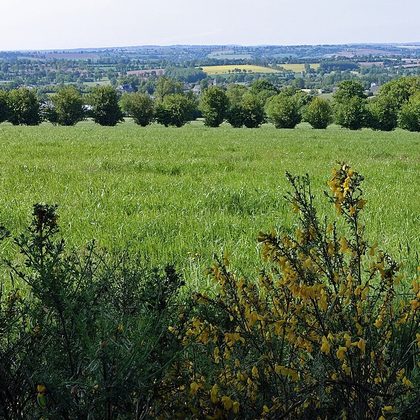
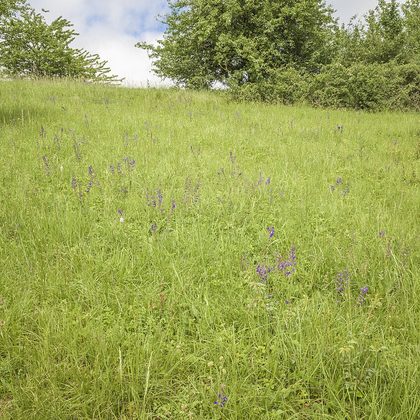
Old broadleaved woodland, parkland, hedgerow trees and farmyards with hollow trees, and also cliffs, dunes and even rabbit burrows. Feeds on arable fields, stubbles and grassland, often in mixed flocks with Woodpigeons and Jackdaws. Readily takes over black woodpecker holes and boxes put up for tawny owl or Jackdaw.
Where the bird is most at home, classified with EUNIS — the European standard for habitats.


Range and movements
Breeds across nearly all of Europe, with strongholds in the lowland woods of western and central Europe; the Netherlands holds a large and growing population. Northern birds move south and swell winter numbers in France and Iberia. In Spain it is both a breeder and a numerous winter visitor on the meseta.
- Resident
- Breeding (summer)
- Winter
- Passage
- dark = core range, pale = thinly spread
How and when to look
Go to an old oak or beech wood at first light in March and listen for the monotonous cooing, then follow the sound to a tree with woodpecker holes. In October and November scan through migrating Woodpigeons: Stock dove flies faster, looks darker and lacks any white wing bar.
Conservation status
After the crash caused by mercury seed dressings and pesticides last century the species has recovered strongly and is now increasing in the Netherlands, helped by the spread of the black woodpecker and by nest boxes. Felling of old hollow trees and the conversion of mixed farmland remain the main constraints.
Scientific name
Columba oenas | Linnaeus, 1758
Linnaeus described the species in 1758 and placed it straight away in the genus where it still stands. He introduced the genus Columba in that same work. Columba is Latin for 'dove' and goes back to Greek kolumbos 'diver', from kolumbaō 'to dive, to swim'; classical writers used it of the rock dove for the swimming stroke of its wings in flight. oenas is Ancient Greek oinas, the name of a pigeon. The specimen the first description was based on came from Sweden.