All species › Falcons › Falcons and caracaras
Falcons and caracaras | Falconidae
Valken en caracara's | Halcones y caracaras | Falcões e caracarás
Nineteen species in six genera occur in this guide (Herpetotheres, Micrastur, Caracara, Ibycter, Daptrius and Falco), one of them only as a vagrant. In the true falcons the cutting edge of the upper mandible carries a sharp tooth that fits a notch in the lower: they kill with a bite through the neck, not with the crushing power of the foot as hawks do. Their wing is long and pointed and the beat stiff and rowing; inside the nostril sits a small bony knob that breaks the airflow in fast dives. American Kestrel hunts lizards and insects from a post or wire, Bat Falcon catches bats and birds at dusk, and Aplomado Falcon and the rare Orange-breasted Falcon take birds in the air; Peregrine Falcon and Merlin come mainly as winter visitors from North America. The forest falcons (Micrastur) hunt with short, rounded wings in the interior of the forest, and Laughing Falcon specialises in snakes. The caracaras are built far less for speed: they walk on the ground and eat carrion, insects and small animals; Yellow-headed Caracara also picks ticks and insects from livestock, Black Caracara forages along the rivers of Amazonia, Chimango Caracara on grassland and fields in the south, and Red-throated Caracara raids wasp nests. The true falcons make no nest but lay on a cliff ledge, in a tree hole, on a building or in a disused nest of another bird, whereas the caracaras often build a stick nest of their own. The eggs are buff and densely covered with red-brown markings; the clutch is usually two to five, incubated mostly by the female while the male brings the food.
Native species 18 species
Species that occur here by nature: breeding birds, winter visitors and passage migrants. They are arranged by genus, in the sequence of the list.


Micrastur 6 species
-
Buckley's Forest Falcon
Micrastur buckleyi Tall terra firme forest
 Várzea (whitewater flooded forest)
 Secondary forest and forest edge
-

Collared Forest Falcon
Micrastur semitorquatus- Tall terra firme forest
 Coastal lowland forest
 Interior semi-deciduous forest
 Cerradão and dry woodland
 Gallery forest and woodland islands of the Pantanal
- Várzea (whitewater flooded forest)
 Dry forest and thorn scrub of northern Venezuela
-

Slaty-backed Forest Falcon
Micrastur mirandollei- Tall terra firme forest
- Várzea (whitewater flooded forest)
 Igapó (blackwater flooded forest)
- Secondary forest and forest edge
-

Barred Forest Falcon
Micrastur ruficollis- Tall terra firme forest
- Coastal lowland forest
 Montane forest of the Serra do Mar
 Montane forest of the Venezuelan Andes and Perijá
 Montane forest of the Venezuelan coastal range
 Highland forest of the Guiana Shield
 Veredas and gallery forest
-
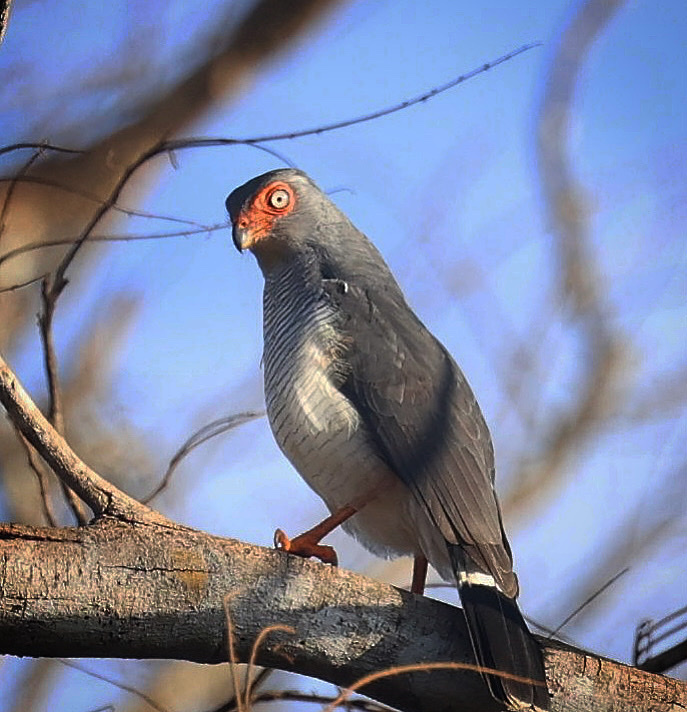
Cryptic Forest Falcon
Micrastur mintoni- Tall terra firme forest
- Coastal lowland forest
 Northeastern coastal forest
 Bamboo and liana forest
- Várzea (whitewater flooded forest)
-

Lined Forest Falcon
Micrastur gilvicollis- Tall terra firme forest
- Várzea (whitewater flooded forest)
 White-sand forest and campina
- Highland forest of the Guiana Shield
Caracara 1 species


Daptrius 3 species
-

Yellow-headed Caracara
Daptrius chimachima Pasture and arable land
 Cerrado savanna
 Seasonally flooded plain
 Llanos savanna
- Secondary forest and forest edge
-

Black Caracara
Daptrius ater Large rivers and sandbars
- Várzea (whitewater flooded forest)
 Floating meadows and river islands
 Blackwater rivers and small streams
- Secondary forest and forest edge
-

Chimango Caracara
Daptrius chimango Pampa grassland
- Pasture and arable land
 Southern marshes and lagoons
 Sandy beaches and dunes
 Towns, cities and gardens
Falco 6 species
-

American Kestrel
Falco sparverius- Cerrado savanna
- Pasture and arable land
- Towns, cities and gardens
- Llanos savanna
 Caatinga scrub
 Savannas of the Guianas
-

Merlin
Falco columbarius Mudflats, lagoons and salt flats
 Mangroves
- Llanos savanna
- Pasture and arable land
- Towns, cities and gardens
-

Orange-breasted Falcon
Falco deiroleucus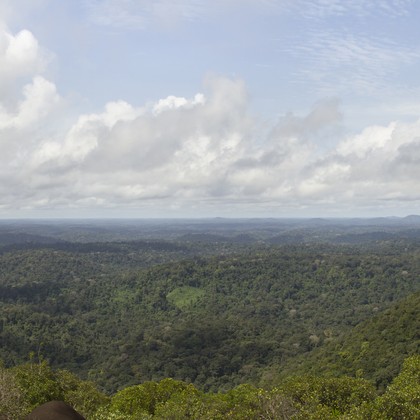 Inselbergs and rock outcrops
- Tall terra firme forest
- Highland forest of the Guiana Shield
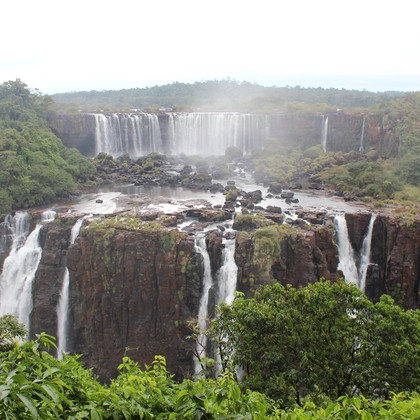 Rapids and waterfalls
-

Bat Falcon
Falco rufigularis- Secondary forest and forest edge
- Tall terra firme forest
- Várzea (whitewater flooded forest)
- Coastal lowland forest
- Montane forest of the Venezuelan Andes and Perijá
- Montane forest of the Venezuelan coastal range
-

Aplomado Falcon
Falco femoralis- Cerrado savanna
- Llanos savanna
- Savannas of the Guianas
- Pampa grassland
- Seasonally flooded plain
- Pasture and arable land
-

Peregrine Falcon
Falco peregrinus- Mudflats, lagoons and salt flats
- Towns, cities and gardens
- Sandy beaches and dunes
- Large rivers and sandbars
- Llanos savanna
- Mangroves
Vagrants 1 species
Birds blown in from other continents. They have no range here, and so no distribution map.
