All species › Passerines › Thrushes and allies
Thrushes and allies | Turdidae
Lijsters | Zorzales y mirlos | Sabiás e afins
Medium-sized birds with an upright carriage, long strong legs and a moderately long slender bill; this guide has 29 species in five genera: Myadestes, Cichlopsis, Hylocichla, Catharus and Turdus. On the ground they work in short stages — a few hops, a halt to look and listen, then a strike — and besides earthworms and insects they eat many berries and fruits. The true thrushes (Turdus) make up the bulk: species of rainforest, várzea and white-sand forest in Amazonia, such as Black-billed and White-necked Thrushes, Pale-breasted and Rufous-bellied Thrushes of open woodland, parks and gardens in central and southern Brazil, Pantepui Thrush on the table mountains of the Guiana Highlands, and Great Thrush in the Andes of Venezuela. Creamy-bellied Thrush moves north from the south in the southern winter, and from October to April Catharus thrushes from North America winter in the forests of Amazonia; Wood Thrush and Bicknell's Thrush have been recorded as vagrants. Solitaires (Myadestes, Cichlopsis) sing in montane forest. The song is loud and fluting, built of repeated motifs and often delivered from a high perch, above all at dawn and dusk. The nest is a solid cup, in many species plastered inside with mud; young birds are spotted even where the adults are plain.
Native species 27 species
Species that occur here by nature: breeding birds, winter visitors and passage migrants. They are arranged by genus, in the sequence of the list.
Myadestes 1 species

Cichlopsis 1 species

Catharus 6 species
-

Orange-billed Nightingale-Thrush
Catharus aurantiirostris Montane forest of the Venezuelan coastal range
 Montane forest of the Venezuelan Andes and Perijá
 Plantations and agroforestry
 Highland forest of the Guiana Shield
-
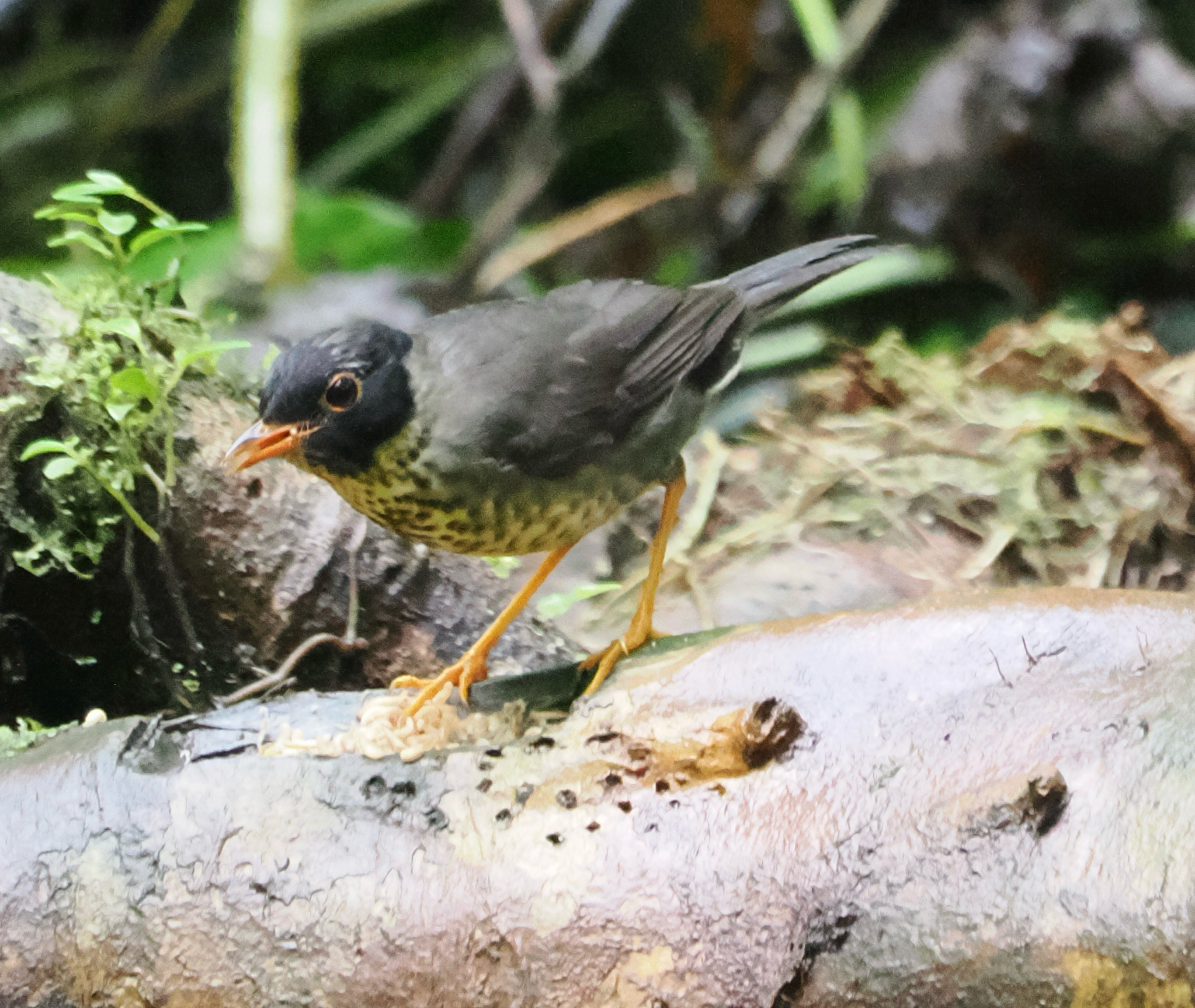
Speckled Nightingale-Thrush
Catharus maculatus- Montane forest of the Venezuelan Andes and Perijá
-

Slaty-backed Nightingale-Thrush
Catharus fuscater- Montane forest of the Venezuelan Andes and Perijá
-

Swainson's Thrush
Catharus ustulatus- Montane forest of the Venezuelan Andes and Perijá
- Montane forest of the Venezuelan coastal range
 Secondary forest and forest edge
- Plantations and agroforestry
-

Veery
Catharus fuscescens Tall terra firme forest
- Secondary forest and forest edge
 Várzea (whitewater flooded forest)
- Montane forest of the Venezuelan coastal range
-

Gray-Cheeked Thrush
Catharus minimus- Tall terra firme forest
- Montane forest of the Venezuelan coastal range
- Montane forest of the Venezuelan Andes and Perijá
- Highland forest of the Guiana Shield
- Secondary forest and forest edge
Turdus 19 species
-

Pale-eyed Thrush
Turdus leucops- Montane forest of the Venezuelan Andes and Perijá
- Montane forest of the Venezuelan coastal range
- Highland forest of the Guiana Shield
-

Chestnut-bellied Thrush
Turdus fulviventris- Montane forest of the Venezuelan Andes and Perijá
-

Glossy-black Thrush
Turdus serranus- Montane forest of the Venezuelan Andes and Perijá
- Montane forest of the Venezuelan coastal range
-

Great Thrush
Turdus fuscater- Montane forest of the Venezuelan Andes and Perijá
 Towns, cities and gardens
 Pasture and arable land
-

Black-hooded Thrush
Turdus olivater- Montane forest of the Venezuelan Andes and Perijá
- Montane forest of the Venezuelan coastal range
- Highland forest of the Guiana Shield
-

Blacksmith Thrush
Turdus subalaris Araucaria forest
 Montane forest of the Serra do Mar
 Interior semi-deciduous forest
 Veredas and gallery forest
-

Creamy-bellied Thrush
Turdus amaurochalinus Cerradão and dry woodland
- Interior semi-deciduous forest
- Veredas and gallery forest
 Gallery forest and woodland islands of the Pantanal
- Secondary forest and forest edge
- Towns, cities and gardens
-

Campina Thrush
Turdus arthuri White-sand forest and campina
 Savannas of the Guianas
- Secondary forest and forest edge
-

Black-billed Thrush
Turdus ignobilis- Secondary forest and forest edge
- Várzea (whitewater flooded forest)
- Towns, cities and gardens
- Plantations and agroforestry
 Floating meadows and river islands
-

Yellow-legged Thrush
Turdus flavipes- Montane forest of the Serra do Mar
 Coastal lowland forest
- Montane forest of the Venezuelan coastal range
- Montane forest of the Venezuelan Andes and Perijá
- Highland forest of the Guiana Shield
- Interior semi-deciduous forest
-

White-necked Thrush
Turdus albicollis- Tall terra firme forest
- Coastal lowland forest
- Montane forest of the Serra do Mar
- Highland forest of the Guiana Shield
- Montane forest of the Venezuelan coastal range
- Interior semi-deciduous forest
-
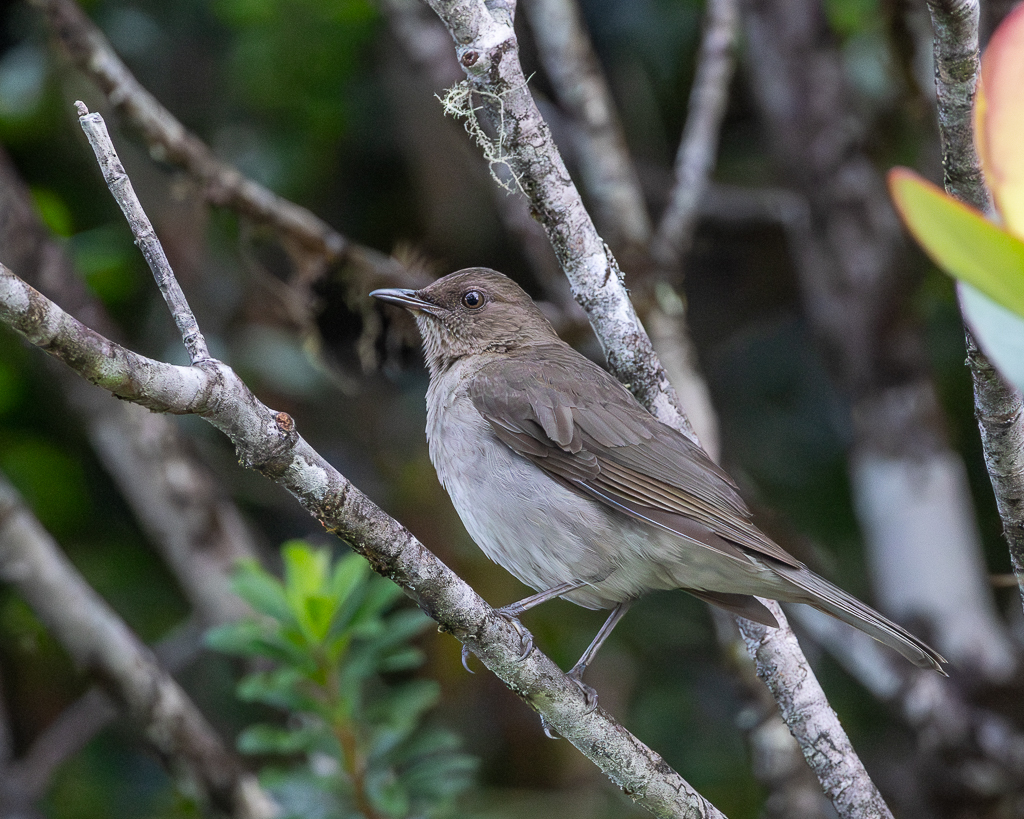
Pantepui Thrush
Turdus murinus- Highland forest of the Guiana Shield
- Secondary forest and forest edge
- Savannas of the Guianas
-

Lawrence's Thrush
Turdus lawrencii- Tall terra firme forest
- Várzea (whitewater flooded forest)
 Igapó (blackwater flooded forest)
-

Pale-breasted Thrush
Turdus leucomelas- Towns, cities and gardens
- Veredas and gallery forest
- Cerradão and dry woodland
- Secondary forest and forest edge
- Interior semi-deciduous forest
- Plantations and agroforestry
 Dry forest and thorn scrub of northern Venezuela
-

Hauxwell's Thrush
Turdus hauxwelli- Várzea (whitewater flooded forest)
- Floating meadows and river islands
- Tall terra firme forest
-

Cocoa Thrush
Turdus fumigatus- Várzea (whitewater flooded forest)
- Secondary forest and forest edge
- Tall terra firme forest
- Coastal lowland forest
- Montane forest of the Venezuelan coastal range
- Plantations and agroforestry
-

Rufous-bellied Thrush
Turdus rufiventris- Towns, cities and gardens
- Interior semi-deciduous forest
- Veredas and gallery forest
- Cerradão and dry woodland
- Araucaria forest
 Dry forest of the north-east
- Gallery forest and woodland islands of the Pantanal
-

Spectacled Thrush
Turdus nudigenis- Towns, cities and gardens
- Secondary forest and forest edge
- Plantations and agroforestry
- Dry forest and thorn scrub of northern Venezuela
 Llanos savanna
-

Varzea Thrush
Turdus sanchezorum- Várzea (whitewater flooded forest)
- Floating meadows and river islands
Vagrants 2 species
Birds blown in from other continents. They have no range here, and so no distribution map.

