All species › Passerines › Ovenbirds and woodcreepers › Grey-headed Spinetail
Grey-headed Spinetail | Cranioleuca semicinerea
Grijskopstekelstaart | Curutié cabecigrís | João-de-cabeça-cinza
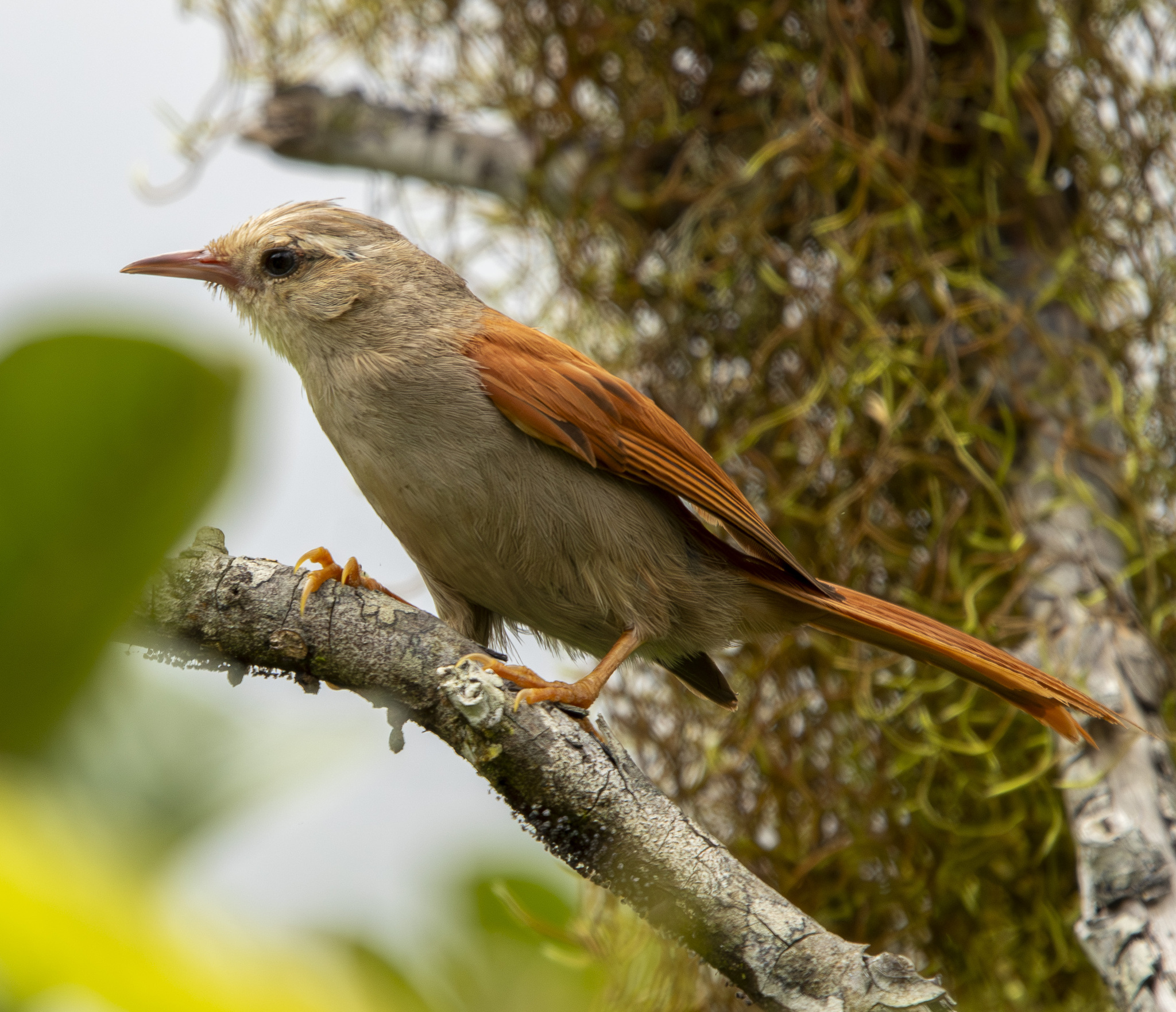
The Grey-headed Spinetail is a spinetail with a grey head and a rufous back, of dry and semi-humid forests in north-eastern and central Brazil, where it is endemic. Pairs forage like tits in the canopy, often with mixed flocks. There are two forms: one in the north-east and one in the centre of the country.
Voice
The song is a fast, high, slightly descending trill, often given by both partners. The call is a short, sharp tsik.
Recording: JAYRSON ARAUJO DE OLIVEIRA — CC BY-NC-SA 4.0 · xeno-canto
Identification
14–15 cm, with a pointed, straight bill and a graduated, rufous tail with spiny tips. Head and neck are grey, with a faint, pale supercilium. Back, wings and tail are rufous. The throat is whitish, the rest of the underparts pale grey, slightly browner on the flanks. The sexes are alike; juveniles are duller, with a browner head.
Confusion species
Pallid Spinetail Cranioleuca pallida has a cinnamon-brown crown with a white supercilium and lives in humid montane forest further south. Sooty-fronted Spinetail Synallaxis frontalis has a rufous crown, a dark forehead and a longer tail, and stays low in thickets. Streaked Xenops Xenops rutilans has an upturned bill, a white cheek stripe and streaked underparts.
Habitat
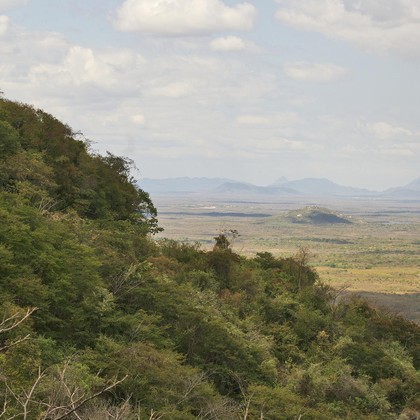
Dry deciduous forest, semi-humid forest, brejos on hills and plateaus, gallery forest and cerradão, from the lowlands to about 1000 m. It forages in pairs or with mixed flocks in the middle and upper strata along branches, vines and dead leaves for insects and spiders. The nest is a globe of twigs and plant fibres hanging from a branch.
Where the bird is most at home, classified by the vegetation units of Amazonia and the Guianas.


Range and movements
Brazil: endemic; in the north-east from Ceará and Piauí to Pernambuco, Alagoas and Bahia, and in the centre of the country in Goiás and adjacent Tocantins and western Minas Gerais. Venezuela, Guyana, Suriname and French Guiana: absent. It does not occur outside the guide area.
- Resident
- dark = core range, pale = thinly spread
How and when to look
Search dry forest and brejos in the north-east, for example in the Serra de Baturité or the Chapada do Araripe in Ceará, for mixed flocks in the canopy. The grey head with the rufous back stands out when the bird climbs along the outside of the branches.
Conservation status
Least Concern (IUCN). The species tolerates some disturbance, but clearing of dry forest and brejos in the north-east and of cerradão in central Brazil reduces and fragments its habitat.
Scientific name
Cranioleuca semicinerea | (Reichenbach, 1853)
Reichenbach described the species in 1853 as Leptoxyura semicinerea; because it was later moved to another genus, the author and year stand in brackets. The genus Cranioleuca was introduced in 1853 by Reichenbach. Cranioleuca is Greek, from kranion 'skull, head' and leukos 'white', after the white crown of the type species C. albiceps. semicinerea is Latin, from semi- 'half' and cinereus 'ash-grey', after the grey head contrasting with the rufous back. The specimen the first description was based on came from Brazil (possibly Bahia).