All species › Passerines › Tyrant flycatchers and allies › Andean Negrito
Andean Negrito | Lessonia oreas
Salvins negrito | Negrito andino | Colegial-andino
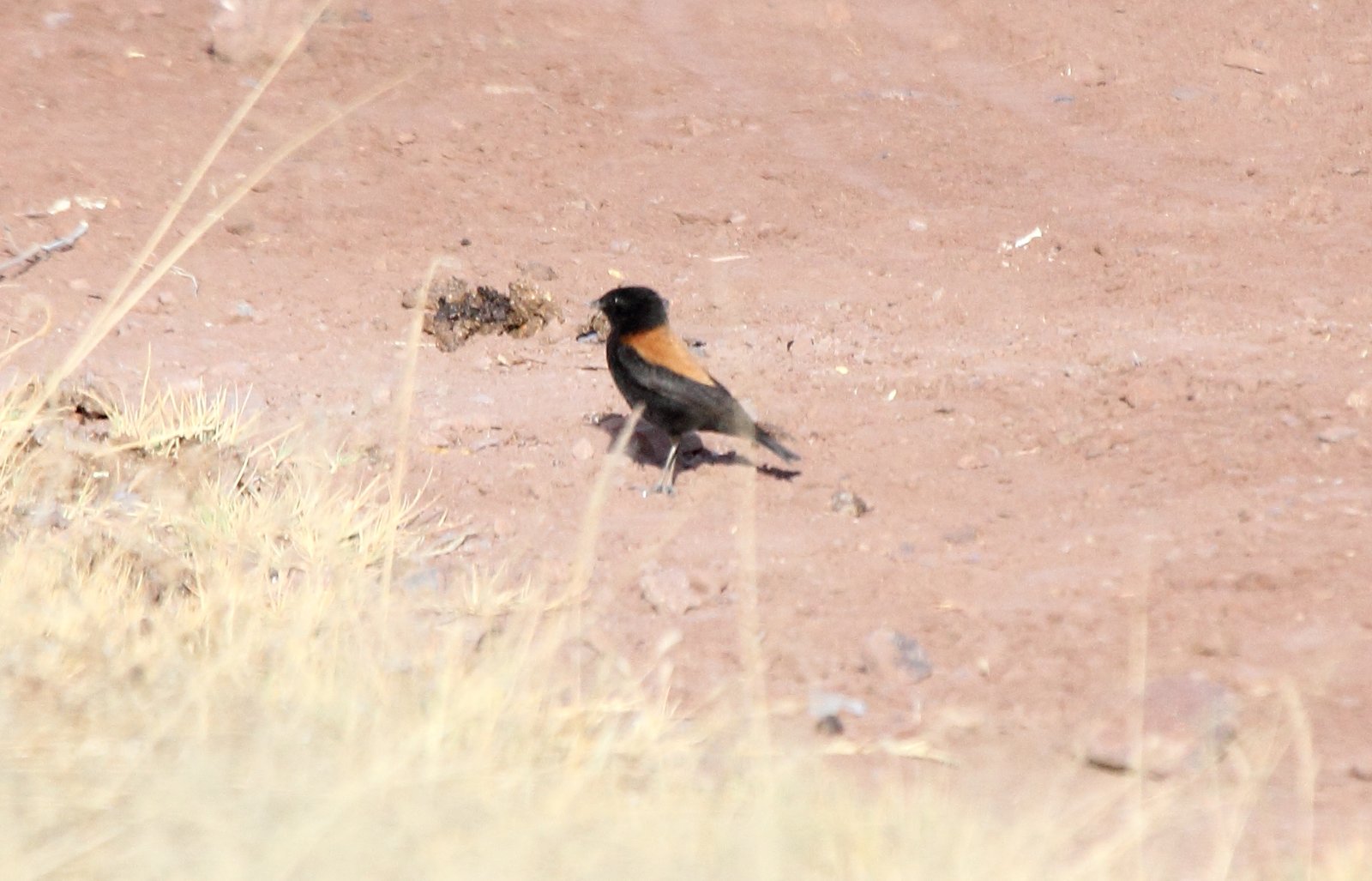
The Andean Negrito is a small, dark tyrant of the shores of lakes, streams and bofedales on the high plateaus of the central Andes. It runs quickly over short grass and mud, frequently flicking up. The male is black with a rufous back and shows silvery-white wings in flight.
Voice
Not very vocal. A short, soft, repeated tit and in alarm a very high zi. In display flight the male makes a rattling sound with the wings and gives short, high calls.
Recording: Dan Lane — CC BY-NC-SA 4.0 · xeno-canto
Identification
12.5–13 cm, small, with an upright stance and a fairly short tail. The male is black with a pale rufous back; the inner webs of the flight feathers are silvery white, making the wings look pale in flight, but they are hardly visible at rest. The female is smaller and blackish brown, with a dull rufous back, a whitish chin, sooty underparts with rufous breast sides and sandy-brown inner webs to the flight feathers.
Confusion species
Austral Negrito Lessonia rufa is smaller, the male has a darker rufous back and no silvery-white wings; in the guide area it lives only in the lowlands of southern Bolivia. White-headed Marsh Tyrant Arundinicola leucocephala has a white head and lives in lowland marshes. Ground tyrants Muscisaxicola are larger, grey or brown, with a black tail with white edges.
Habitat
Open grassland with low shrubs, usually at the edges of lakes, streams, bofedales and wet meadows in the puna and on the altiplano, roughly between 3000 and 4600 m. It walks over the ground and mud and picks up insects or sallies briefly after them. The nest is a cup of grass and feathers, hidden in a grass tussock or among stones.
Where the bird is most at home, classified by the vegetation units of the Andes and the west coast.


Range and movements
Peru: in the Andes from Ancash and Huánuco south to Puno, Moquegua and Tacna. Bolivia: on the altiplano and in the high Andes from La Paz to Potosí. In the austral winter some birds move lower, sometimes down to the coast. Absent from Colombia, Ecuador and the Galápagos. Outside the guide area in northern Chile and north-western Argentina.
- Resident
- dark = core range, pale = thinly spread
How and when to look
Walk along the shores of lakes and bofedales on the high plateau, for example around Lake Titicaca, and look for small black birds running over mud and short grass and fluttering up briefly.
Conservation status
Least Concern. The species is widespread and locally common; drainage and pollution of bofedales and lakes can degrade its habitat locally.
Scientific name
Lessonia oreas | (Sclater & Salvin, 1869)
Sclater & Salvin described the species in 1869 as Centrites oreas; because it was later moved to another genus, the author and year stand in brackets. The genus Lessonia was introduced in 1832 by Swainson. The genus name honours the French naval surgeon and naturalist René Lesson (1794–1849). The species name comes from Greek-Latin oreas, 'mountain nymph', referring to its high-mountain habitat. The specimen the first description was based on came from Tinta, Cusco, Peru.