All species › Passerines › Tyrant flycatchers and allies › Austral Negrito
Austral Negrito | Lessonia rufa
Roodrugnegrito | Negrito austral | Colegial
The Austral Negrito is a small, ground-dwelling tyrant of open, wet terrain in the south of South America. It breeds in Chile and Argentina and migrates north in the austral winter. The guide area lies at the northern edge of its winter range: it occurs regularly only in southern Bolivia, and in Peru only as a vagrant.
Voice
Not very vocal. A repeated, short tchit when alarmed and a soft twitter as a contact call.
Recording: Bernabe Lopez-Lanus — CC BY-NC-SA 3.0 · xeno-canto
Identification
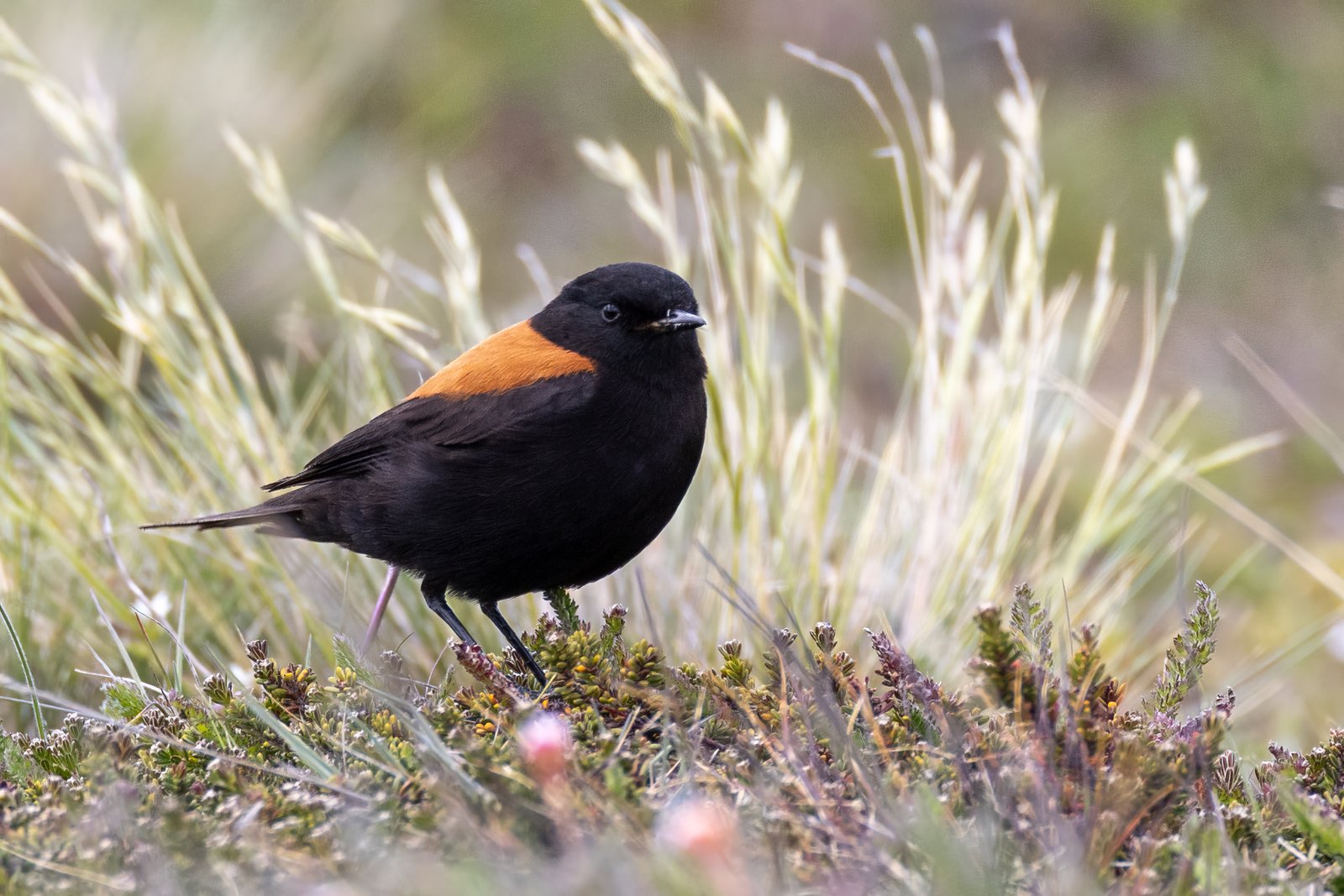
11.5–12.5 cm, small, with an upright stance and a fairly short tail. The male is black with a rufous back. The female is greyish brown, with a warmer rufous back, a pale throat and a dull white belly; the tail is blackish with pale outer edges. Young birds resemble the female.
Confusion species
Andean Negrito Lessonia oreas is very similar, but lives high in the Andes; the male has a paler rufous back and silvery-white inner webs to the flight feathers, which are conspicuous in flight. Females of Spectacled Tyrant Hymenops perspicillatus are larger, streaked and have rufous primaries.
Habitat
Open, wet grassland, pastures and the edges of lakes, marshes and pools, in the guide area in the lowlands and lower valleys of southern Bolivia, mostly below 2000 m. It runs quickly over the ground and picks up insects. It breeds only outside the guide area; the nest is an open cup on the ground.
Where the bird is most at home, classified by the vegetation units of the Andes and the west coast.


Range and movements
Bolivia: scarce winter visitor in the south, mainly in Tarija and southern Santa Cruz and Chuquisaca. Peru: only a few records of vagrants in the south. Absent from Colombia, Ecuador and the Galápagos. Outside the guide area the species breeds in Chile and Argentina south to Tierra del Fuego and winters in northern Argentina, Uruguay, Paraguay and far southern Brazil.
- Summer visitor (c. Apr–Sep)
- Passage (Mar–Apr, Oct–Nov)
- dark = core range, pale = thinly spread
How and when to look
Between May and September, search in southern Bolivia along the edges of pools and in wet pastures for small, dark birds running over the ground.
Conservation status
Least Concern. The species is widespread in its breeding range; in the guide area it occurs only in small numbers.
Scientific name
Lessonia rufa | (Gmelin, 1789)
Gmelin described the species in 1789 as [Alauda] rufa; because it was later moved to another genus, the author and year stand in brackets. The genus Lessonia was introduced in 1832 by Swainson. The genus name honours the French naval surgeon and naturalist René Lesson (1794–1849). The species name comes from Latin rufus, 'red, rufous', referring to the rufous back. The specimen the first description was based on came from Buenos Aires, Argentina.