All species › Passerines › Wrens › Apolinar's Wren
Apolinar's Wren | Cistothorus apolinari
Apolinars winterkoning | Cucarachero de Apolinar | Corruíra-de-apolinar
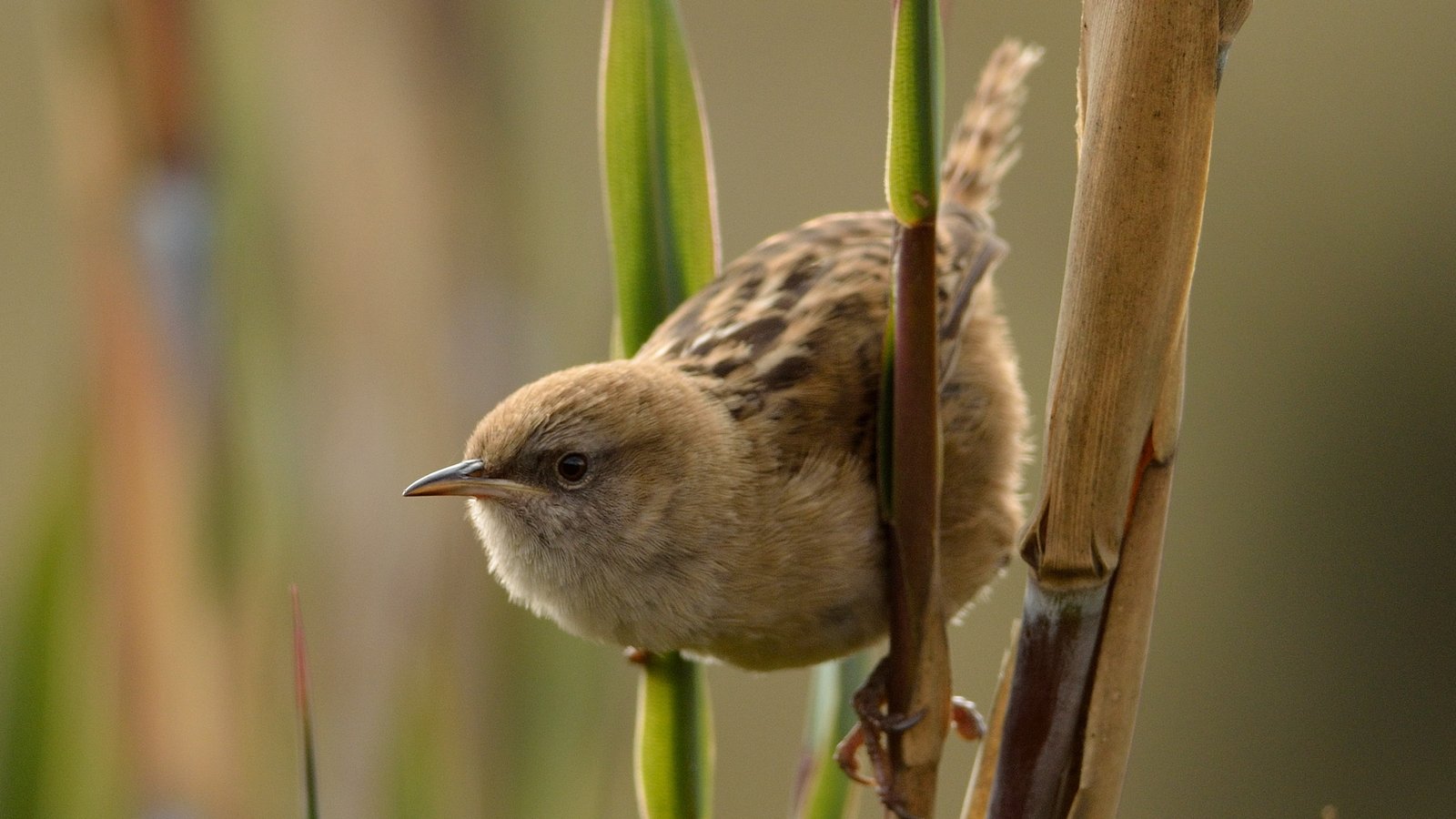
Apolinar's Wren is a fairly large wren endemic to the Eastern Andes of Colombia. It lives in reed and bulrush beds around lakes and marshes on the high plateau of Bogotá and Boyacá, and in a separate population in the páramo. Pairs often sing in duet from dense waterside vegetation.
Voice
The song consists of short, repeated phrases of gurgling, grating and clear notes, often given in duet by both partners. The call is a dry, rasping chrr and a hard tick.
Recording: Felipe Velasco — CC BY-NC-SA 4.0 · xeno-canto
Identification
12–13 cm, with a fairly long, thin bill and a fairly long tail. The crown and nape are plain brown, the mantle black with white streaks, and the rump warm brown. The supercilium is greyish and inconspicuous. The wings and tail are brown with black barring. The throat and breast are greyish to dull buff, the flanks cinnamon. The sexes are alike; young birds are duller, with less distinct mantle streaks.
Confusion species
Grass Wren Cistothorus platensis is smaller and shorter-tailed, with a streaked crown and warmer buff underparts, and lives in drier grassland and páramo, not in reeds. Southern House Wren Troglodytes musculus has an unstreaked back and lives around buildings and in open country.
Habitat
Reeds (Typha) and bulrushes (Schoenoplectus) along lakes, marshes and watercourses on the high plateau, roughly between 2500 and 3100 m; the páramo population lives up to about 4000 m in humid páramo with bamboo (Chusquea) and low shrubs. It eats insects and other invertebrates, which it seeks low in the vegetation. The nest is a domed structure of plant material with a side entrance, attached to reed stems.
Where the bird is most at home, classified by the vegetation units of the Andes and the west coast.


Range and movements
Endemic to Colombia: the Eastern Andes in Cundinamarca and Boyacá, including the Bogotá plateau, Lake Fúquene and Lake Tota, and in the páramo of Sumapaz and Chingaza among other sites. Absent from Ecuador, Peru, Bolivia and the Galápagos.
- Resident
- dark = core range, pale = thinly spread
How and when to look
In the early morning along the reed fringes of lakes and marshes on the Bogotá and Boyacá plateau; birds sing from the edge of the reeds and sometimes show briefly on a stem.
Conservation status
Endangered. The marshes of the high plateau have largely been drained, polluted or overgrown, and the remaining reedbeds are fragmented. Disturbance, fires in the páramo and brood parasitism by Shiny Cowbird Molothrus bonariensis also play a role.
Scientific name
Cistothorus apolinari | Chapman, 1914
Chapman described the species in 1914 and placed it straight away in the genus where it still stands. The genus Cistothorus was introduced in 1851 by Cabanis. The genus name comes from Greek kistos, 'bush', and thouros, 'leaping, running through'. The species name honours Brother Apolinar María (died 1949), a La Salle brother and ornithologist working in Colombia. The specimen the first description was based on came from Suba (Tibabuyes), Bogotá, Colombia.