All species › Passerines › Antpittas › Atuen Antpitta
Atuen Antpitta | Grallaria atuensis
Atuenmierpitta | Tororoí leonado sureño | Tovacuçu-de-atuen
Atuen Antpitta is the southern form of the former Tawny Antpitta and lives only in the high Andes of northern Peru, south of the Marañón. It was recognised as a separate species mainly on the basis of its different song. Like its relatives it lives in open terrain along and above the treeline.
Voice
The song is a three-part hollow whistle, WHEEP tu-TUEE, with a rising end. The call is a harsh, rolling screech. It is most active around dawn and sings from the ground or a prominent perch.
No recording with a suitable Creative Commons licence is available for this species yet.
Identification
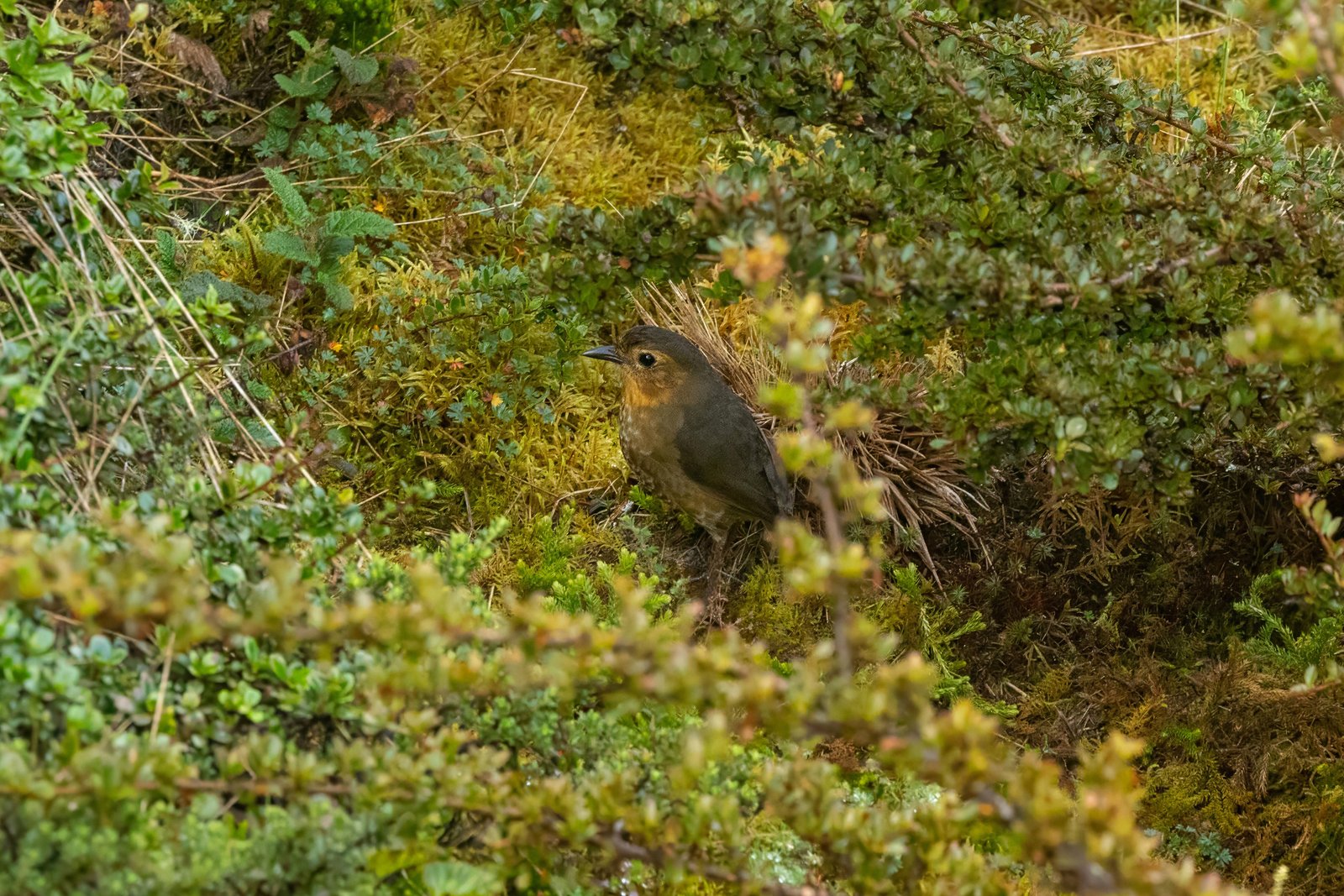
17–18 cm, round and short-tailed, on brownish-grey legs, with a black to blackish-grey bill. The lores, eye-ring and a spot behind the eye are cinnamon-rufous; the ear coverts cinnamon-rufous with black tips. The crown, back, wings and tail are brown to dusky olive-brown. The throat is cinnamon-ochre, the underparts dark olive-ochre, darkest on the breast; small white feather tips on the breast and belly give a scaled pattern. The sexes are alike.
Confusion species
Tawny Antpitta Grallaria quitensis north and west of the Marañón is paler, with a whitish throat, and sings differently. Stripe-headed Antpitta Grallaria andicolus has a streaked head and streaked underparts and often lives in Polylepis woodland. Rusty-tinged Antpitta Grallaria przewalskii and Chachapoyas Antpitta Grallaria gravesi are rufous and live lower, in dense montane forest.
Habitat
Jalca and páramo-like grassland and adjacent montane forest, mainly between 2850 and 3500 m. It searches the ground for insects and other invertebrates. Little is known about its breeding.
Where the bird is most at home, classified by the vegetation units of the Andes and the west coast.


Range and movements
Only in Peru, on the main Andean ridge in southern Amazonas, eastern La Libertad and in San Martín. Absent from Colombia, Ecuador, Bolivia and the Galápagos. Does not occur outside the guide area.
- Resident
- dark = core range, pale = thinly spread
How and when to look
Listen at dawn in the jalca of Amazonas, for example in the highlands around Leimebamba, for the hollow whistled song. The bird sometimes sings from an open, raised spot.
Conservation status
Least Concern. The range is small, but the population is considered stable and the species is fairly common there; it occurs in at least two protected areas. Fragmentation and destruction of the jalca are, however, increasing.
Scientific name
Grallaria atuensis | Carriker, 1933
Carriker described the species in 1933 and placed it straight away in the genus where it still stands. The genus Grallaria was introduced in 1816 by Vieillot. The genus name comes from New Latin grallarius, 'stilt-walker', referring to the long legs. The species name atuensis refers to Atuén in Amazonas, Peru, not necessarily the type locality. The specimen the first description was based on came from Atuén, Amazonas, Peru.