All species › Pelicans, herons and ibises › Herons, egrets and bitterns › Bare-throated Tiger Heron
Bare-throated Tiger Heron | Tigrisoma mexicanum
Mexicaanse tijgerroerdomp | Garza tigre mexicana | Socó-boi-de-garganta-nua
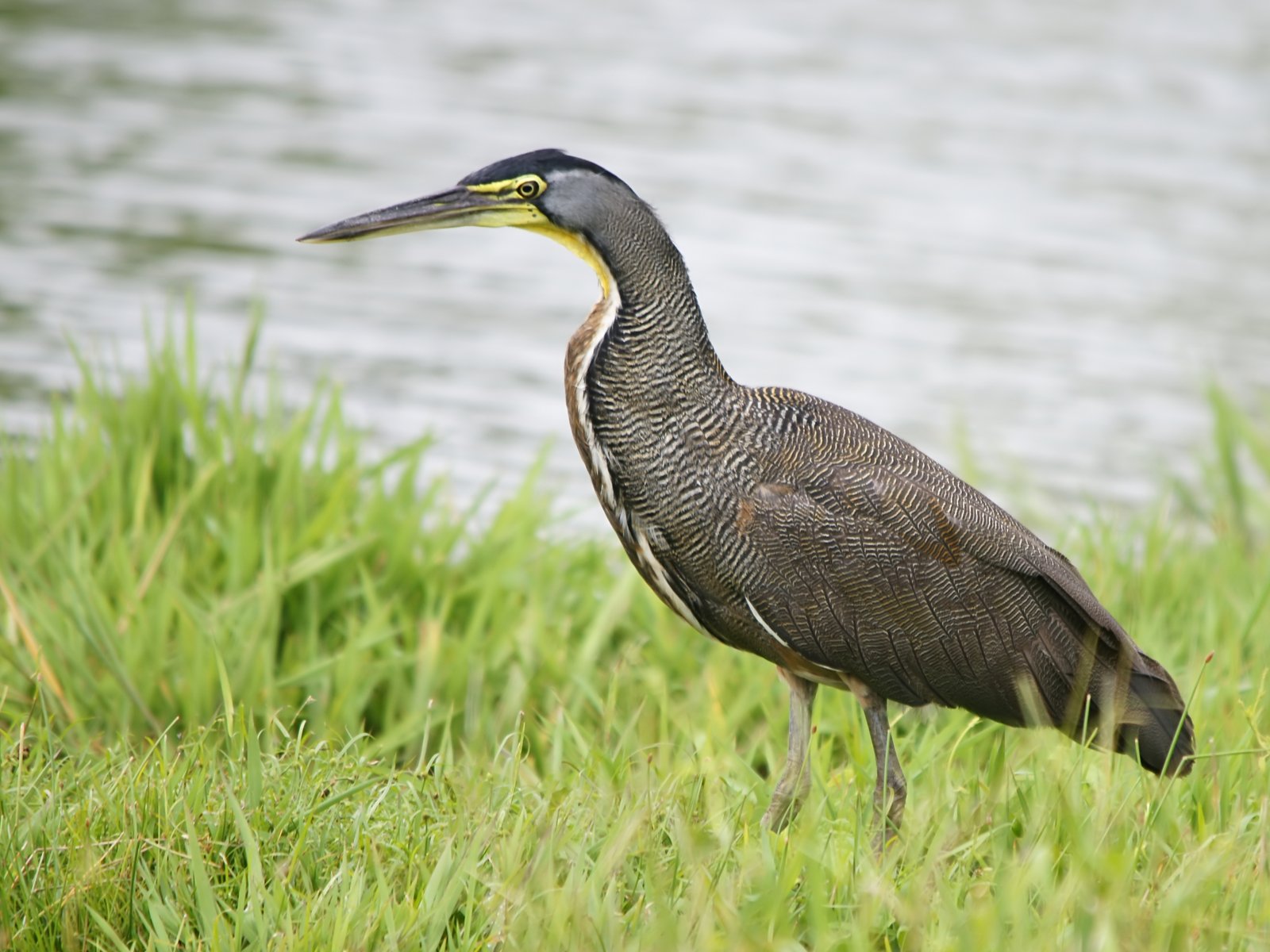
The Bare-throated Tiger Heron is the largest tiger heron and the only one with a bare throat. It ranges from Mexico to north-western Colombia and reaches the guide area only in that far north-west. There it lives mainly in mangroves and coastal marshes.
Voice
A deep, hoarse, coughing wok-wok-wok, mainly at dusk and at night; when alarmed a husky bark.
Recording: Manuel Grosselet — CC BY-NC-SA 4.0 · xeno-canto
Identification
71–81 cm, large and heavy, with a long, strong bill. The throat is bare and yellow to greenish yellow. Adults have a black crown, a grey face and a neck finely barred black and buff, with a whitish central stripe on the foreneck. The back and wings are greyish brown with fine black vermiculations; the belly is cinnamon. The legs are dark greenish grey. Juveniles are buff with black bars but, like adults, already have a bare throat. The sexes are alike.
Confusion species
Rufescent Tiger Heron Tigrisoma lineatum has a feathered throat and a rufous head and neck without a black crown; juveniles are reliably separated only by the throat. Fasciated Tiger Heron Tigrisoma fasciatum is smaller, with a shorter bill and a feathered throat, and lives along fast-flowing mountain rivers.
Habitat
Mangroves, coastal marshes, lagoons, river banks and freshwater marshes in the lowlands, mostly near the coast. It hunts standing, taking fish, crabs, frogs and other small animals. The nest is a platform of sticks in a tree, often over water.
Where the bird is most at home, classified by the vegetation units of the Andes and the west coast.


Range and movements
In Colombia only in the far north-west: around the Gulf of Urabá and in northern Chocó. Absent from Ecuador, Peru, Bolivia and the Galápagos. Outside the guide area from Mexico through Central America to Panama.
- Resident
- dark = core range, pale = thinly spread
How and when to look
Check the mangroves and river mouths around the Gulf of Urabá, especially at low tide in the early morning, when birds stand on mudbanks and along the forest edge.
Conservation status
Least Concern. Locally threatened by mangrove clearance and the drainage of coastal marshes.
Scientific name
Tigrisoma mexicanum | Swainson, 1834
Swainson described the species in 1834 and placed it straight away in the genus where it still stands. The genus Tigrisoma was introduced in 1827 by Swainson. The genus name comes from Greek tigris, 'tiger', and sōma, 'body', after the barred plumage. The species name refers to Mexico. The specimen the first description was based on came from Real del Monte, Hidalgo, Mexico.