All species › Passerines › Cotingas › Black-necked Red Cotinga
Black-necked Red Cotinga | Phoenicircus nigricollis
Fluweelcotinga | Cotinga roja cuellinegra | Saurá-de-pescoço-preto
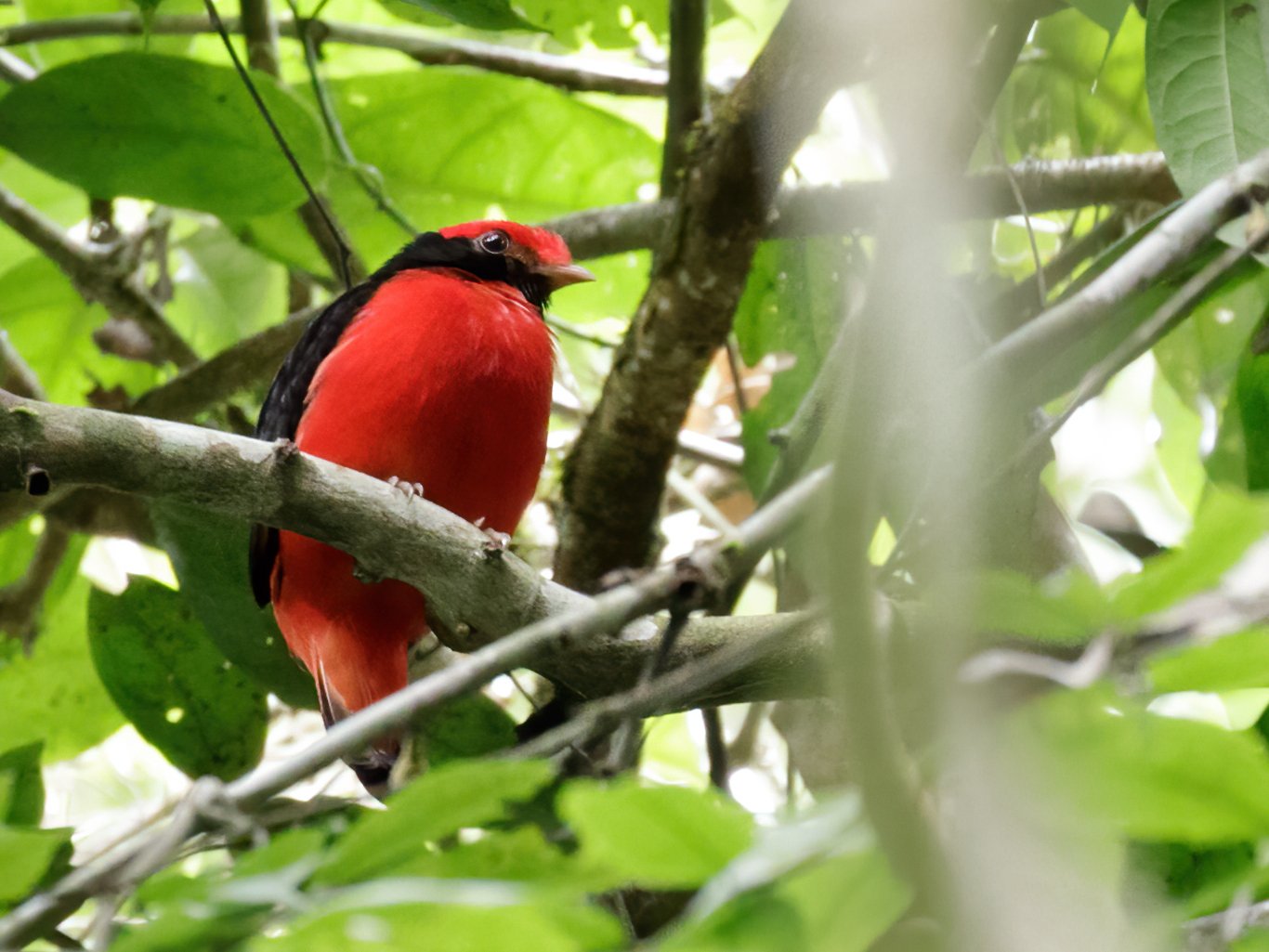
The Black-necked Red Cotinga is a red-and-black cotinga of Amazonian terra firme rainforest in north-western Amazonia. Males display in loose groups at traditional sites in the forest. Away from the leks the species lives unobtrusively in the middle storey and the canopy.
Voice
At the lek males give loud, shrill and squeaky calls. Usually silent elsewhere.
Recording: GABRIEL LEITE — CC BY-NC-SA 4.0 · xeno-canto
Identification
23–25 cm. The male has a glossy scarlet crown; the rest of the head, the throat, neck, back and wings are velvety black. The breast, belly and rump are scarlet; the tail is red with a narrow black terminal band. The female is duller: the crown is reddish, the upperparts are olive-brown, the throat is greyish brown and the underparts are rosy red. Young males at first resemble the female.
Confusion species
The male is practically unmistakable in the guide area. Masked Crimson Tanager Ramphocelus nigrogularis is also red and black, but smaller, with a black mask and a silvery bill base, and lives in small groups near water. The closely related Phoenicircus carnifex lives outside the guide area, in north-eastern Amazonia and the Guianas.
Habitat
Tall, humid terra firme rainforest in the lowlands, especially on sandy or well-drained soils, below about 500 m. It feeds mainly on fruit. Males display in the middle storey at traditional leks. Little is known about the nest.
Where the bird is most at home, classified by the vegetation units of the Andes and the west coast.

Range and movements
In Colombia in the east and south-east of Amazonia, including Caquetá, Vaupés and Amazonas. In Ecuador very locally in the north-east. In Peru in the north-east, mainly north of the Amazon in Loreto. Absent from Bolivia and the Galápagos. Outside the guide area in southern Venezuela and in western Brazil north of the Amazon.
- Resident
- dark = core range, pale = thinly spread
How and when to look
Search tall terra firme forest in north-eastern Peru, for example around Iquitos, or in Colombian Amazonia. Males at a lek are most active in the early morning; listen for their shrill calls.
Conservation status
Least Concern. Its habitat is still largely intact over most of the range, but forest is being lost locally along rivers and roads.
Scientific name
Phoenicircus nigricollis | Swainson, 1832
Swainson described the species in 1832 and placed it straight away in the genus where it still stands. He introduced the genus Phoenicircus in that same work. The genus name comes from Greek phoinix, 'crimson', and kerkos, 'tail'. The species name comes from Latin niger, 'black', and collum, 'neck', after the black neck. The specimen the first description was based on came from Barcelos, Rio Negro, Brazil.