All species › Passerines › Antbirds › Blackish-grey Antshrike
Blackish-grey Antshrike | Thamnophilus nigrocinereus
Zwart-grijze mierklauwier | Batará ceniciento | Choca-preta-e-cinza
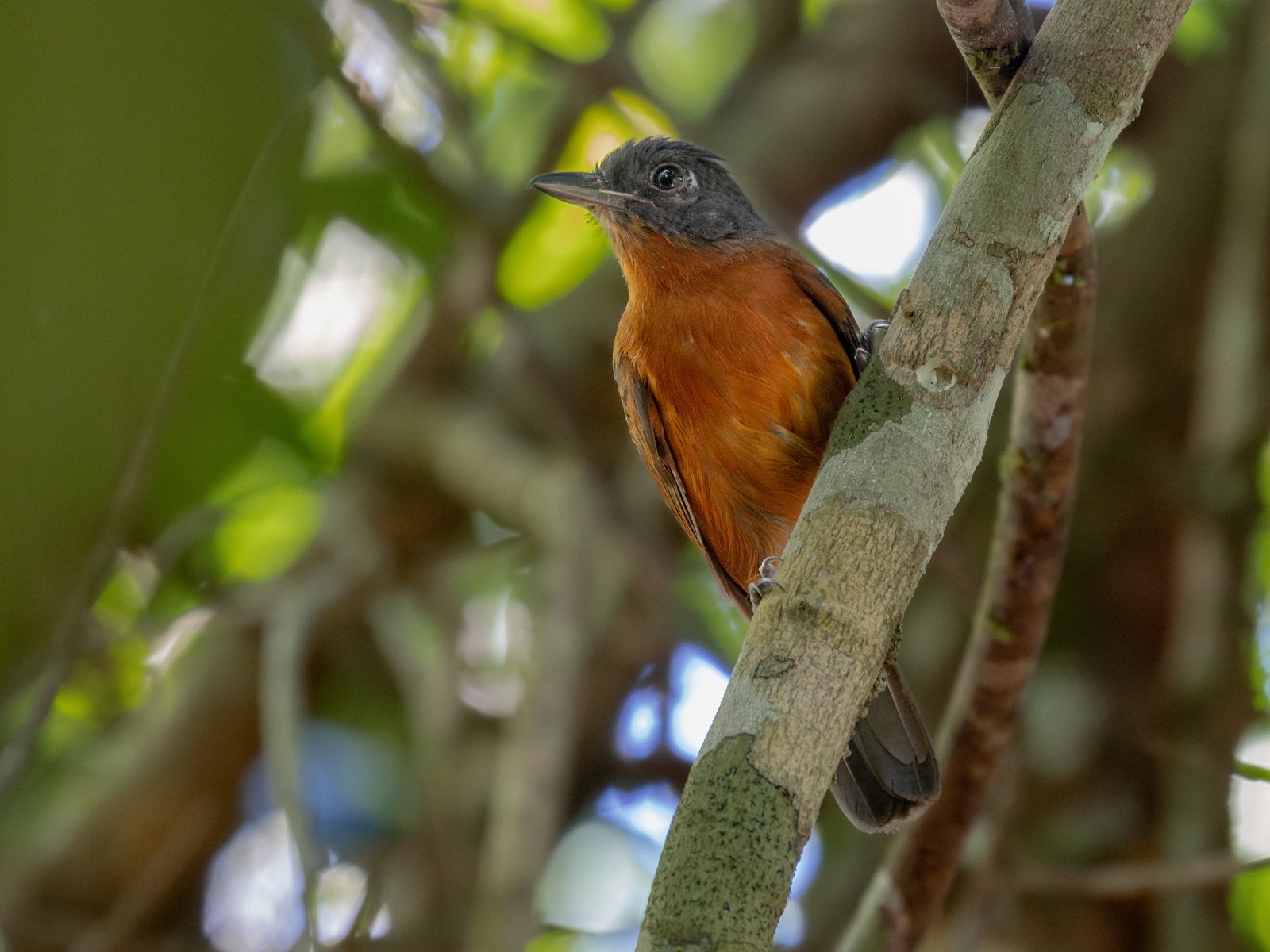
Blackish-grey Antshrike is a sturdy antshrike of riverine forest in northern and eastern Amazonia and the Orinoco region. The male is dark grey with a black crown, the female has a grey head and rufous underparts. In the guide area it occurs only in eastern Colombia, and further in the Brazilian part of the map window along the Rio Negro and the Amazon.
Voice
The song is a series of about ten low, hollow, nasal notes that accelerate and stay level or drop slightly. Calls are a low, complaining kaw and a churring growl.
Recording: Victor Vanegas — CC BY-NC-SA 4.0 · xeno-canto
Identification
16 cm (15–17 cm), with a heavy, hooked bill. The male is blackish grey with a black crown, a concealed white patch between the shoulders, white edges to the scapulars, wing coverts and flight feathers and white tail tips. The female has a blackish-grey crown and face, dark grey upperparts with a rufous tinge, brown wings and tail and rufous underparts, darkest on the breast.
Confusion species
The male Plain-winged Antshrike Thamnophilus schistaceus lacks the white in the wing and lives in the interior of terra firme forest; the female has a rufous crown. The male Amazonian Antshrike Thamnophilus amazonicus is smaller, with white wing spots; the female has an orange-brown head. Castelnau's Antshrike Thamnophilus cryptoleucus is black in both sexes and lives on river islands farther west.
Habitat
Understorey and mid-storey of forest closely tied to rivers: in Colombia seasonally flooded savanna woodland on white sand and gallery forest, in Brazil also várzea, igapó, river islands and the edges of clearings near water. Below 400 m. It lives in pairs and searches dense foliage for insects.
Where the bird is most at home, classified by the vegetation units of the Andes and the west coast.


Range and movements
Colombia: in the east, in the Meta drainage and along the Orinoco and the Vaupés. Absent from Ecuador, Peru, Bolivia and the Galápagos. Outside the guide area in southern Venezuela, along the Rio Negro, the lower Madeira and the Amazon in Brazil, and in French Guiana.
- Resident
- dark = core range, pale = thinly spread
How and when to look
Search gallery forest and flooded riverside forest along the Orinoco near Puerto Carreño or Puerto Inírida. Listen for the low, hollow series of notes from dense thickets close to the water.
Conservation status
Least Concern. The species has a large range; riverside forest is locally affected by clearing and agriculture.
Scientific name
Thamnophilus nigrocinereus | Sclater, 1855
Sclater described the species in 1855 and placed it straight away in the genus where it still stands. The genus Thamnophilus was introduced in 1816 by Vieillot. The genus name comes from Greek thamnos, 'bush', and philos, 'loving': bush-lover. The species name comes from Latin niger, 'black', and cinereus, 'ash-grey'. The specimen the first description was based on came from Rio Tocantins, Pará, Brazil.