All species › Passerines › Swallows › Blue-and-white Swallow
Blue-and-white Swallow | Pygochelidon cyanoleuca
Blauwwitte zwaluw | Golondrina azul y blanca | Andorinha-pequena-de-casa
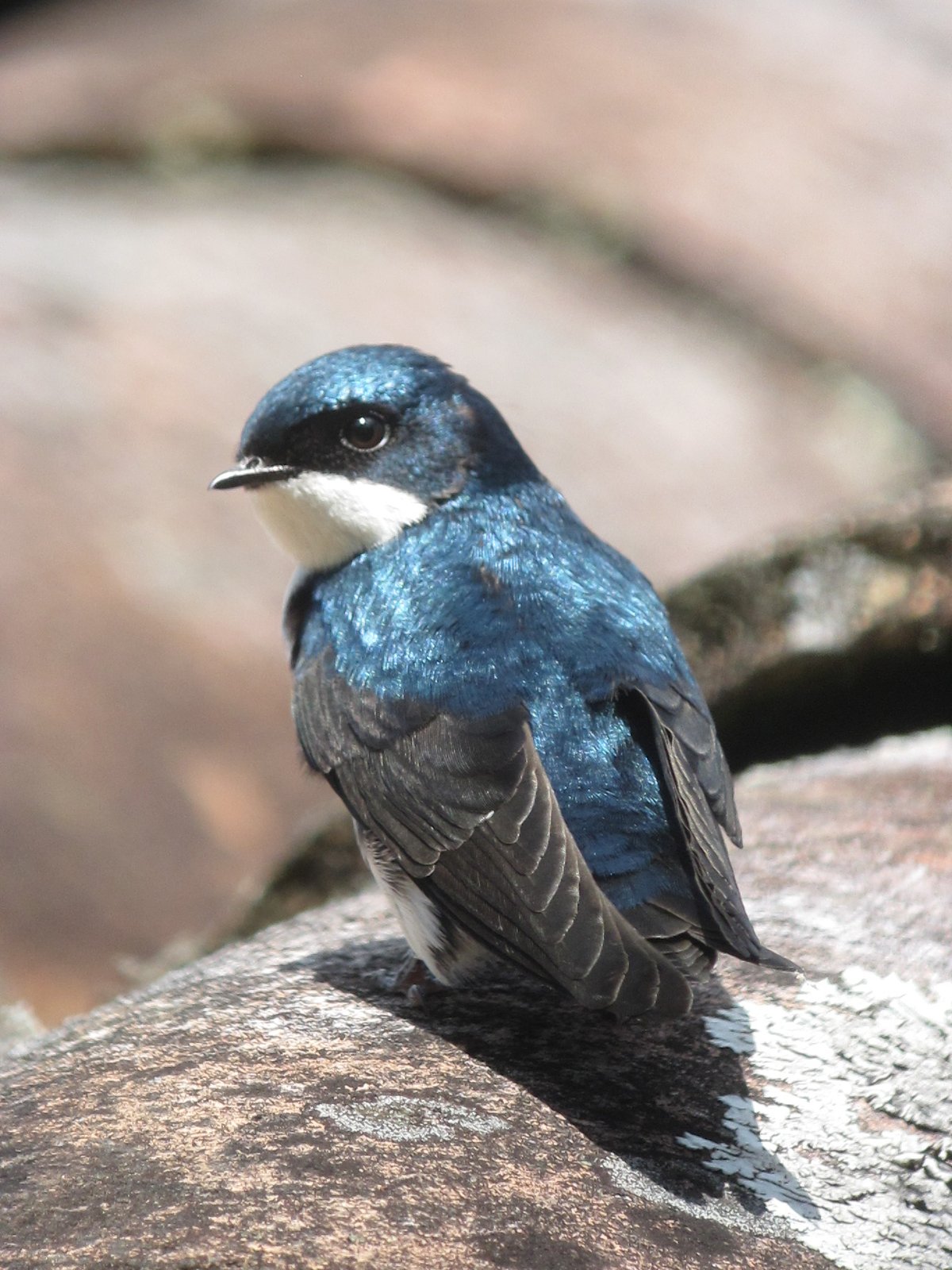
The Blue-and-white Swallow is the swallow of towns, villages and farmland in the Andes: dark steel blue above and white below. It nests in walls, roofs and banks and in large parts of the guide area is the most frequently seen swallow. Besides the residents in the mountains, migrants from the south of the continent reach the lowlands in the austral winter.
Voice
A thin, buzzy dzzzz and a soft, busy twitter, in flight and on roofs and wires; the song is a fine, buzzy warble.
Recording: Stephan Risch — CC BY-NC-SA 4.0 · xeno-canto
Identification
12–13 cm, with a slightly forked tail. The upperparts are glossy dark steel blue, the wings and tail blackish. The underparts are white, with black undertail coverts and grey-brown flanks; the underwing is dark. The sexes are alike. Juveniles are duller and browner above, with a dingy buff throat and breast. Migrants from the south are slightly larger.
Confusion species
Brown-bellied Swallow Orochelidon murina is entirely dark grey-brown below and lives higher in the Andes. Pale-footed Swallow Orochelidon flavipes has a buff throat, dark flanks and pink legs, and hunts in small groups over cloud forest. Black-collared Swallow Pygochelidon melanoleuca has a black breast band and a deeply forked tail. White-winged Swallow Tachycineta albiventer has white wing patches and a white rump.
Habitat
Towns, villages, fields, pasture, roads and clearings in montane forest in the Andes, from sea level to over 3500 m, but most numerous in the mountains; in Peru also in coastal towns. It hunts small insects in fast, agile flight, often in small groups. It nests in holes in walls and under roofs, in burrows in banks and in rock crevices.
Where the bird is most at home, classified by the vegetation units of the Andes and the west coast.


Range and movements
In Colombia, Ecuador, Peru and Bolivia widespread in the Andes and their valleys, locally also in the lowlands; in Peru down to the coast. Migrants from the south winter in the Amazonian lowlands of Bolivia, Peru, Ecuador and Colombia. Absent from the Galápagos. Outside the guide area from Costa Rica to Tierra del Fuego.
- Resident
- dark = core range, pale = thinly spread
How and when to look
In Andean towns and villages, look for swallows on roofs, cables and church towers and around squares; in the lowlands, watch in the austral winter for small groups of migrants among other swallows over rivers.
Conservation status
Least Concern. The species benefits from buildings and open farmland and is common over much of its range.
Scientific name
Pygochelidon cyanoleuca | (Vieillot, 1817) (GBIF: Notiochelidon cyanoleuca)
Vieillot described the species in 1817 as Hirundo cyanoleuca; because it was later moved to another genus, the author and year stand in brackets. The genus Pygochelidon was introduced in 1865 by Baird. The genus name comes from Greek pugē, 'rump', and khelidōn, 'swallow'. From Greek kuanos, 'dark blue', and leukos, 'white', after the blue upperparts and white underparts. The specimen the first description was based on came from Paraguay.