All species › Passerines › Swallows › Tawny-headed Swallow
Tawny-headed Swallow | Alopochelidon fucata
Bruinkopzwaluw | Golondrina cabecicastaña | Andorinha-morena
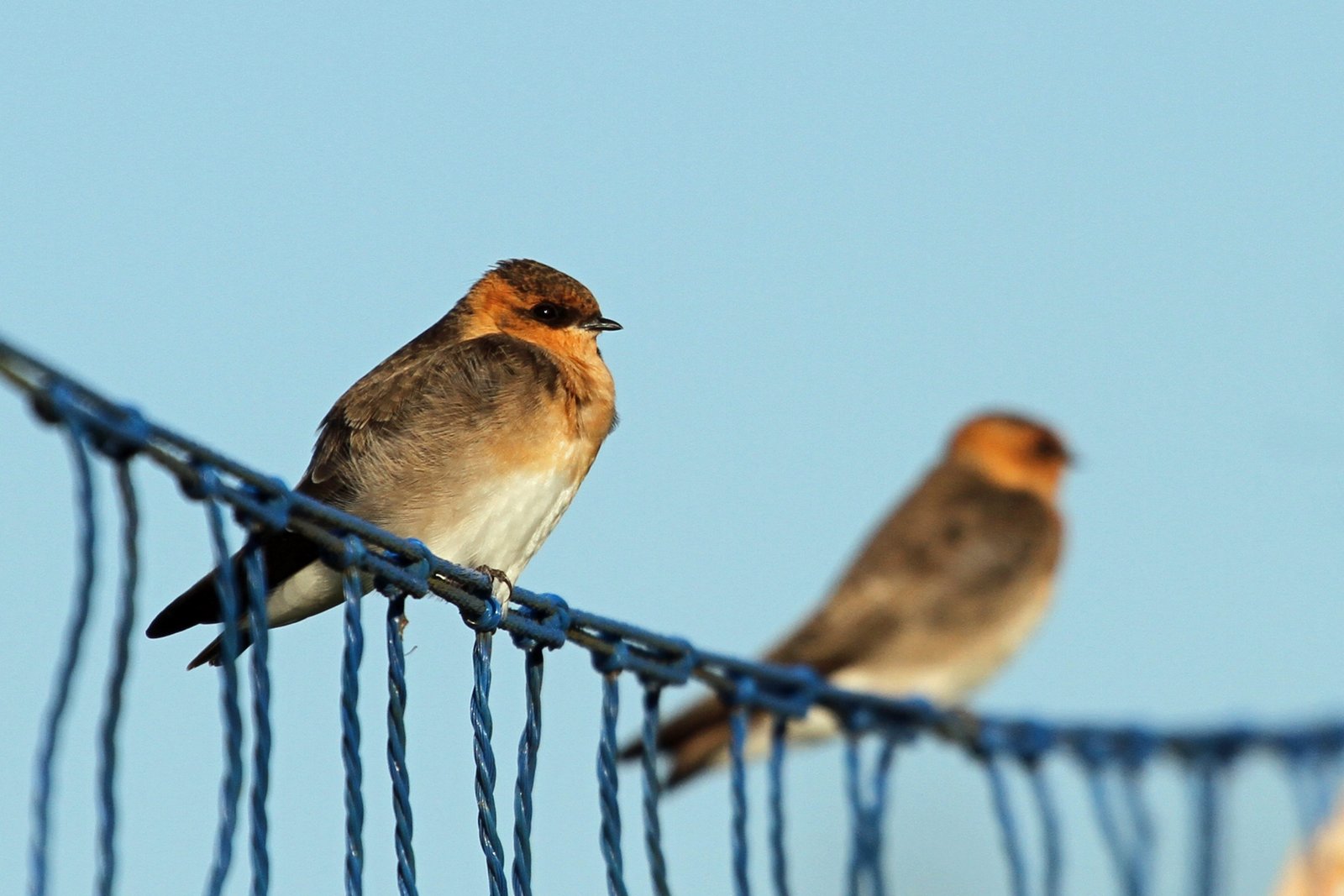
The Tawny-headed Swallow is a small, brown swallow with a tawny to cinnamon head and breast, a bird of open grassland and savanna. It breeds in eastern Bolivia; elsewhere in the guide area it appears in the austral winter as a migrant from the south of the continent. In Colombia and Peru it is scarce and local.
Voice
A soft, trilled call, treeeb, in flight.
Recording: Franco Vushurovich — CC BY-NC-SA 4.0 · xeno-canto
Identification
12 cm, with a short, nearly square tail. The upperparts are greyish brown, the crown darker. The forehead, supercilium, sides of the head and nape are tawny to cinnamon, as are the throat and breast. The belly and undertail coverts are white. The sexes are alike. Juveniles are duller, with less cinnamon on the head.
Confusion species
Southern Rough-winged Swallow Stelgidopteryx ruficollis is larger, with only a cinnamon throat, no cinnamon supercilium or nape, and a yellowish belly. Bank Swallow Riparia riparia has a white throat and a brown breast band. Juvenile Blue-and-white Swallows Pygochelidon cyanoleuca have a dingy buff throat, but are darker above and have black undertail coverts.
Habitat
Open grassland, savanna, wet and seasonally flooded grassland and pasture, often near water, up to about 1600 m. It hunts flying insects low over grass and water, often among other swallows. The nest is in a burrow at least a metre deep in a bank or ditch side.
Where the bird is most at home, classified by the vegetation units of the Andes and the west coast.


Range and movements
In Bolivia resident in the east, with additional migrants from the south in the austral winter. In Peru a winter visitor in the south-east. In Colombia a scarce winter visitor in the east. Absent from Ecuador and the Galápagos. Outside the guide area in south-eastern Venezuela, Brazil, Paraguay, Uruguay and Argentina.
- Resident
- dark = core range, pale = thinly spread
How and when to look
In the austral winter, search over savannas and wet grassland in eastern Bolivia and south-eastern Peru, especially near pools and ditches; look for a small swallow with a cinnamon head among flocks of other swallows.
Conservation status
Least Concern. The species has a large range; conversion of natural grassland to cropland may affect it locally.
Scientific name
Alopochelidon fucata | (Temminck, 1822)
Temminck described the species in 1822 as Hirundo fucata; because it was later moved to another genus, the author and year stand in brackets. The genus Alopochelidon was introduced in 1903 by Ridgway. The genus name combines Ancient Greek alōpos, 'fox-like' (alōpēx means 'fox'), with khelidōn, 'swallow'. The species name comes from Latin fucatus, 'painted'. The specimen the first description was based on came from São Paulo, Brazil.