All species › Passerines › Tanagers and allies › Blue-grey Tanager
Blue-grey Tanager | Thraupis episcopus
Bisschopstangare | Tangara azuleja | Sanhaço-da-amazônia
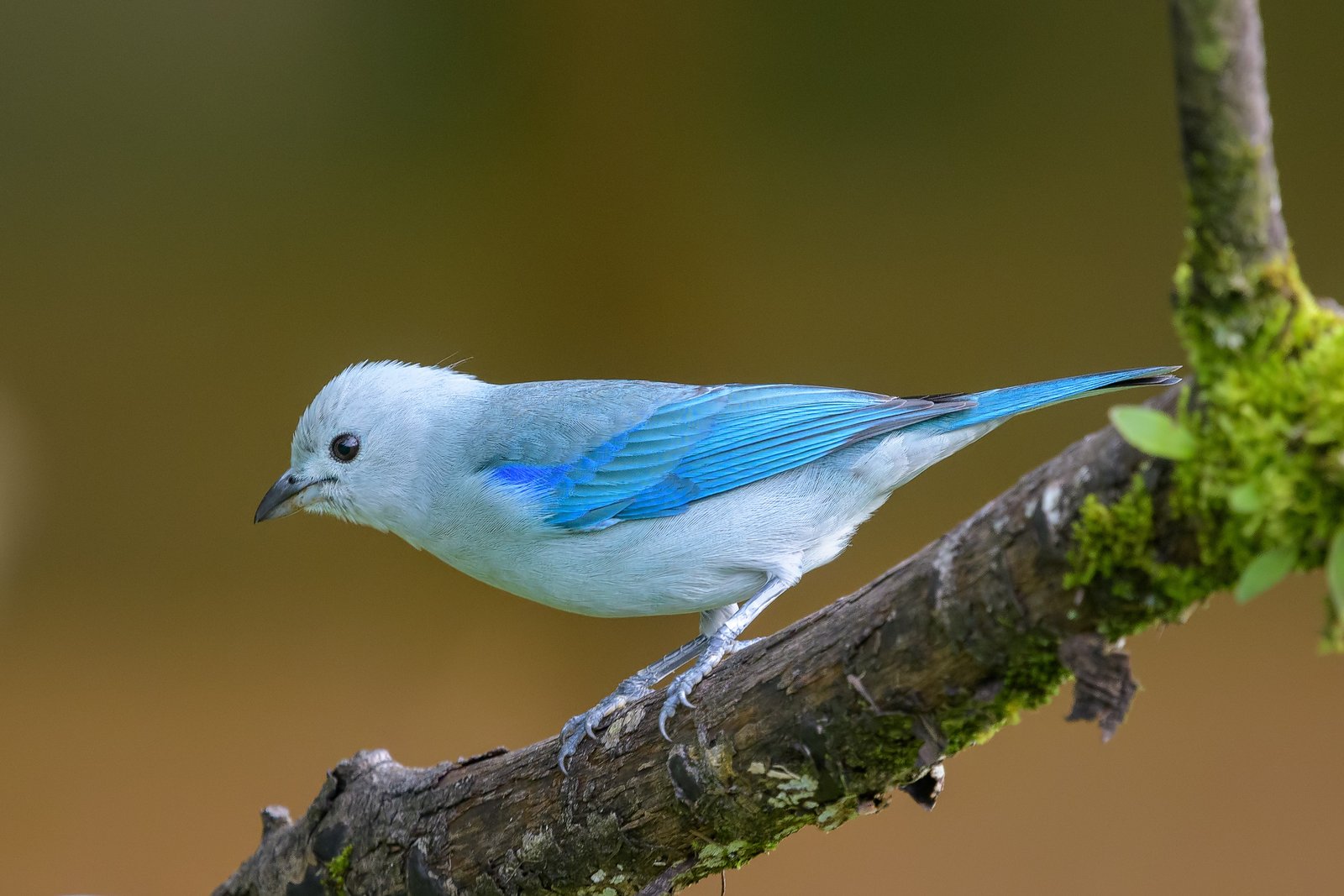
The Blue-grey Tanager is a medium-sized, plain blue-grey tanager of open, semi-open and inhabited country in the lowlands and lower slopes. It is one of the most widespread tanagers of tropical America and lives in pairs or noisy small groups in gardens, parks, plantations and along forest edges.
Voice
Gives sharp tseep and chip notes. The song is a rapid, squeaky and twittering series, often sustained, with a slightly rasping tone.
Recording: Juan Freile — CC BY-NC-SA 4.0 · xeno-canto
Identification
16 cm, with a fairly thick, dark bill. Head and underparts are pale grey with a blue tinge, back and tail bluer. The wings are brighter blue; the lesser coverts on the shoulder vary by subspecies, from blue or violet-blue to whitish in much of Amazonia. The sexes are alike. Juveniles are duller and greyer.
Confusion species
Palm Tanager Thraupis palmarum is olive-grey, with a two-toned wing: pale olive-green in front and blackish flight feathers. Sayaca Tanager Thraupis sayaca in Bolivia is greyer, with blue-green wing edges and no pale shoulder. Glaucous Tanager Thraupis glaucocolpa in northern Colombia is greyer, with a whitish belly and a blue-green wing patch.
Habitat
Forest edges, open woodland, secondary growth, riverside vegetation, plantations, gardens, parks and villages, from the lowlands to about 2000 m, locally higher. It eats fruit, nectar and insects and comes to fruit feeders. The nest is an open cup in a tree or shrub, often also on buildings.
Where the bird is most at home, classified by the vegetation units of the Andes and the west coast.


Range and movements
In Colombia widespread in the lowlands and lower slopes east and west of the Andes, also in the valleys between the ranges. In Ecuador on both sides of the Andes. In Peru in Amazonia and on the lower eastern slope, and in the far northwest. In Bolivia in the lowlands and foothills of the north and east. Does not occur on the Galápagos. Outside the guide area from Mexico to Amazonian Brazil.
- Resident
- dark = core range, pale = thinly spread
How and when to look
Look in gardens, parks and along roads in lowland villages and towns; the birds often perch in the open on wires and treetops and come to fruiting trees and feeding stations.
Conservation status
Least Concern. Very common and widespread; benefits from forest clearance and settlement.
Scientific name
Thraupis episcopus | (Linnaeus, 1766)
Linnaeus described the species in 1766 as Tanagra Episcopus; because it was later moved to another genus, the author and year stand in brackets. The genus Thraupis was introduced in 1826 by Boie. The genus name is Greek thraupis, an unidentified small bird mentioned by Aristotle. The species name is Late Latin episcopus, 'bishop' (Greek episkopos, 'overseer'); presumably for the blue or purple colour, or a black cap. The specimen the first description was based on came from Cayenne, French Guiana.