All species › Passerines › Tanagers and allies › Sayaca Tanager
Sayaca Tanager | Thraupis sayaca
Sayacatangare | Celestino común | Sanhaço-cinzento
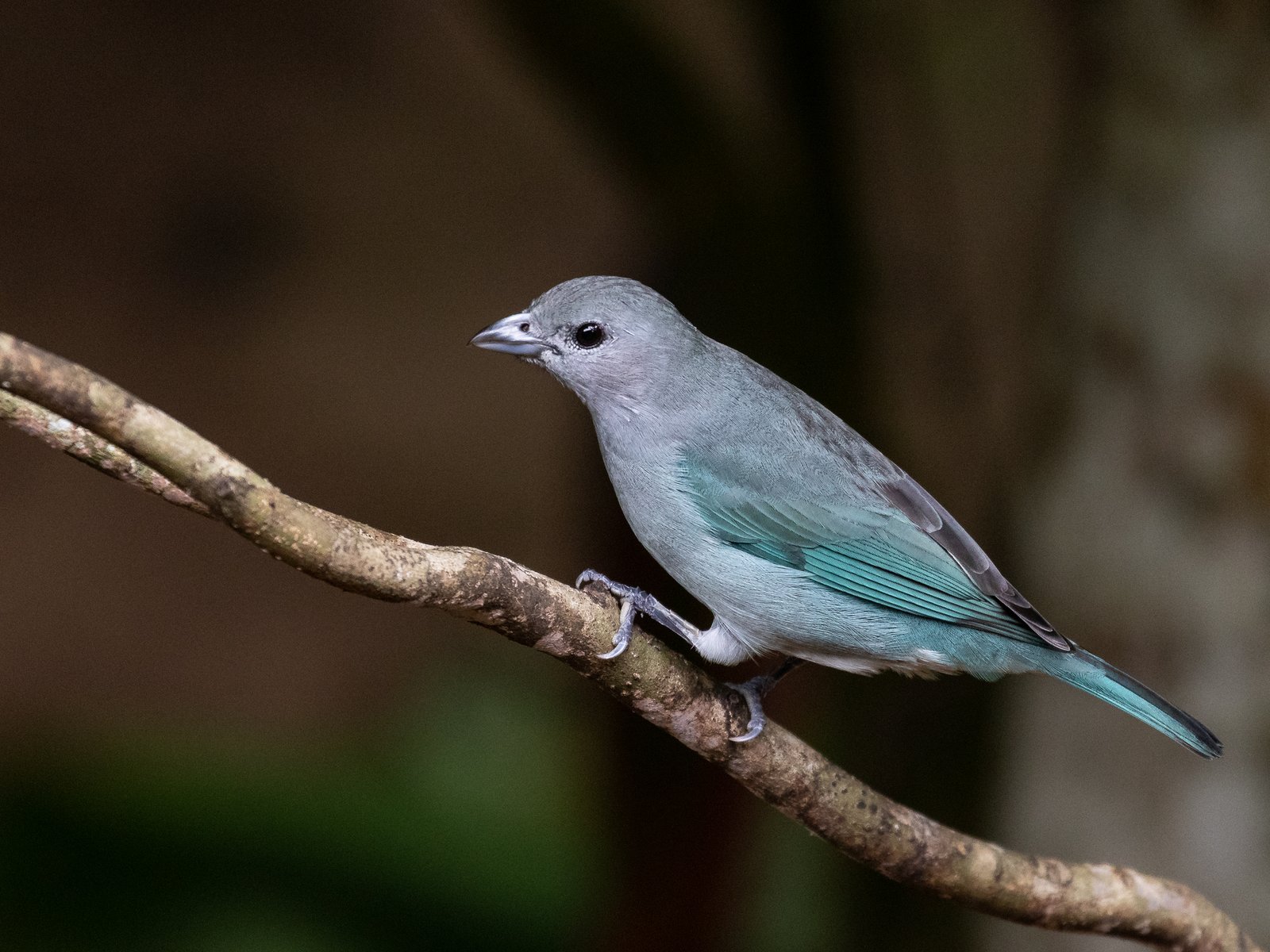
The Sayaca Tanager is the southern counterpart of the Blue-grey Tanager: a medium-sized, grey tanager with blue-green wings of semi-open country, gardens and towns in eastern and central South America. In the guide area it lives mainly in Bolivia, where it ranges far up into the Andean valleys.
Voice
Gives sharp tseep and chip notes. The song is a rapid, squeaky series with rasping notes, similar to that of Blue-grey Tanager.
Recording: Fabrício Grigolin — CC BY-NC-SA 4.0 · xeno-canto
Identification
17 cm, with a fairly thick, dark bill. The plumage is largely pale grey with a blue tinge on back and head, the underparts paler, almost whitish towards the belly. Wings and tail have blue-green to turquoise edges, brightest on the coverts. The sexes are alike. Juveniles are duller, with a greener tone.
Confusion species
Blue-grey Tanager Thraupis episcopus is bluer, with more violet-blue or a whitish shoulder patch on the wing, and lives mainly in northern Bolivia. Palm Tanager Thraupis palmarum is olive-grey with a two-toned wing. Blue-capped Tanager Sporathraupis cyanocephala has a blue cap and an olive-green back and lives higher in humid montane forest.
Habitat
Forest edges, open and secondary woodland, dry forest, riverine woodland, plantations, gardens, parks and towns, from the lowlands to about 2500 m in the dry and semi-humid Andean valleys. It eats fruit, flowers, nectar and insects. The nest is an open cup in a tree or shrub, also on buildings.
Where the bird is most at home, classified by the vegetation units of the Andes and the west coast.


Range and movements
In Bolivia widespread in the east and south: in the lowlands of Santa Cruz and southern Beni and in the valleys and foothills of La Paz, Cochabamba, Chuquisaca and Tarija. In Peru only a few records in the far southeast. Does not occur in Colombia, Ecuador or on the Galápagos. Outside the guide area in eastern and southern Brazil, Paraguay, Uruguay and northern Argentina.
- Resident
- dark = core range, pale = thinly spread
How and when to look
Look in parks and gardens in cities such as Santa Cruz and Cochabamba and along forest edges in the valleys of the eastern slope; the birds often perch in the open in treetops and come to fruiting and flowering trees.
Conservation status
Least Concern. Common and widespread; benefits from open landscapes and settlement.
Scientific name
Thraupis sayaca | (Linnaeus, 1766)
Linnaeus described the species in 1766 as Tanagra Sayaca; because it was later moved to another genus, the author and year stand in brackets. The genus Thraupis was introduced in 1826 by Boie. The genus name is Greek thraupis, an unidentified small bird mentioned by Aristotle. The species name comes from the Tupi name Saí-acú, 'very lively (bird)', for various tanagers; Marcgrave wrote 'Sayacu' in 1648. The specimen the first description was based on came from Brazil.