All species › Parrots › African and New World parrots › Blue-throated Macaw
Blue-throated Macaw | Ara glaucogularis
Blauwkeelara | Guacamayo barbazul | Arara-de-garganta-azul
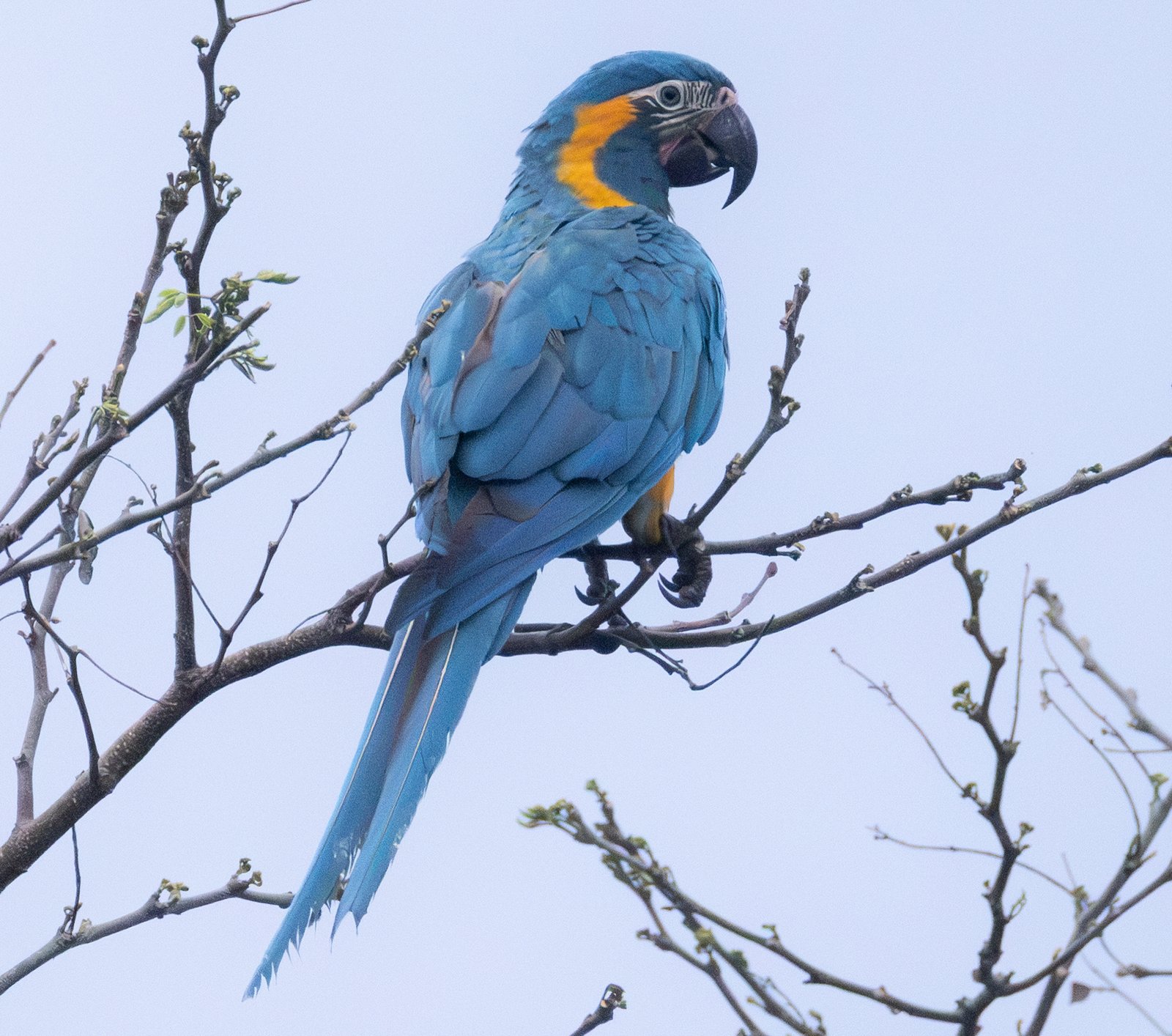
The Blue-throated Macaw is a large blue-and-yellow macaw that occurs only in the seasonally flooded savannas of the Beni in northern Bolivia. It is one of the rarest parrots in the world; only a few hundred birds remain in the wild. For a long time the species was known mainly from the trade; wild birds were only rediscovered in 1992.
Voice
Loud, raucous screeches, in flight and at the roost, similar to those of Blue-and-yellow Macaw.
No recording with a suitable Creative Commons licence is available for this species yet.
Identification
85 cm, of which about half is tail, with a heavy black bill. The crown, upperparts and upper side of the tail are turquoise blue, the underparts golden yellow. The throat and cheeks are blue; the bare, pale face is crossed by lines of small blue feathers. The undersides of the wings and tail are yellowish olive. The sexes are alike.
Confusion species
Blue-and-yellow Macaw Ara ararauna is larger, with a green forehead, a black throat band and a white face with black feather lines; Blue-throated Macaw has a blue throat and blue cheeks and is more turquoise above. Both species occur together in the Beni. Other large macaws in the Beni, such as Red-and-green Macaw Ara chloropterus, are mainly red.
Habitat
Seasonally flooded savanna with islands of forest and palms, especially of the motacú palm Attalea phalerata, and gallery forest, in the lowlands at about 200 m. It eats mainly the fruit of this palm, as well as fruit of other palms and trees. It nests in cavities in palms and large trees.
Where the bird is most at home, classified by the vegetation units of the Andes and the west coast.


Range and movements
Endemic to Bolivia: only in the savannas of the Beni (Llanos de Moxos) in the north of the country, in a few small, separate areas. Absent from Colombia, Ecuador, Peru and the Galápagos.
- Resident
- dark = core range, pale = thinly spread
How and when to look
In the Barba Azul Nature Reserve in the Beni, where pairs and small groups feed and roost in the palm islands. Early in the morning the birds fly from the roost to the feeding areas and are then most often seen.
Conservation status
Critically Endangered. The population declined sharply in the 20th century through trapping for the cage-bird trade; today the main threats are the loss of palm islands and nest trees through fires and cattle ranching. Conservation programmes with nest boxes and reserves support the population. The species is listed on Appendix I of CITES.
Scientific name
Ara glaucogularis | Dabbene, 1921
Dabbene described the species in 1921 and placed it straight away in the genus where it still stands. The genus Ara was introduced in 1799 by De Lacépède. The genus name comes from Tupi ará, 'macaw', an onomatopoeia of these birds' call. The species name comes from glaucus, 'greyish-blue', and Latin gularis, 'of the throat', for the blue throat. The specimen the first description was based on came from (per the description).