All species › Passerines › Mockingbirds and thrashers › Brown-backed Mockingbird
Brown-backed Mockingbird | Mimus dorsalis
Bruinrugspotlijster | Calandria castaña | Calhandra-de-dorso-castanho
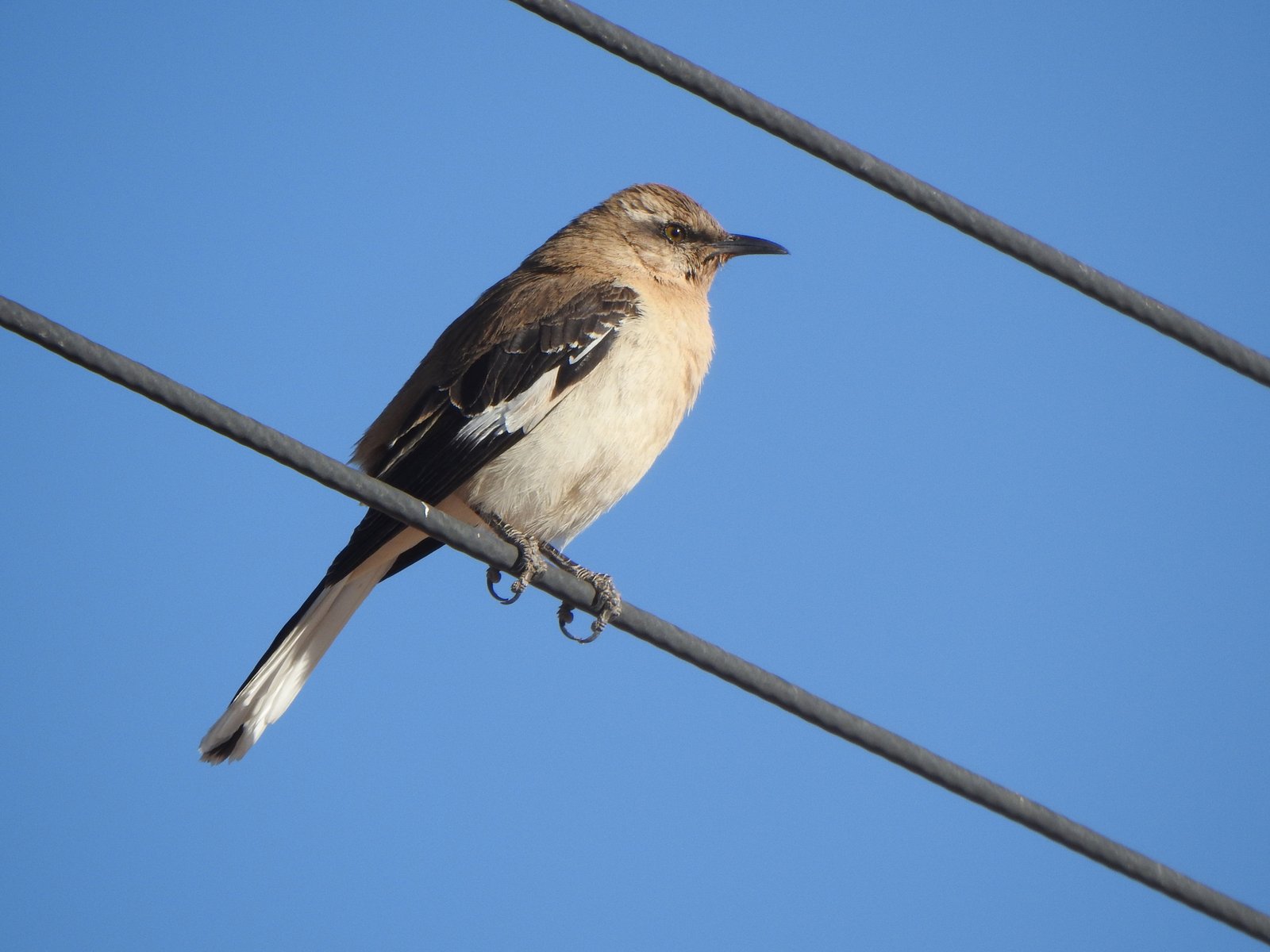
The Brown-backed Mockingbird is the mockingbird of the dry valleys and slopes of the Andes in Bolivia and north-western Argentina. It lives mainly between 2300 and 3500 m, often near villages, fields and hedgerows. With its chestnut-brown back and the white patches in the wing and tail it is the only mockingbird that occurs this high in the mountains in the guide area.
Voice
The song is a series of repeated harsh notes, scratchy phrases and chuckles, often from a shrub, post or wall. The call is a hoarse, rasping scold.
Recording: Nick Athanas — CC BY-NC-SA 3.0 · xeno-canto
Identification
21–25 cm, a slender mockingbird with a long tail and a slightly decurved black bill. The crown and upperparts are chestnut-brown, brightest on the rump. A whitish supercilium, a black eyestripe and dusky cheeks. The underparts are whitish, with a buff tinge on the breast and flanks. The wings are blackish with a white patch at the base of the flight feathers, showing as a white band in flight. The tail is mostly blackish, with the outer three to four pairs of feathers white. The sexes are alike; juveniles have dusky spots on the breast.
Confusion species
White-banded Mockingbird Mimus triurus is smaller and greyer, with a grey-brown back and a broader white wing band, and lives mainly in the Chaco lowlands. Chalk-browed Mockingbird Mimus saturninus is grey-brown with a streaked back, lacks the white wing patch and lives in the lowlands. Black-billed Shrike-Tyrant Agriornis montanus is an upright tyrant flycatcher with a heavy, hooked bill and no white supercilium.
Habitat
Dry scrub with cacti and thorny shrubs, sparsely vegetated slopes, hedgerows, field edges and terraces and the surroundings of villages, in the dry valleys and on the edges of the altiplano, mostly between 2300 and 3500 m, exceptionally from 1700 to 4200 m. It forages much on the ground for insects and also eats fruit and berries. The nest is a cup of twigs in a shrub or cactus.
Where the bird is most at home, classified by the vegetation units of the Andes and the west coast.


Range and movements
Bolivia: in the dry valleys and slopes of the Andes from La Paz south through Cochabamba, Oruro, Chuquisaca and Potosí to Tarija. There are a few records from the far south of Peru, but its occurrence there is uncertain. Absent from Colombia and Ecuador and from the Galápagos. Outside the guide area in north-western Argentina, south to Tucumán.
- Resident
- dark = core range, pale = thinly spread
How and when to look
In the dry valleys around Cochabamba, Sucre and Potosí, check hedgerows, field edges and shrubs near villages; the birds often perch in the open and show the white patches in the wing and tail when they fly off.
Conservation status
Least Concern. The species has a fairly limited range, but is common within it and tolerates the farmland of the Andean valleys.
Scientific name
Mimus dorsalis | (d'Orbigny, ACVMD & de Lafresnaye, 1837)
D'Orbigny, ACVMD & de Lafresnaye described the species in 1837 as Or[pheus] dorsalis; because it was later moved to another genus, the author and year stand in brackets. The genus Mimus was introduced in 1826 by Boie. The genus name is Latin mimus, 'mimic', after the imitation of other sounds. The species name comes from Latin dorsum, 'back', after the brown back. The specimen the first description was based on came from Cochabamba, Bolivia.