All species › Passerines › Antpittas › Chestnut-naped Antpitta
Chestnut-naped Antpitta | Grallaria nuchalis
Roodnekmierpitta | Tororoí nuquicastaño | Tovacuçu-de-nuca-castanha
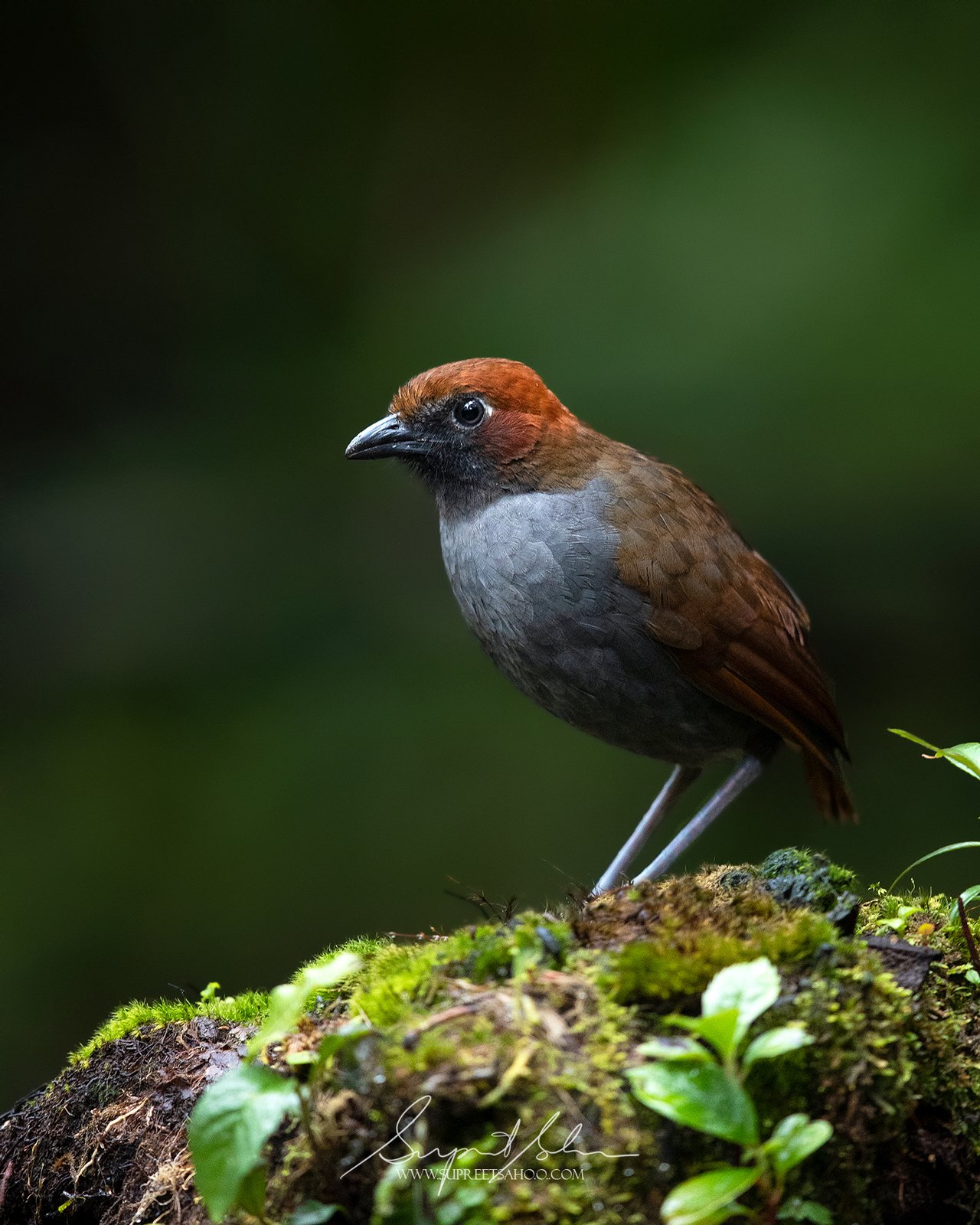
The Chestnut-naped Antpitta is a large, dark antpitta of high montane forest in the northern Andes, with a chestnut head and nape above grey underparts. It is closely tied to dense stands of Chusquea bamboo. Its song is heard mainly at dawn and dusk.
Voice
The song is a series of four to seven whistled notes; the first notes are alike, the last is long and sharply upslurred. It also gives shorter calls, sometimes only the final rising note. It usually sings hidden from a low perch.
Recording: Juan Freile — CC BY-NC-SA 4.0 · xeno-canto
Identification
19–21 cm, round and short-tailed, on long pale blue-grey legs, with a black bill and a grey iris. The crown is dark chestnut, the hindcrown, nape and face rufous-chestnut, with a bare white patch of skin behind the eye. The upperparts, wings and tail are brown. The underparts are ashy grey, darkest on the throat. Birds in Colombia have a brighter head and paler underparts; those on the western slope of northern Ecuador have a brown crown, blackish lores and blackish-grey underparts. The sexes are alike.
Confusion species
Bicolored Antpitta Grallaria rufocinerea in Colombia is smaller, with wholly rufous upperparts and no white skin patch behind the eye. Chestnut-crowned Antpitta Grallaria ruficapilla has a rufous head but white, black-streaked underparts. Undulated Antpitta Grallaria squamigera is larger, with buff, scaled underparts. Pale-billed Antpitta Grallaria carrikeri in northern Peru has a black face and an ivory bill.
Habitat
High montane forest and humid cloud forest, mainly in and near dense Chusquea bamboo, also in the undergrowth of adjacent forest without bamboo, roughly between 2000 and 3000 m. It lives on the ground deep in the bamboo and takes insects and other invertebrates. The only known nest was a large cup of bamboo leaves with some twigs and moss, about 3 m up in a bamboo thicket, holding two young.
Where the bird is most at home, classified by the vegetation units of the Andes and the west coast.


Range and movements
In Colombia in the Central Andes from Antioquia to Cauca and on the western slope of the Eastern Andes in Cundinamarca. In Ecuador on the eastern slope from Pichincha southwards, and on the western slope in the north (Imbabura and Pichincha). In Peru in the north, south to Piura and Cajamarca. Absent from Bolivia and the Galápagos. Does not occur outside the guide area.
- Resident
- dark = core range, pale = thinly spread
How and when to look
Walk at first light along trails through bamboo-rich high montane forest, for example in the reserves in the Andes of northern Ecuador, and listen for the series of whistles with the rising final note. The bird sometimes briefly crosses a trail or hops out of the bamboo.
Conservation status
Least Concern. The range is large and no immediate threats are known, but the species depends on undisturbed montane forest with bamboo.
Scientific name
Grallaria nuchalis | Sclater, 1860
Sclater described the species in 1860 and placed it straight away in the genus where it still stands. The genus Grallaria was introduced in 1816 by Vieillot. The genus name comes from New Latin grallarius, 'stilt-walker', referring to the long legs. The species name comes from Latin nucha, 'nape'. The specimen the first description was based on came from Río Napo, Ecuador.