All species › Passerines › Shrike-babblers, Erpornis and vireos › Choco Vireo
Choco Vireo | Vireo masteri
Chocóvireo | Vireo del Chocó | Juruviara-do-chocó
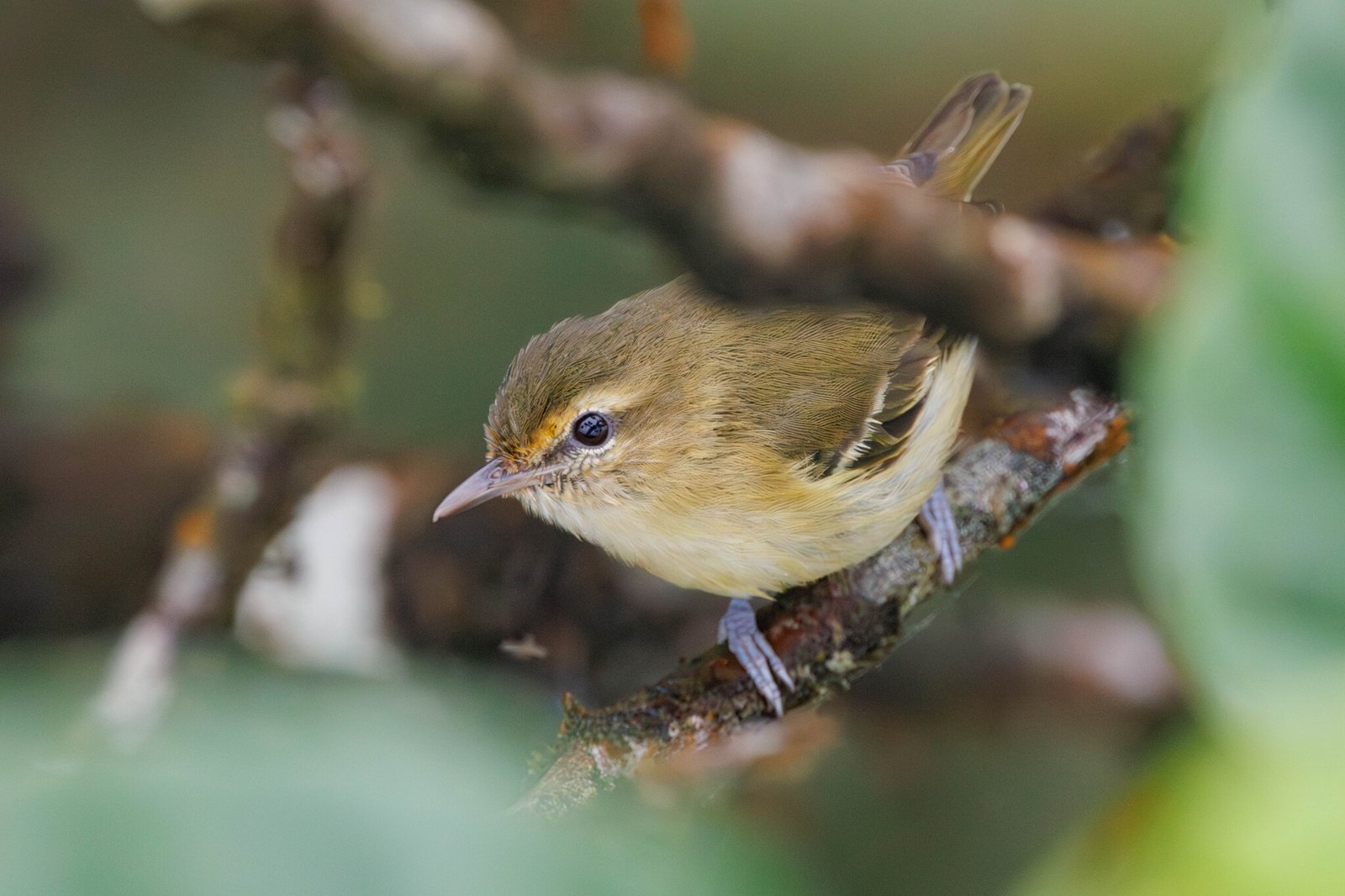
The Choco Vireo is a small, olive-green vireo of the very wet montane rainforest on the Pacific side of the Western Andes. The species was discovered only in 1991 and described in 1996. The naming rights were auctioned; the proceeds went to buying forest for a nature reserve.
Voice
The song is a short, fast series of about ten notes lasting about two seconds, built up of three parts. It sings year-round, usually from a perch in the canopy.
Recording: Juan Freile — CC BY-NC-SA 4.0 · xeno-canto
Identification
12 cm, with a short, fairly thick bill. The upperparts are olive-green, the crown slightly greyer. A pale yellowish supercilium and a dark eye-stripe. Two white wing bars. The throat and breast are dull yellowish, the belly dingy white. The iris is dark. The sexes are alike; young birds are paler, with creamy underparts.
Confusion species
Brown-capped Vireo Vireo leucophrys usually lives higher, has a brown crown and lacks wing bars. Lesser Greenlet Pachysylvia decurtata is smaller, with a grey head, a white eye-ring and no wing bars. Nearctic warblers with wing bars in winter have a thinner bill.
Habitat
The canopy of very wet, mossy montane rainforest rich in epiphytes, in the forest interior and along edges and treefall gaps. At middle elevations; reported figures vary from about 600 to 2100 m. It searches for insects in the foliage, often in mixed flocks. Little is known about the nest.
Where the bird is most at home, classified by the vegetation units of the Andes and the west coast.


Range and movements
Colombia: locally on the western slope of the Western Andes, from Risaralda south to Nariño. Ecuador: in the north-west, known from few sites south to northern Pichincha. Peru and Bolivia: absent. Absent from the Galápagos. Endemic to the guide area.
- Resident
- dark = core range, pale = thinly spread
How and when to look
Listen in the morning for the short, fast song from the canopy in wet montane forest of the Western Andes of Colombia and north-western Ecuador. Mixed flocks moving through the treetops are the best lead.
Conservation status
Near Threatened. The range is small and fragmented; logging, agriculture, mining and new settlements reduce the habitat, and the population is declining.
Scientific name
Vireo masteri | Salaman & Stiles, 1996
Salaman & Stiles described the species in 1996 and placed it straight away in the genus where it still stands. The genus Vireo was introduced in 1808 by Vieillot. The genus name is Latin vireo, a green migratory bird, perhaps the female golden oriole or the greenfinch; related to virere, 'to be green'. The species name honours the American birder Bernard Master, who bought the naming rights to this species at an auction; his donation was used to create the Pangan ProAves Reserve in Colombia. The specimen the first description was based on came from Alto de Pisones, Risaralda, Colombia.