All species › Passerines › Ovenbirds and woodcreepers › Crested Hornero
Crested Hornero | Furnarius cristatus
Kuifovenvogel | Hornero copetón | João-de-barro-de-topete
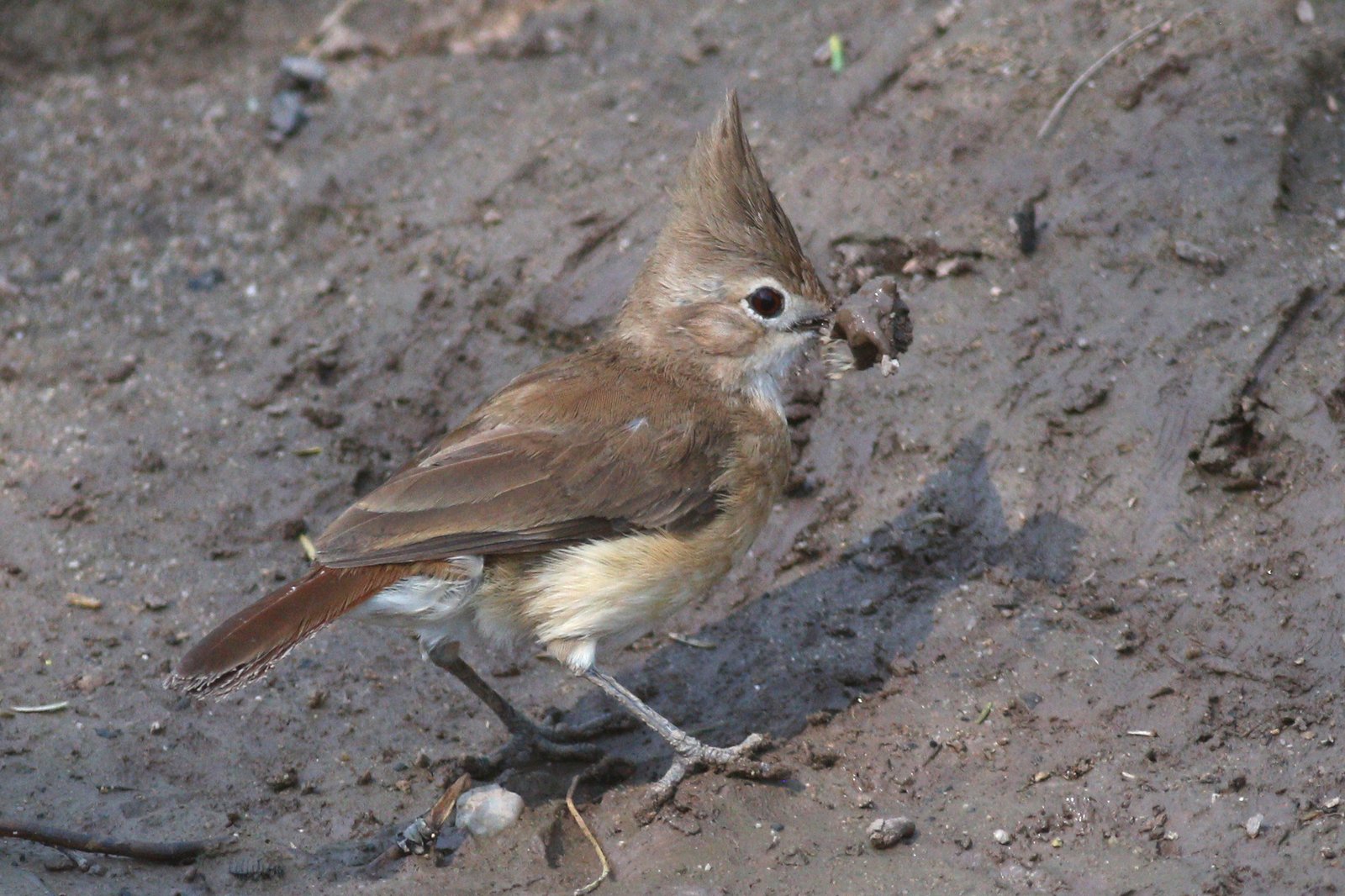
The Crested Hornero is a small, pale ovenbird with a pointed crest, characteristic of the dry Chaco. It builds a mud nest like the Rufous Hornero, but smaller. In the guide area it occurs only in south-eastern Bolivia.
Voice
A rapid duet of high, shrill notes, thinner than in Rufous Hornero. The call is a short, sharp chek.
Recording: Bernabe Lopez-Lanus — CC BY-NC-SA 3.0 · xeno-canto
Identification
15–16 cm, with a fairly short, straight bill and a pointed, rufous crest that is often raised. The upperparts are pale rufous to sandy, the tail brighter rufous. A faint, pale supercilium. The throat is white, the underparts pale buff. The legs are greyish. The sexes are alike.
Confusion species
Rufous Hornero Furnarius rufus is larger, without a crest, and plainer brown. Lark-like Brushrunner Coryphistera alaudina is also crested, but is streaked on the head and underparts and lives in small groups. Brown Cacholote Pseudoseisura lophotes is much larger, with a dark, shaggy crest and a loud voice.
Habitat
Dry Chaco woodland and thorn scrub with open, bare ground, also pasture and farmyards in the Chaco, mostly below 800 m. It forages on foot on bare ground for insects. The mud nest sits on a branch or post.
Where the bird is most at home, classified by the vegetation units of the Andes and the west coast.


Range and movements
Absent from Colombia, Ecuador, Peru and the Galápagos. Bolivia: in the Chaco of the south-east, in southern Santa Cruz, Chuquisaca and Tarija. Outside the guide area in western Paraguay and northern Argentina.
- Resident
- dark = core range, pale = thinly spread
How and when to look
Search open patches, sandy tracks and farmyards in the Chaco woodland of south-eastern Bolivia, for example around Villamontes; birds walk over bare ground and hop into a bush when disturbed.
Conservation status
Least Concern. The Chaco is being rapidly cleared for farming and ranching, but the species tolerates a partly open landscape.
Scientific name
Furnarius cristatus | Burmeister, 1888
Burmeister described the species in 1888 and placed it straight away in the genus where it still stands. The genus Furnarius was introduced in 1816 by Vieillot. The genus name comes from Latin furnarius, 'baker' (from furnus, 'oven'), for the oven-shaped mud nest. The species name comes from Latin cristatus, 'crested', for the crest. The specimen the first description was based on came from Sierras de Córdoba, Argentina.