All species › Passerines › Antpittas › Cundinamarca Antpitta
Cundinamarca Antpitta | Grallaria kaestneri
Cundinamarcamierpitta | Tororoí de Cundinamarca | Tovacuçu-de-cundinamarca
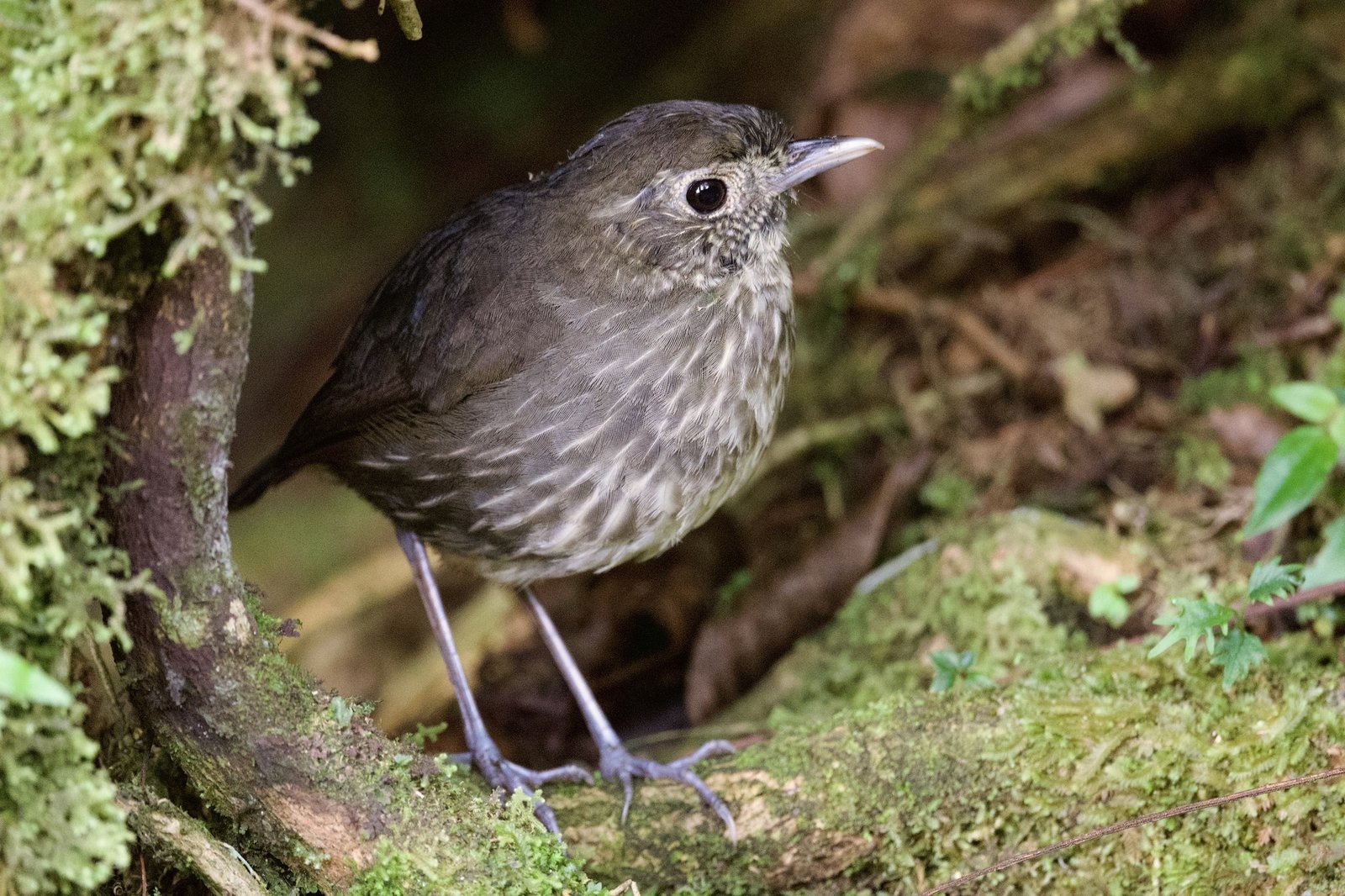
The Cundinamarca Antpitta is a small, dull olive-brown antpitta with white-streaked underparts that was only described in 1992. It lives in a narrow belt of montane forest on the eastern slope of the Eastern Andes of Colombia. Its closest relative is the Santa Marta Antpitta.
Voice
The song is a short series of three clear whistles, each note slightly longer and higher than the one before; the last is sometimes left out. When alarmed a higher, sharp call with a piercing first note.
Recording: Bram Vogels — CC BY-NC-SA 4.0 · xeno-canto
Identification
15–16 cm, round and short-tailed, on long grey legs. The whole plumage is dull olive-brown; the back feathers have narrow sooty fringes, giving faint barring. The wings are warmer brown. The throat is paler, the breast olive-brown with white streaks, the belly duller white. The underwing is cinnamon. The sexes are alike.
Confusion species
Santa Marta Antpitta Grallaria bangsi is slightly larger, with a deep buff throat, and lives only in the Sierra Nevada de Santa Marta. Chestnut-crowned Antpitta Grallaria ruficapilla is larger, with a rufous head and white, black-streaked underparts. White-bellied Antpitta Grallaria hypoleuca has rufous-brown upperparts, a white throat and belly and a grey breast. Muisca Antpitta Grallaria rufula lives higher and is plain rufous-brown.
Habitat
Humid montane forest and mature secondary forest with dense undergrowth, roughly between 1700 and 2500 m. It uses forest edges and clearings only where there is plenty of low vegetation. On the ground it searches leaf litter and loose soil for insects, larvae, spiders and probably earthworms. It probably breeds in the second half of the year; almost nothing is known about the nest.
Where the bird is most at home, classified by the vegetation units of the Andes and the west coast.


Range and movements
In Colombia only on the eastern slope of the Eastern Andes, between Monterredondo and the Farallones de Medina, in south-western Cundinamarca and north-western Meta. It has disappeared from the northern part of its former range. Absent from Ecuador, Peru, Bolivia and the Galápagos. Does not occur outside the guide area.
- Resident
- dark = core range, pale = thinly spread
How and when to look
Listen early in the morning in the montane forest around Monterredondo, along the road from Bogotá to Villavicencio, for the rising series of three whistles. The bird keeps to dense undergrowth and sings from the ground or a low branch.
Conservation status
Endangered. The population is estimated at a few hundred mature birds and is declining because of logging, clearing for small-scale farming and grazing by goats. Part of the range lies within Chingaza National Park.
Scientific name
Grallaria kaestneri | Stiles, 1992
Stiles described the species in 1992 and placed it straight away in the genus where it still stands. The genus Grallaria was introduced in 1816 by Vieillot. The genus name comes from New Latin grallarius, 'stilt-walker', referring to the long legs. The species name honours Peter Kaestner, American diplomat and amateur ornithologist who discovered the species and later became the first birder to see 10,000 species. The specimen the first description was based on came from Monterredondo, Guayabetal, Cundinamarca, Colombia.