All species › Passerines › New World sparrows › Dusky-headed Brushfinch
Dusky-headed Brushfinch | Atlapetes fuscoolivaceus
Roetkopstruikgors | Atlapetes oliváceo | Tico-tico-de-cabeça-escura
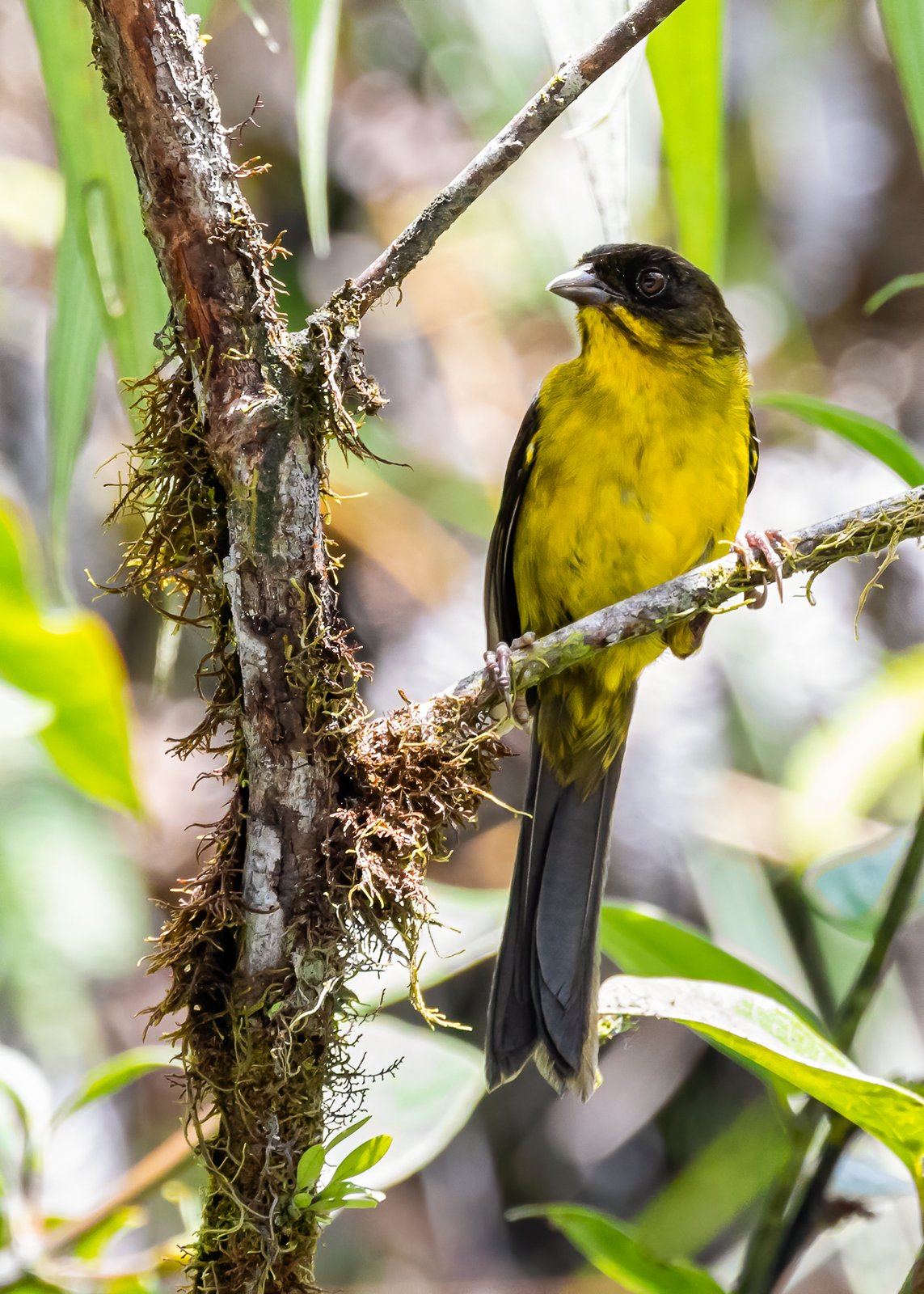
The Dusky-headed Brushfinch is a Colombian brushfinch with a dark head and yellow underparts, found only in the upper Magdalena valley in the south of the country. Its range is one of the smallest of all brushfinches. It lives in pairs or small groups at forest edges and in scrub.
Voice
High, thin calls, roughly tseet, and a short series of high, thin notes as song.
Recording: David Bradley — CC BY-NC-SA 4.0 · xeno-canto
Identification
17–18 cm, with a stout, black bill. The head is dark, sooty olive-grey, darkest on the cheeks and lores, and grades into the olive-green upperparts. The throat and underparts are yellow, with a dark malar stripe on each side of the throat and olive flanks. The sexes are alike; juveniles are browner and less clearly marked.
Confusion species
Yellow-headed Brushfinch Atlapetes flaviceps has a yellowish head and lives farther north in the Central Andes. Yellow-breasted Brushfinch Atlapetes latinuchus has a rufous crown and a black face. Slaty Brushfinch Atlapetes schistaceus has a rufous crown and grey underparts with a white moustache.
Habitat
Edges of humid montane and cloud forest, secondary forest, scrub and overgrown clearings, roughly between 1500 and 2600 m. It searches low in the vegetation and on the ground for insects, seeds and fruit, sometimes in mixed flocks. The nest is a cup low in a shrub.
Where the bird is most at home, classified by the vegetation units of the Andes and the west coast.


Range and movements
In Colombia only in the upper Magdalena valley, mainly in Huila and adjacent Cauca, on the slopes of the Central and Eastern Andes around the headwaters of the river. Absent from Ecuador, Peru, Bolivia and the Galápagos. Does not occur outside the guide area.
- Resident
- dark = core range, pale = thinly spread
How and when to look
Search shrubby forest edges around San Agustín and in the mountains of southern Huila. Pairs forage low in the vegetation along trails and roadsides.
Conservation status
Near Threatened. The range is very small and threatened by forest clearance for farming and cattle ranching; the species partly tolerates secondary growth.
Scientific name
Atlapetes fuscoolivaceus | Chapman, 1914
Chapman described the species in 1914 and placed it straight away in the genus where it still stands. The genus Atlapetes was introduced in 1831 by Wagler. The genus name comes from Greek: the mythical titan Atlas and petēs, 'flyer'. The species name comes from Latin fuscus, 'dusky', and olivaceus, 'olive', for the dusky olive plumage. The specimen the first description was based on came from San Agustín, Huila, Colombia.