All species › Passerines › Antpittas › Great Antpitta
Great Antpitta | Grallaria excelsa
Grote mierpitta | Tororoí excelso | Tovacuçu-grande
The Great Antpitta is one of the largest and heaviest antpittas, a bulky ground bird of cloud forest in northern Venezuela. There it is known only from a few mountain ranges and is seldom observed. It has not been confirmed with certainty in the guide area; it is included in this guide because its range reaches close to the Colombian border.
Voice
A low, hollow, tremulous call lasting a few seconds, similar to that of Undulated Antpitta. Heard mainly in the early morning.
Recording: Nick Athanas — CC BY-NC-SA 3.0 · xeno-canto
Identification
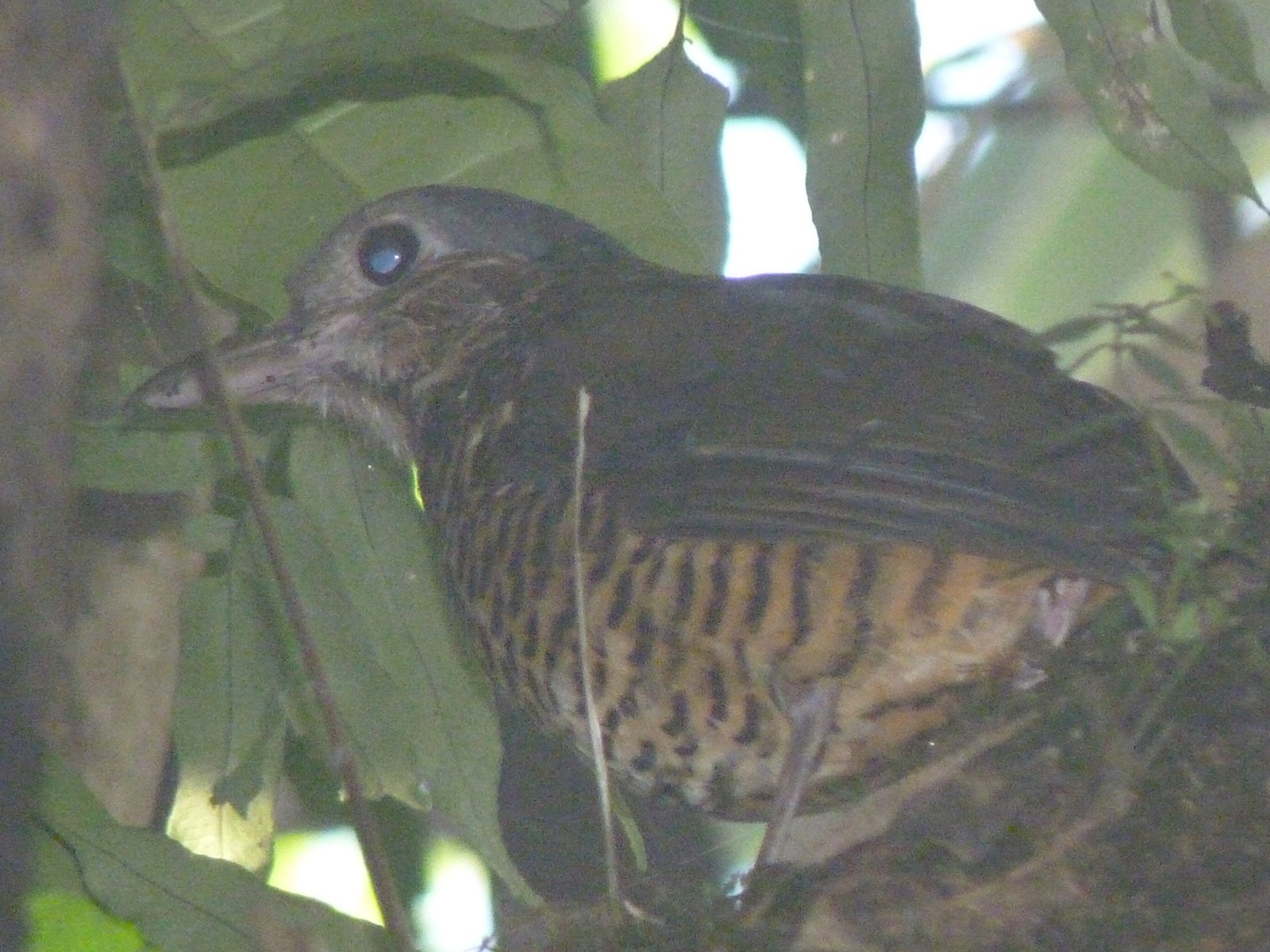
24 cm, heavily built and short-tailed, on long grey legs, with a heavy bill. The crown and nape are grey, the back and wings olive-brown. The throat is whitish. The breast and belly are ochre-brown, densely covered with black wavy lines and scallops. The sexes are alike.
Confusion species
Undulated Antpitta Grallaria squamigera is smaller, with a slate-grey back, a white throat with a black malar stripe and ochre-yellow underparts; it is widespread in the Andes of the guide area. Giant Antpitta Grallaria gigantea of Colombia and Ecuador is about the same size, but has rufous underparts with fine black barring and no pale throat.
Habitat
Humid cloud forest with dense undergrowth, in Venezuela at roughly 1700 to 2300 m. It lives on the forest floor and searches the leaf litter for earthworms and other invertebrates. Little is known about the nest.
Where the bird is most at home, classified by the vegetation units of the Andes and the west coast.

Range and movements
Not confirmed with certainty in the guide area; a record would be most likely in the Colombian border region with Venezuela. Absent from Ecuador, Peru, Bolivia and the Galápagos. Outside the guide area only in northern Venezuela, in the Coastal Cordillera and in the Andes.
How and when to look
A record in the guide area calls for a sound recording or photograph. In cloud forest along the Venezuelan border, listen for low, hollow trills and compare them with those of Undulated Antpitta.
Conservation status
Near Threatened. The species has a small range in northern Venezuela and is threatened by clearance and fragmentation of montane forest.
Scientific name
Grallaria excelsa | Berlepsch, 1893
Berlepsch described the species in 1893 and placed it straight away in the genus where it still stands. The genus Grallaria was introduced in 1816 by Vieillot. The genus name comes from New Latin grallarius, 'stilt-walker', referring to the long legs. The species name comes from Latin excelsus, 'lofty, high'. The specimen the first description was based on came from Aricagua, Mérida, Venezuela.